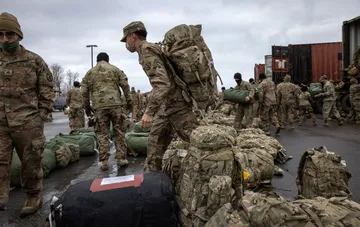
In Copenhagen, the Danish Parliament has unanimously voted to ratify a security agreement signed in September 2026 with the USA and Greenland. The document allows the American government to establish new military facilities on the island while confirming Denmark's sovereignty over Greenland, and it aims to defuse tensions that had built up following repeated claims by US President Donald Trump about his intent to control the territory. The vote took place on Thursday: all 109 attending parliamentarians supported the agreement, with no votes against or abstentions. Earlier, on November 3, 2026, the Greenland Parliament ratified the document; the agreement supplements the 1951 treaty regarding the US military presence on the island.
What the United States gains
According to the agreement text, the US gains the right to build two military bases in Greenland — in the Narsarsuaq area in the south and in Mestersvig in the northeast. Additionally, the American side gains the ability to influence matters related to foreign military activity and strategically significant investments in the region. The document will enter into force after Denmark officially notifies the US of its ratification. Since ratification by the US Congress is not required, the agreement will remain in effect until a current or future US president decides otherwise.
Sovereignty, autonomy, and restrictions for third countries
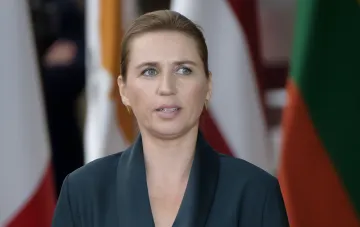
Danish Prime Minister Mette Frederiksen called the day of ratification "remarkable" and the agreement itself beneficial for its participants, NATO, and all of Europe. "The agreement respects the sovereignty of the Kingdom [of Denmark], its territorial integrity, and the right of Greenland's residents to self-determination," she stated. The document guarantees that Greenland will remain an autonomous territory within Denmark and will continue to be in effect even if the island attains full independence. Countries not belonging to the European Union and NATO will not be able to gain access to strategically important sectors — according to the authors of the agreement, this will help avoid influence from China and Russia in the region through investments.
Diplomatic crisis and Trump's rhetoric
Trump's statements about his intent to annex the island escalated into a serious diplomatic crisis between NATO member countries in January 2026. Despite the signed agreement, the American president has repeatedly claimed that the US has "gotten" Greenland or now "owns" it, although the territory remains under Danish sovereignty. Senior researcher at the Danish Institute for International Studies, Rasmus Sinding Sønnergaard, believes that Trump will likely continue using provocative rhetoric; however, the fact that he perceives the deal as his own victory, conversely, reduces the likelihood of renewed conflict with Greenland.
Prospects for implementation
Next, the countries will move toward implementing the agreement and stationing American military bases, which will require funding approval from the US Congress. According to Sønnergaard, this will not be an obstacle, even considering the transition of control over both chambers to the Democrats. The expert notes that a more serious problem for Washington is restoring its standing in Greenland: while the Americans have gained more formal levers of influence than before, the current administration "damaged relations with Denmark and caused strong resentment of the US in Greenland." "In the future, this will become a problem for them when they want to strengthen their positions in Greenland," the researcher notes.