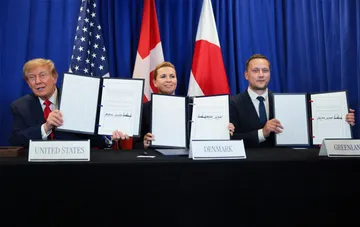
The United States intends to restore its military presence in Greenland, which was almost entirely wound down after the end of the Cold War. According to three sources familiar with the details of the deal, Washington will receive two military bases near strategically important points on the island: one in the south and a second on the eastern coast. The agreement between Denmark, Greenland, and the United States is to be signed on Tuesday on the sidelines of the UN General Assembly in New York at 10:30 a.m. Eastern Time. The text of the document has not been made public as of publication, and its final wording, sources say, is being finalized directly before the signing ceremony.
Narsarsuaq and Mestersvig: Where the American Military Will Be Stationed
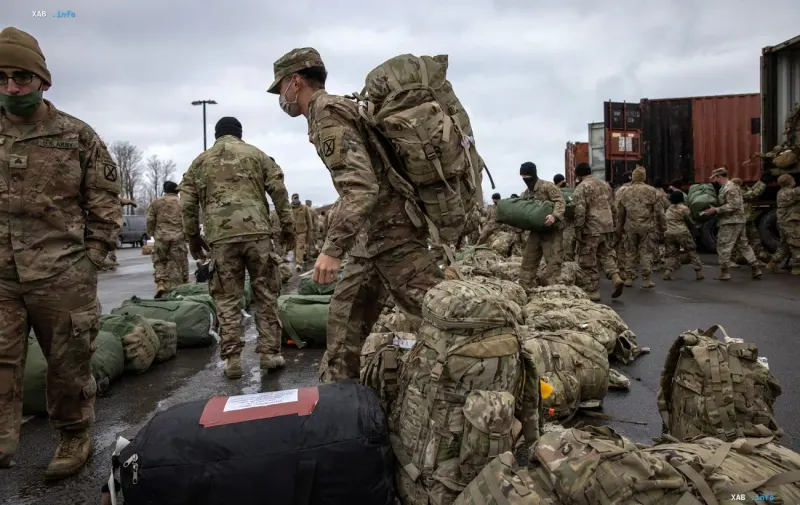
The first facility will be located in the settlement of Narsarsuaq in southern Greenland. This village, where only a few dozen residents remained after the closure of the American base "Thule West One" in the 1950s, will once again become a point of American military presence. The second facility is the Mestersvig military outpost on the island's eastern coast, which is currently used by the Danish special unit "Sirius" to organize dog patrols of the Arctic territories. Thus, the United States will effectively return to the deployment model that existed during the Cold War, when 17 American military facilities operated on the island and their strength exceeded 10,000 service members. Today only one American base remains in Greenland — "Pituffik," where about 150 military personnel serve.
Trump's Pressure and the Path to a Diplomatic Solution
The agreement is the result of months of pressure from US President Donald Trump, who for a long time insisted on Washington's control over Greenland and repeatedly refused to rule out the use of military or economic force to gain control over the Danish autonomous territory. Trump's statements peaked in January 2026 and led to a serious diplomatic crisis within NATO. It was precisely this crisis that pushed Denmark and Greenland to begin full-fledged negotiations with Washington. According to opinion polls, the majority of Greenland's residents are against transferring control of the island to the United States.
Contradictory Data
The statements of the parties show significant discrepancies in the interpretation of the essence of the agreement. President Trump stated that the document gives the United States "permanent control over the security of the island" and that "no adversary of the US will be able to have a base or military presence on the island." Meanwhile, a White House spokesperson, who declined to comment on the details of the deal, limited herself to the formulation that the document is intended to "secure and protect the safety of Greenland and the United States." In Denmark, by contrast, it is emphasized that the agreement transfers control over Arctic security to NATO oversight, rather than leaving this question solely to the discretion of Washington and Copenhagen. Moreover, the Danish side stresses that the document recognizes the sovereignty of Greenland and its right to self-determination. Thus, one side speaks of "permanent control," while the other speaks of collective security within the framework of the alliance and the preservation of sovereignty. The final text of the agreement, which is supposed to clarify these discrepancies, has not been published as of the preparation of this material. The governments of Denmark and Greenland did not respond to a Reuters request for comment.
Strategic Context: The Arctic and the North Atlantic
In addition to the agreement on military presence, the governments of the three countries expect to officially sign a separate document on strengthening security in the Arctic and the North Atlantic. The choice of venue — the UN General Assembly in New York — gives the event international resonance and allows the parties to present the deal as the result of multilateral diplomatic efforts, rather than as bilateral pressure. For the United States, the return to Greenland means the restoration of a strategic foothold in the Arctic region, the significance of which has sharply increased against the backdrop of climate change, the opening of new sea routes, and the intensifying competition among great powers for the resources of the North. For Denmark and Greenland, the key condition was the inclusion of the security question within the framework of NATO, which, in their assessment, reduces the risks of unilateral actions by Washington.
Historical Perspective and the Reaction of the Local Population
The return of American military personnel to Greenland closes a nearly seventy-year period during which the US presence on the island shrank from 17 facilities and more than 10,000 service members to a single "Pituffik" base with its 150 staff. The settlement of Narsarsuaq, where the base will be restored, has already experienced one phase of American military presence and its subsequent closure in the 1950s, which left only a few dozen residents in the village. The local population, according to polls, is largely against the strengthening of American control over the island. Nevertheless, the diplomatic crisis provoked by Trump's direct threats forced Copenhagen and Nuuk to go to negotiations, the outcome of which was an agreement whose text was finalized only hours before the signing.