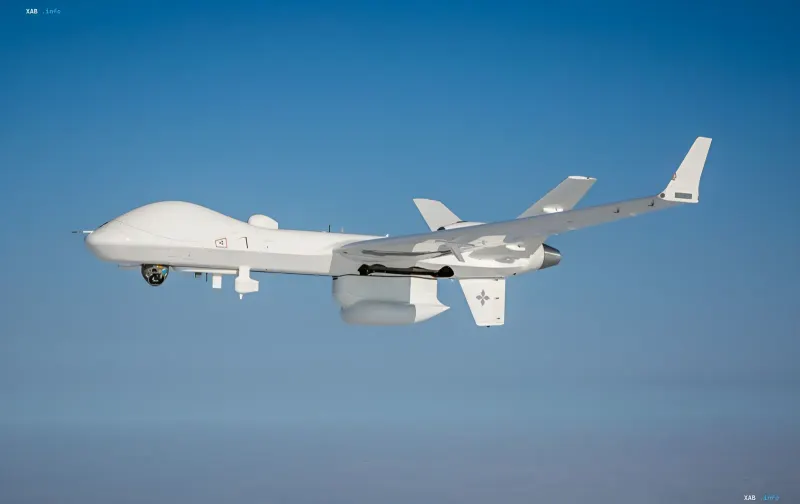
The Armed Forces of Denmark have begun large-scale tests of MQ-9B reconnaissance drones in their airspace. The main objective of the new program is the effective monitoring of Russian warships moving through the strategically vital Arctic region. As of October 2026, the northern flank requires Scandinavian countries to adopt fundamentally new approaches to security.
Joint maneuvers and European integration
During the initial test flights, the Danish military actively practiced joint operations with the German Air Force. The German side deployed its own drone to conduct flights along the coast of Jutland, testing communication channels and NATO joint force coordination. These exercises lay the groundwork for a unified northern surveillance architecture in Europe.
Large-scale procurement and infrastructure
Denmark previously signed a contract to purchase four MQ-9B SeaGuardian unmanned systems for a total of approximately $600 million. Delivery is expected in 2028. The main base for these UAVs will be the airbase in Aalborg, where necessary infrastructure is currently being built and a staff of about 100 military personnel and specialists is forming.
Geopolitical context and partner pressure
The acquisition of long-range drones for the Arctic zone is largely driven by US pressure and criticism regarding security in Greenland. Alongside Denmark, countries such as the UK, Belgium, Poland, Germany, and Canada have also acquired MQ-9B systems, highlighting a broader militarization trend in the Arctic.
Contradictory data
Despite coordinated actions within NATO, discussions persist among experts regarding the timelines for full infrastructure deployment. While official Danish Ministry of Defense reports confirm the readiness of the Aalborg base by 2028, some independent analysts express doubt over meeting delivery schedules due to the heavy workload of American manufacturer General Atomics and strict Arctic maintenance demands.