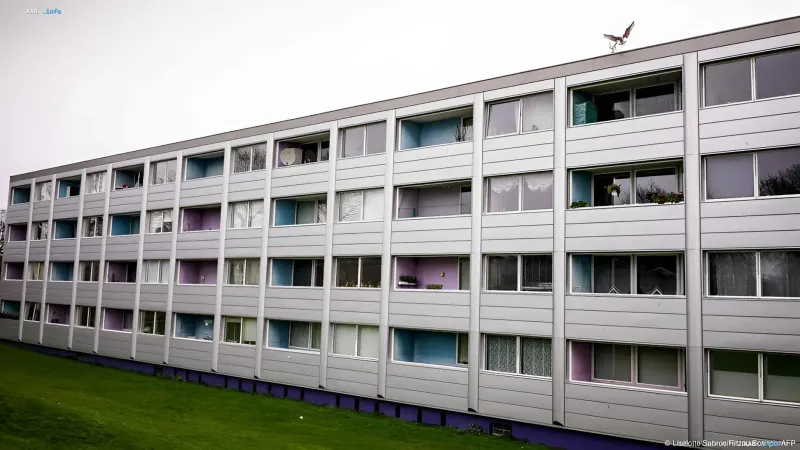
The Danish Supreme Court has ruled in favor of a housing association that terminated 91 rental agreements to prevent its residential complex from being designated a 'hard ghetto'. The court upheld the legality of the so-called 'ghetto law', enacted in 2018, which permits the relocation of 'non-Western' residents from areas with a high proportion of minorities in order to promote integration. According to tenants' associations, approximately 11,000 people will be forced to move across Denmark under this law.
Court: Criteria Not Based on Ethnicity
In the reasoning of its decision, the court stated that the application of the law's criteria is 'not broadly based on ethnicity'. As noted in the text of the ruling, the law divides people into two groups — 'immigrants and descendants from non-Western countries' and 'everyone else' — while both groups contain 'a very large proportion of people of various ethnic backgrounds', and people of the exact same background can simultaneously belong to both groups. Consequently, the court rejected the argument of racial discrimination.
Divergence with EU Court Ruling
The Danish court's decision diverges from the position of the EU's highest court handed down a year earlier: back then, it was established that the application of the law could qualify as discrimination if the criteria are based on race. However, the EU court ultimately left it to national courts to make a final decision on the matter, which allowed the Danish Supreme Court to deliver an opposite substantive verdict.
Specifics: 60% 'Western' Tenants by 2030
Under the law, social housing complexes where the minority population exceeds a set threshold are required to restructure, renovate, and adjust their social composition: by 2030, 60% of apartments must be rented to 'Western' tenants at market value. The proceedings that led to the ruling involved seven tenants challenging their eviction in the Nøjsomhed district of Helsingør, north of Copenhagen; the court upheld a lower court's 2022 verdict.
Government Position and Migration Policy Context
Danish Housing Minister Jacob Mark welcomed the decision, stating that it 'strengthens security, social cohesion, and integration'. The housing association noted in a written statement that it recognizes the impact of the evictions on the affected residents and has taken measures to provide them with new housing. Against this backdrop, Denmark — which positions itself as a pioneer in tightening migration rules and serves as a model for a number of EU countries — last week joined five states announcing their intention to establish a center in Rwanda for the deportation of asylum seekers.
What Is Considered a 'Non-Western' Country
According to Statistics Denmark, 'non-Western' countries include all states except the 27 EU members, as well as Andorra, Australia, the United Kingdom, Canada, Iceland, Liechtenstein, Monaco, New Zealand, Northern Ireland, Norway, San Marino, Switzerland, the United States, and the Vatican. This exact list forms the criterion upon which the entire relocation mechanism is built.