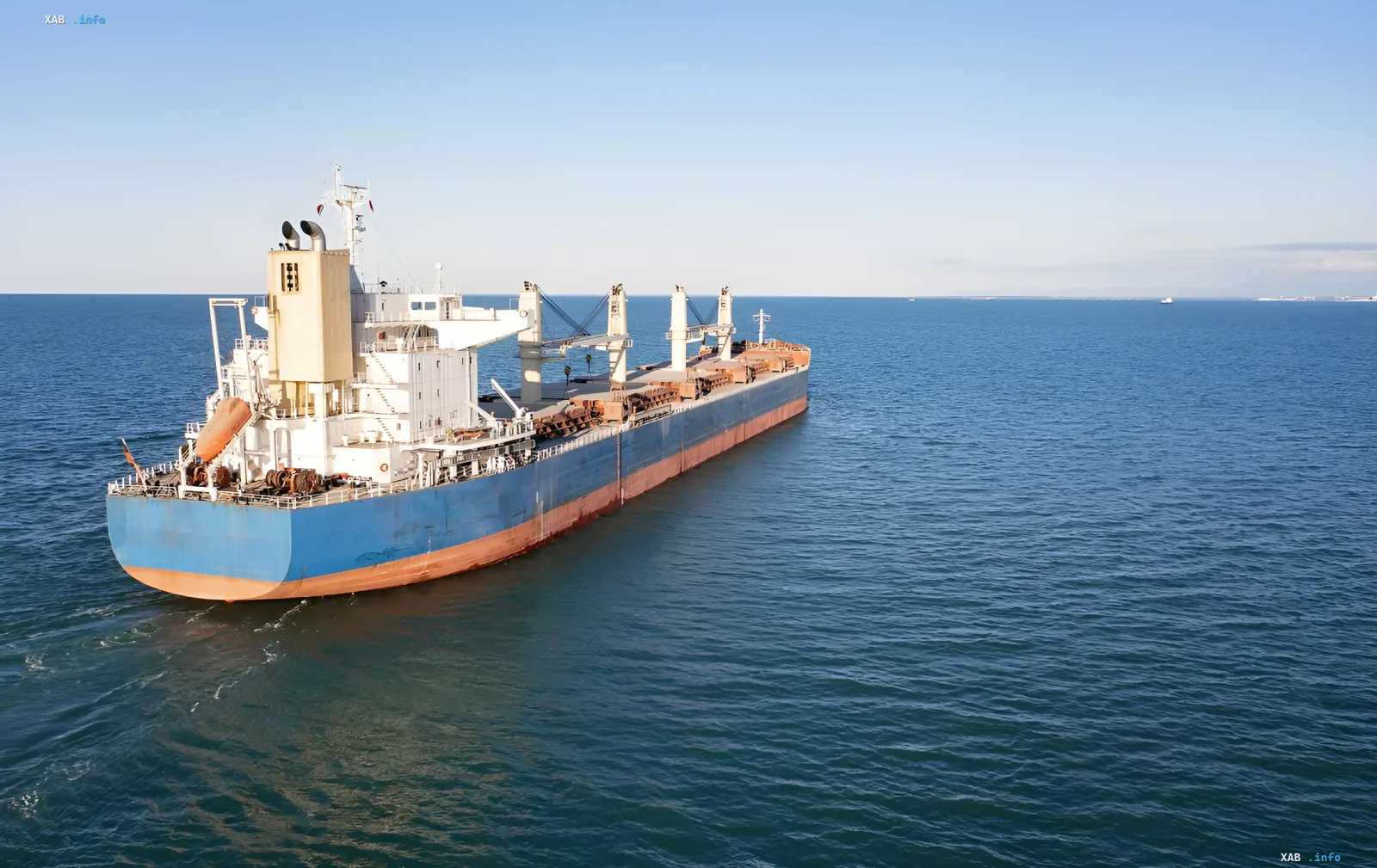
A massive queue of dozens of vessels bound for Ukrainian river ports has formed on the Danube, in the area of the Sulina Channel. According to traders and analysts, up to 70 vessels are currently approaching Sulina, waiting for clearance to pass through in order to load grain for further export. The route's limited throughput has turned one of the key river corridors into a bottleneck that is effectively paralyzing a portion of the country's grain exports.
Causes of the delays: from a shortage of pilots to fuel priority
The delays are being driven by several factors at once. These include an acute shortage of pilots, the limited throughput capacity of the channel itself, and the priority handling of other cargo, in particular fuel. The context of the situation was set by Russian attacks, which have effectively blocked Ukrainian Black Sea ports through which around 90% of grain exports previously passed. Some of the cargo has been rerouted through the river ports on the Danube, but the capacity of this route is significantly smaller, so grain vessels are forced to compete for port infrastructure with other types of cargo. Air alerts remain an additional restraining factor: due to the threat of attacks, the operation of Ukrainian ports has to be temporarily halted, which further shifts shipping schedules.
The cost of delays and risks to the sowing campaign
According to data from the consulting firm ASAP Agri, each day of delay at the channel costs carriers roughly $8,000, which further drives up already high freight rates. The company warned that the situation could worsen in the event of deteriorating weather conditions. Kateryna Konoonenko, an operations manager at Avalon Shipping, stated that due to bad weather the Sulina Channel is forecast to be closed for approximately two days. For farmers, the delays mean reduced income: less money is left to buy seeds, fertilizers and fuel ahead of the 2027 sowing season.
Contradictory data
The parties' statements differ on key figures. According to ASAP Agri data as of August 25, more than 50 vessels were waiting to pass through the Sulina Channel, while between five and seven vessels were heading to Ukrainian ports each day. At the same time, Kateryna Konoonenko of Avalon Shipping estimates the number of vessels approaching Sulina at around 70, and the channel's throughput capacity for vessels bound specifically for Ukrainian ports at just two to three vessels per day. Thus, both the overall estimate of the queue (50 versus 70 vessels) and the daily passage limit (5–7 versus 2–3 vessels) diverge. These discrepancies are important to keep in mind when interpreting the scale of the problem.
Alternative routes and loss estimates
Alternative routes — by rail, by road, and through the Danube ports — cannot fully replace the Black Sea direction. According to Kernel CEO Yevhen Osypov, without a solution on exports Ukraine may fail to sow around 20% of its acreage, which means a shortfall of roughly 12 million tonnes of food grain. Thus, the jam near Sulina is not only a logistical but also a systemic threat to food exports and preparation for the next agricultural season.