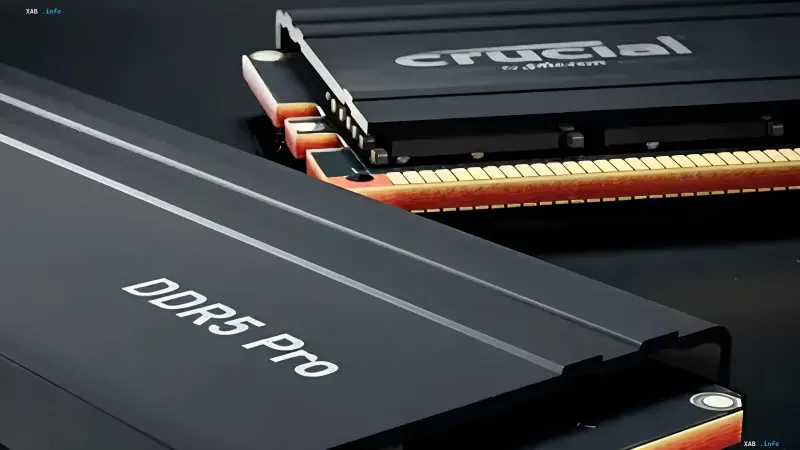
The global memory shortage has escalated into a full-blown “war of automated scripts” inside online stores. According to cybersecurity research firm DataDome, on pages featuring DDR5-standard modules at one major retailer, the share of traffic from malicious reseller bots reached 91%. This means that for every real buyer there are roughly ten requests from programs continuously scanning for stock and prices. For comparison: as recently as spring this year, that ratio was 6 to 1, meaning that over a few months the pressure from automated traffic nearly doubled.
Script War: 91% of Traffic Is Bots
Reseller algorithms operate with extreme aggressiveness: they send requests every 6.5 seconds, bypassing stores' caching mechanisms so that the moment any modules arrive in stock they can instantly grab them into the cart. As a result, real buyers systematically lose the race for limited stock: by the time a person manages to reach the product page, the modules have already been bought by a script. In essence, the retail storefront has turned into an arena where, against a human, there is not another human but an endless stream of machine requests.
The Economics of Shortage: From $72 to $392
This intense influx of bots is directly tied to the explosive rise in DRAM prices. A 32 GB DDR5-6000 memory kit that cost around $72 last year has now risen on average to $392. Top-tier 128 GB sets, by estimates, have jumped in price roughly tenfold — some publications cite a figure around $3,400 for such a kit, and even that is not always available. The gap between the “pre-crisis” and current price makes DDR5 modules an object of pursuit not only by end users but also by resellers counting on further growth.
Causes: AI Boom and Production Imbalance
The root of the problem lies in the reallocation of production capacity: the boom in artificial intelligence and data-center workloads has shifted demand toward high-speed memory, which, combined with limited supply of consumer modules, created a structural shortage. It is precisely the combination of high demand from AI infrastructure and the fragility of DRAM supply chains that has made DDR5 the hottest item in the components market, around which the bot race has unfolded.
Contradictory Data
At the same time, it is important to note nuances in the figures reported by different outlets. The 91% bot-traffic figure, per DataDome, was recorded at one specific large retailer and is not an average market-wide statistic — on other platforms the share of automated traffic may differ. Moreover, price benchmarks in publications vary: $392 for 32 GB and $3,400 for 128 GB are not a discrepancy on a single product but different configurations, although on a superficial reading they may create an impression of contradiction. Finally, the stabilization timeline (no earlier than 2027) is an expert estimate, not a confirmed fact, and may shift depending on the pace of production retooling.
When to Expect Stabilization
Experts note a key difference between the current crisis and past “card” cycles: stabilization of consumer DDR5 memory supply should not be expected before 2027. This means that bot pressure on retail storefronts will likely persist for at least another year, and prices will remain volatile. For ordinary buyers this is a practical signal: relying on a “lucky” moment in an online store is becoming harder, and competition for modules has effectively shifted to the plane of speed and automation, where a human without scripts loses by definition.