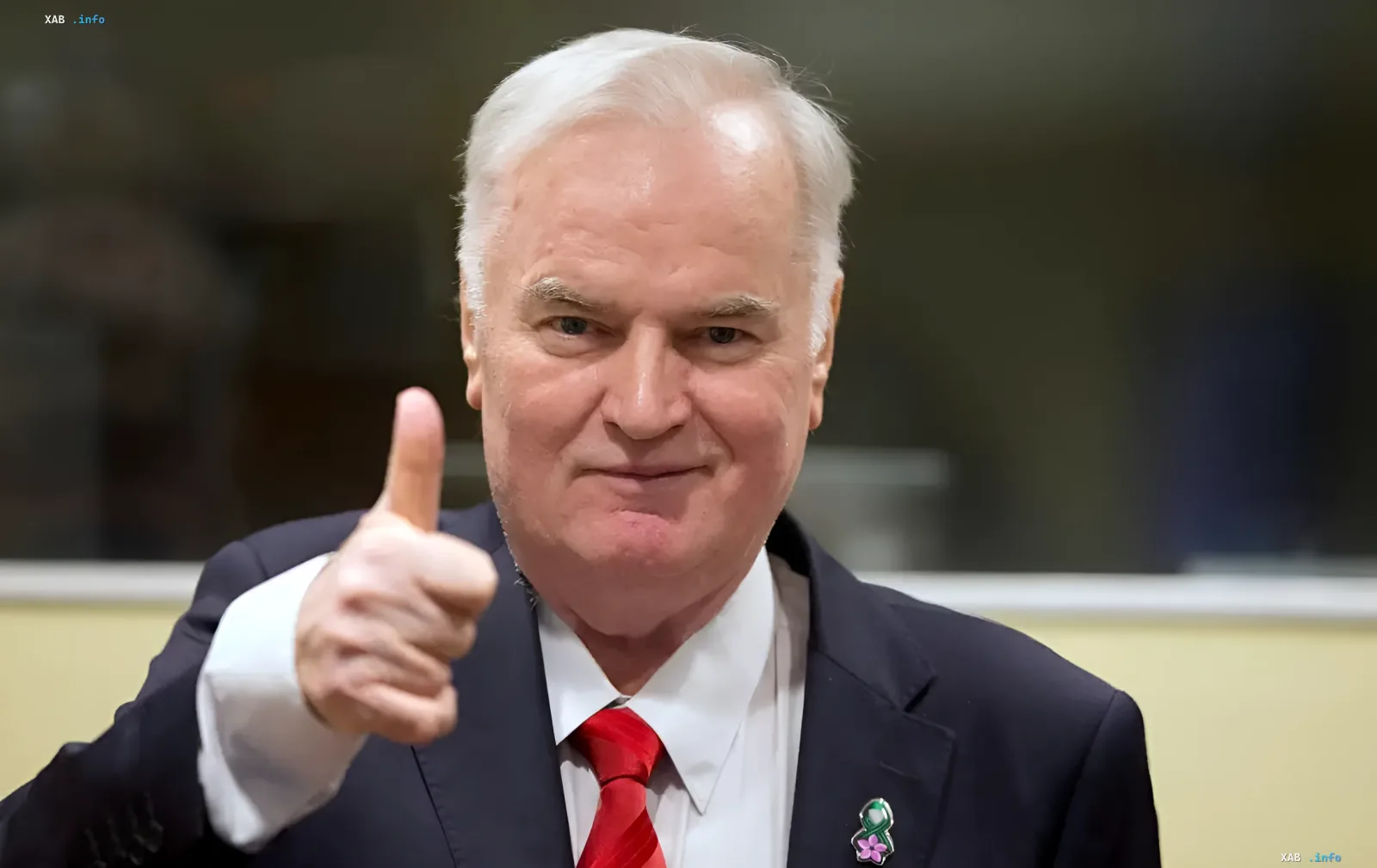
On 27 August 2026, former commander of the Army of Republika Srpska, General Ratko Mladic, who was dubbed the "Bosnian Butcher" by international media, died at the UN prison in The Hague. According to available information, he died at the age of 85, having served 15 years of the life sentence handed down to him for crimes related to the war in Bosnia and Herzegovina in 1992–1995. The death of the man convicted of genocide in Srebrenica caused a major resonance, and among the first official reactions to the event was a statement by the Russian diplomatic service, which extended its condolences to Mladic's relatives and loved ones.
Condolences from Moscow and criticism of the tribunal
The Russian MFA, together with the Russian Embassy in Serbia, published a message expressing condolences to the general's family. In addition to expressing "sincere condolences to relatives and loved ones," the diplomatic service's text contained a harsh assessment of the trial itself: the Mladic case, "whatever the factual circumstances underlying it may have been," was called a "blatant manifestation of double standards and a pro-Serbian bias of the tribunal." Thus, Moscow once again publicly distanced itself from the legitimacy of the rulings of the International Criminal Tribunal for the former Yugoslavia (ICTY), which is consistent with the overall line of Russian rhetoric on the outcomes of the work of the Hague institutions.
The Hague verdict: genocide and a life sentence
It is worth recalling that in 2017 the ICTY found Ratko Mladic guilty of genocide, crimes against humanity, and violations of the laws and customs of war, sentencing him to life imprisonment. In 2021, the appellate instance upheld both the verdict and the sentence. Thus, by the time of his death in 2026, Mladic had served approximately 15 years of what was effectively a life-long punishment. The court established his guilt in persecution, extermination, murder, deportation, and forced displacement of the population, as well as in terrorizing civilians in Sarajevo and taking UN personnel hostage.
Srebrenica as the key episode of the case
The central episode of the trial was the Srebrenica massacre of July 1995. After Bosnian Serb forces captured Srebrenica, which the UN had declared a "safe area," more than 8,000 Bosnian Muslims — predominantly men and boys — were killed. The tribunal classified these events as genocide, which determined the final classification of the Mladic case. It was precisely this assessment that, in effect, divided the international community into those who accept the Hague verdict and those who dispute its political and legal justification.
Defiance in court and the image of a 'hero' for nationalists
During the trial in The Hague, Mladic displayed openly defiant behavior. In particular, during the testimony of the mother of one of the victims of the Srebrenica massacre, he ran his hand across his own throat, mimicking a knife motion. Such gestures, along with the outcome of the verdict, reinforced his image in the eyes of a significant portion of far-right nationalists in Serbia, who to this day consider the general a hero. Neither these circles nor, as follows from the Russian MFA's statement, the official Russian position recognizes the outcomes of the work of the Hague tribunal.
Outcomes and context
The death of Ratko Mladic closes one of the most resonant chapters of postwar Yugoslav history and at the same time underscores the enduring polarization of assessments of his role: for some he is a man convicted of genocide, for others a symbol of resistance. The reaction of the Russian MFA, which extended condolences to the family while simultaneously criticizing the tribunal, became a new public marker of this position. The further development of events will depend on how Serbian and international institutions comment on the circumstances of the death of the man convicted and held in a UN prison.