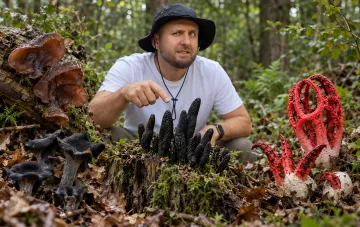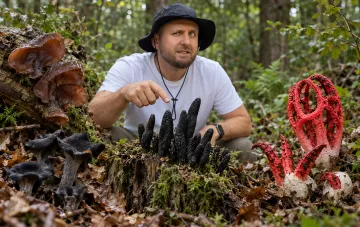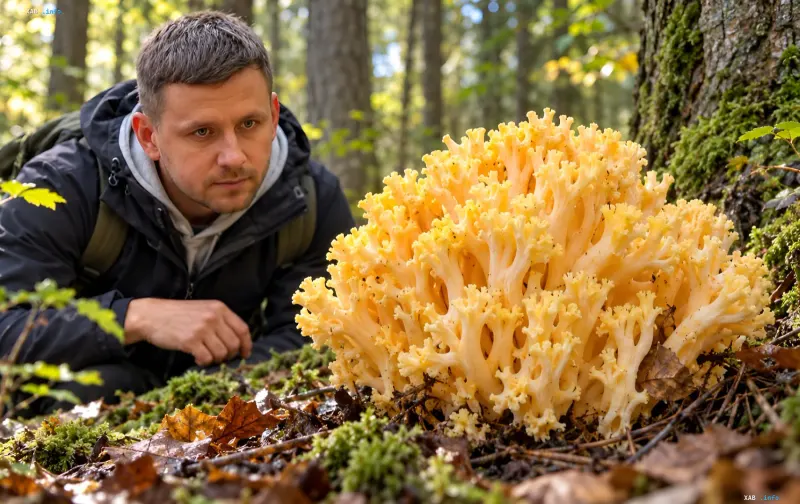
A walk in the forest often reveals mushrooms that have nothing in common with familiar porcini, slippery jacks, or chanterelles. Among them are coral-like species whose branched fruiting bodies resemble deer antlers, tree branches, or marine corals. This is why people call them "deer antlers" and, in some regions, "grandfather's beard." Blogger Yaroslav Fishchenko noted in a video on his Facebook page "Kharakternyk Show" that this name usually hides coral-like mushrooms with numerous branches that can be thin and fragile or, conversely, thick and fleshy. The coloration of such mushrooms ranges from light yellow to golden, white, pink, or reddish, making them visually very diverse.
What these mushrooms are and where they grow
Among the "deer antlers" are representatives of the genus Ramaria. Specifically, the yellow coral mushroom and the golden coral mushroom are different species that may look similar in shape but differ in shades and other morphological features. In a scientific study published in the Journal of Ethnopharmacology, researchers described various species of coral-like mushrooms and their culinary use in certain regions. At the same time, the authors emphasize that edibility status depends on the specific species, not just visual similarity. Ramaria species are found in forest ecosystems, including near trees, but not all of them grow on old stumps or fallen trunks: many species develop directly on the soil and interact with tree roots. For instance, the scientific description of the handsome coral mushroom (Ramaria formosa) states that this mushroom grows on soil in mountain forests.
When they can be found
The appearance time of coral-like mushrooms depends on the species, climate, and weather conditions. Some "deer antlers" grow almost year-round and are even capable of fruiting in winter, meaning they can be encountered outside the classic mushroom season. Habitat is also not universal: it is determined by the specific species rather than the general "coral" mushroom type.
Why caution is required
Some Ramaria species are considered edible and used in cooking: in regions where certain species are traditionally consumed, they are added to soups, fried with onions, or used in other dishes after preliminary processing. However, dangerous representatives also exist among coral-like mushrooms, and their external similarity complicates identification. A medical report published in BMJ Case Reports describes a mass poisoning incident associated, according to the authors, with the consumption of mushrooms that included the red-staining coral mushroom (Ramaria rufescens). This case clearly demonstrates why all mushrooms of this type cannot be considered safe.
The main rule of the mushroom picker
Edibility cannot be determined solely by color or smell, nor should one rely exclusively on photographs or folk names—the same nickname can apply to different species. Nor is there a universal rule stating that boiling "deer antlers" for 15 minutes makes them safe: thermal processing does not guarantee the neutralization of toxins from an unknown or poisonous mushroom. Therefore, the simple and main rule is: first, reliably identify the species, and then decide whether it is fit for consumption. If there are doubts, it is better to leave the unusual mushroom in the forest.