
On the night of August 20, 2026, the Defense Forces of Ukraine carried out successful strikes on two strategic facilities of Russia's fuel and energy complex: the TANEKO oil refinery in Nizhnekamsk (Republic of Tatarstan) and the Tamanneftegaz maritime transshipment complex in Krasnodar Krai. This was reported by the General Staff of the Armed Forces of Ukraine and the Unmanned Systems Forces, citing intelligence data and the results of an attack by long-range unmanned aerial vehicles. Hits and fires were recorded at both enterprises; the extent of damage to technological equipment is being established.
Strike on TANEKO in Nizhnekamsk
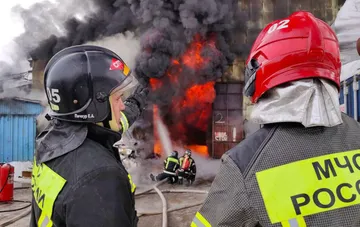
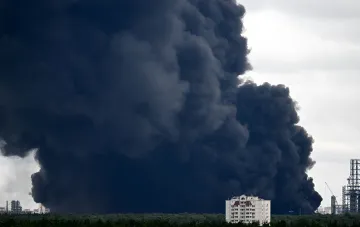
According to the General Staff, a hit was recorded at the TANEKO oil refinery in Nizhnekamsk, after which a fire broke out at the facility. The enterprise is one of the largest in Russia: its design capacity is up to 16 million tons of oil raw materials per year. The plant produces a wide range of petroleum products, including motor fuels, and, as emphasized by the Ukrainian military leadership, supplies fuel to the Russian army. Preliminary information suggests that the Pantsir air defense systems deployed in the area of the object were unable to fully repel the drone attack.
Damage to the Tamanneftegaz Terminal in Kuban
The second target of the attack was the Tamanneftegaz oil terminal in the settlement of Volna in Krasnodar Krai, where a fire also broke out. According to the General Staff, the Taman transshipment complex is one of the key Russian oil terminals in the Black Sea region: its capacity ensures the transshipment of up to 19.9 million tons of oil, petroleum products, and liquefied hydrocarbon gases per year. Damaging the facility strikes at the logistics of export and domestic supply in southern Russia.
Strategic Significance of Long-Range Strikes
The Unmanned Systems Forces explained the logic of the operation: thanks to long-range strikes, Russia will have less fuel, resources, and capabilities to operate its war machine. Thus, attacks on energy complex (TEC) facilities are viewed as a tool for systematically reducing the enemy's fuel and export base, rather than as one-off incidents. Official reports focus on recording fires, damage to technological installations, and reduced production capacity, without providing figures on personnel losses.
Contradictory Data
In several unofficial publications following the attack on Nizhnekamsk, unconfirmed reports emerged of at least 12 deaths. These figures have not been corroborated by either side and are absent from the official statements of the General Staff of the Armed Forces of Ukraine, as well as from verified Russian and international sources. The Ukrainian military leadership, in its reports, limits itself to confirming hits, fires, and assessing equipment damage. In this regard, the editorial does not include specific data on casualties among the personnel in the text, as they remain unverified and contradictory.
Situation at the Front
Parallel to the strikes on rear objects, Ukrainian military forces are recording successes on the line of contact. In particular, in the Kharkiv region, Defense Force units broke through forward and prevented Russian military from raising their flag in one of the settlements in the region. The combination of these events indicates simultaneous pressure on the front and on the deep infrastructure of the enemy.