Denmark is on the brink of an energy crisis caused by unprecedented demand for electricity from data centers. In response to the threat of missing national climate goals, the government is preparing radical restrictions targeting foreign tech giants, primarily American ones. Climate and Energy Minister Samira Nawaz openly stated that priority in resource distribution is now given to transport, industry, and household heating, rather than to 'power-hungry' servers.
Political Blow to American IT Giants
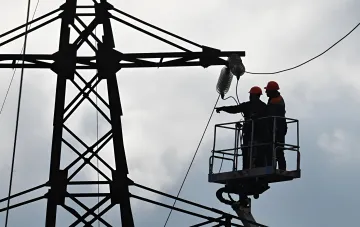
The situation in the Danish energy system has reached a critical point. The country's audit chamber has already criticized the state grid operator Energinet and officials for failing to expand capacity. To rectify the situation, the Danish parliament, with an overwhelming majority (80% of parliamentarians), supported a cross-party agreement to introduce political control over access to the energy grid.
The essence of the new 'emergency plan' is simple and strict: American IT giants will be moved to the very end of the queue for grid connection. Priority will be given to ordinary citizens, hospitals, and production facilities. An exception has been made only for data centers critical to the functioning of healthcare, defense, and emergency services.
Energinet Crisis: 60 GW of Requests vs. 7 GW of Capacity
The background for these political decisions was a deep crisis at the state energy company Energinet. The pace of infrastructure expansion is lagging so far behind schedule that the country's entire 'energy transition' is at risk. Statistics demonstrate the scale of the problem:
- The number of connection requests has grown from 16 in 2020 to 154 in 2025.
- The total requested capacity is 60 GW, whereas the peak capacity of the entire Danish energy system is only 7 GW.
- About one-third of all requests are for the construction of data centers.
Energinet points out that the situation is exacerbated by developers and speculators themselves. They reserve capacity in several places simultaneously and then cancel all options except the most profitable one. Between 2023 and 2025, the number of such cancellations doubled, accounting for 10% of all requests. This has led to legitimate clients, including 'green' energy projects, being stuck in a deadlock.
Cancellation of the 'Live' Queue and New Rules of the Game
As early as February, Energinet was forced to abandon the 'first come, first served' principle. The operator switched to prioritizing projects with a high degree of readiness and those located in zones of energy overproduction. In the spring, the rules were tightened even further: now, projects with ready construction permits and guaranteed financing have priority, especially those willing to limit consumption during peak load hours.
The new bill effectively legalizes these measures, securing the operator's right to make a 'subjective' choice between projects of different types. According to Samira Nawaz, American tech giants are no longer welcome in Denmark. Experts note that Denmark aims to avoid the fate of Ireland, which became Europe's 'server room,' and to keep its digital infrastructure compact.
Reality vs. Forecasts
Despite the harsh rhetoric, the actual picture of consumption may be less dramatic. In December 2025, the Danish Energy Agency significantly adjusted its forecasts. Actual electricity consumption by data centers last year turned out to be 70% lower than expected. Over a five-year horizon, the projected demand will be approximately 60% lower than previous estimates.
According to estimates by the Danish Data Centre Association (DDCA), out of the 15–20 GW declared in the queue, two-thirds of the projects will likely never be realized. The installed capacity of data centers in the country will likely amount to only 1.2 GW. Nevertheless, industry experts insist: to restore order, it is necessary to tighten selection criteria for all sectors of the economy, not just the data center industry.