In November, the Ministry of Digital Transformation of Ukraine, together with the 'Diia.Education' educational platform, launched the annual Digital Literacy Month. The initiative aims to teach citizens how to protect personal data and recognize online fraud. This was reported by RBC-Ukraine, citing a statement from the Ministry of Digital Transformation on Telegram.
Almost Everyone Online, But Far From Everyone Prepared
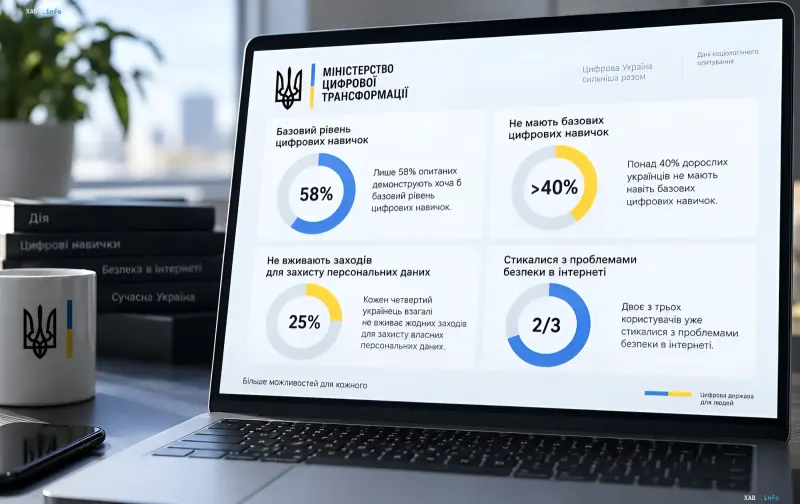
According to a recent study on digital and AI literacy, nearly 92% of Ukraine's adult population uses the internet daily. However, only 58% of respondents demonstrate at least a basic level of digital skills, while over 40% of adult Ukrainians lack even basic digital skills. Thus, mass presence online is not accompanied by adequate user preparation.
Every Fourth Citizen Fails to Protect Personal Data
The situation regarding online security looks even more alarming: every fourth Ukrainian (25%) takes no measures at all to protect their personal data. Furthermore, according to the same poll, two out of three users have already encountered internet security issues. The Ministry of Digital Transformation cites these exact figures as the primary reason for launching the educational campaign.
What Digital Literacy Month Offers
To raise citizen awareness, the 'Diia.Education' portal has opened access to a free educational series titled 'Digital Skills and Online Security,' consisting of seven short episodes. Additionally, the platform plans to launch interactive flashcards with express instructions in case of data leaks or suspicious links. The short-form material is designed so that users can quickly receive practical recommendations in specific situations.
How to Participate and Win a Prize
In addition to useful knowledge, program participants can win valuable prizes. To enter the raffle, participants must fully watch the series and successfully pass the final test by November 30. All holders of verified certificates, including users who completed the training earlier, are automatically entered into the raffle list.
Thus, the campaign combines educational and motivational components: the state is attempting to turn digital vulnerability statistics into an opportunity for practical learning, relying on the 'Diia' platform familiar to citizens.