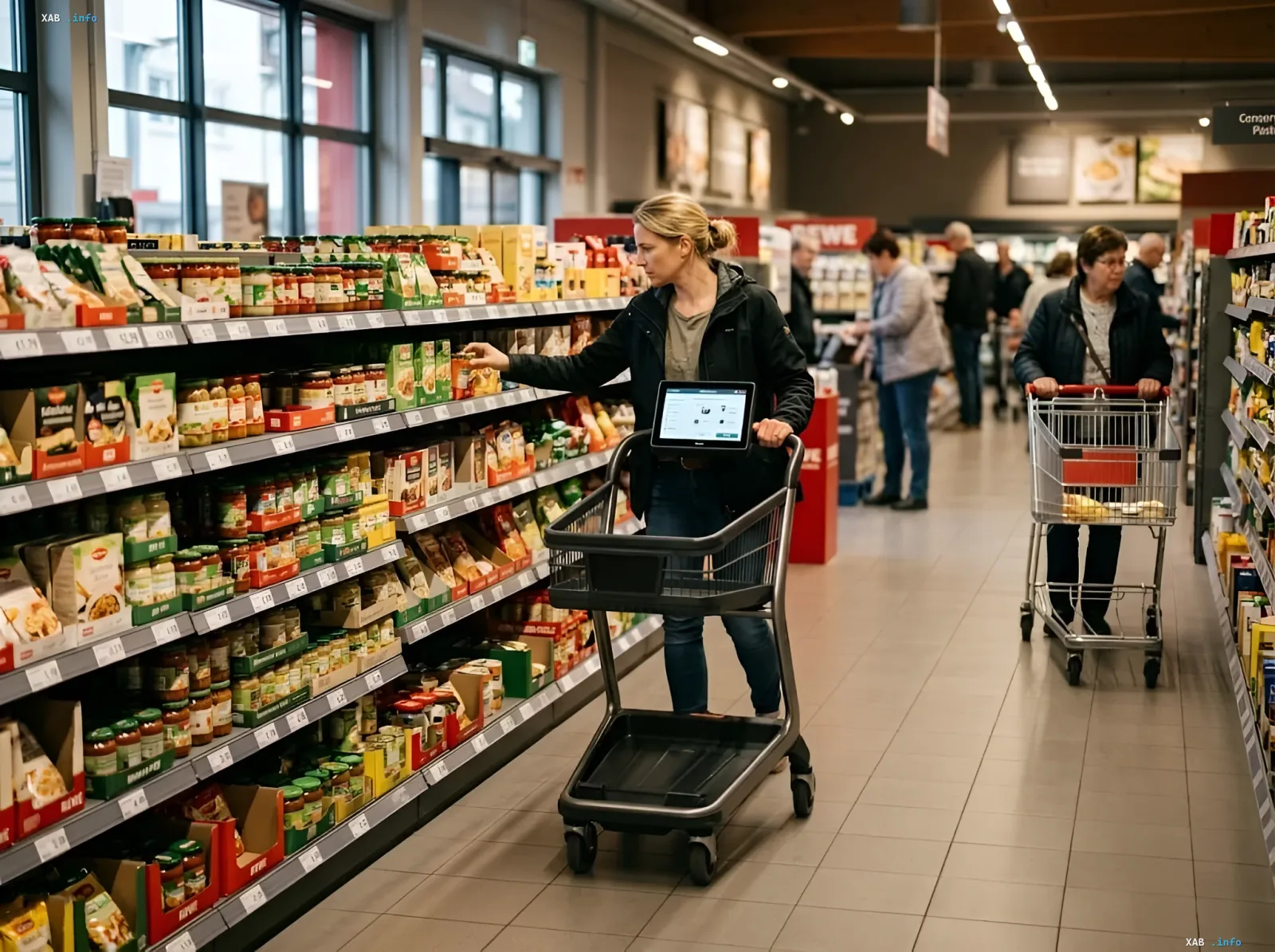
In March 2025, a major German supermarket conducted a large-scale test of innovative "smart" shopping carts equipped with touchscreens. The results, published in the prestigious Journal of Business Research, became a sensation for the retail industry: shoppers using the digital interface spent 32% more money and stayed in the store 23% longer than their counterparts with standard baskets. However, as researchers from Bayes Business School discovered, behind these figures lies a complex psychology of consumption, rather than just the "magic" of technology.
The Engagement Effect: Statistics vs. Intuition
The study covered an impressive sample size of 12,418 shopping sessions. During the month-long experiment, it was established that active users of smart carts (9,422 people in total) not only spent more money but also filled their carts with 25% more items. The screens on the carts offered digital shopping lists, store navigation, and personalized recommendations.
At first glance, the logic seems obvious: the digital interface holds attention, navigation forces shoppers to walk through more aisles, and recommendations stimulate impulse purchases. Indeed, the 23% increase in time spent in the store is a classic indicator of successful retail strategies. The longer a customer stays in the sales floor, the higher the probability that they will see an item they did not originally plan to buy.
Correlation or Causation?
Despite the impressive figures, researchers from Bayes warn against hasty conclusions. The key issue lies in the methodology: this was a descriptive field study, not a randomized experiment. Shoppers chose for themselves whether to use a smart cart or not.
This creates a risk of systematic bias. It is possible that those who chose the high-tech cart originally planned a larger shopping trip or had a higher income level. Differences in spending might have been driven less by the screen's features and more by the initial characteristics of the shoppers themselves and their goals for visiting the store.
The "Super-User" Paradox: Saving Instead of Impulse Spending
One of the most interesting findings was the analysis of the behavior of so-called "super-users" — customers who interacted with the screen more than 20 times per session. Logic would suggest that these people, deeply immersed in the interface, should become the primary victims of marketing tricks. However, statistics showed the opposite.
Super-users did indeed spend more time in the store and took more items, but their total spending did not exceed the average basket size of regular shoppers. According to co-author Youssef Oka, these customers used the interface not as a showcase for purchases, but as a tool for comparing prices and product specifications. For them, the screen became a means of saving and rationalization, rather than a stimulus for spending.
Contradictory Data
There is a clear gap in the interpretation of the study results between retailer expectations and actual data. On one hand, the overall statistics for all smart cart users (32% increase in spending) confirm the hypothesis that technology increases revenue. On the other hand, a detailed cross-section of the most active users refutes this hypothesis, showing that deep interaction with technology can lead to more rational behavior.
Furthermore, the question of the long-term effect remains unclear. The study did not examine how customer behavior changes after several months of using smart carts. Perhaps the "wow" effect and impulse purchases will fade when the technology becomes familiar, and consumers will start using it exclusively as a navigator, just as "super-users" do.
The Future of Retail: Controlled Trials
The study, published in 2025, puts an important point in the discussion about the digitization of trade, but simultaneously opens new questions. To finally answer whether recommendations and cart features specifically increase revenue, controlled trials are necessary. Only they will allow separating the effect of the interface from the differences between the shoppers themselves.
For business, this means that implementing smart carts is not a guarantee of profit growth, but a tool that requires fine-tuning. If the interface works as a navigator and assistant, it will attract loyal customers, but not necessarily increase the average basket size. If, however, it is oriented towards aggressive marketing, it may repel the most active users.