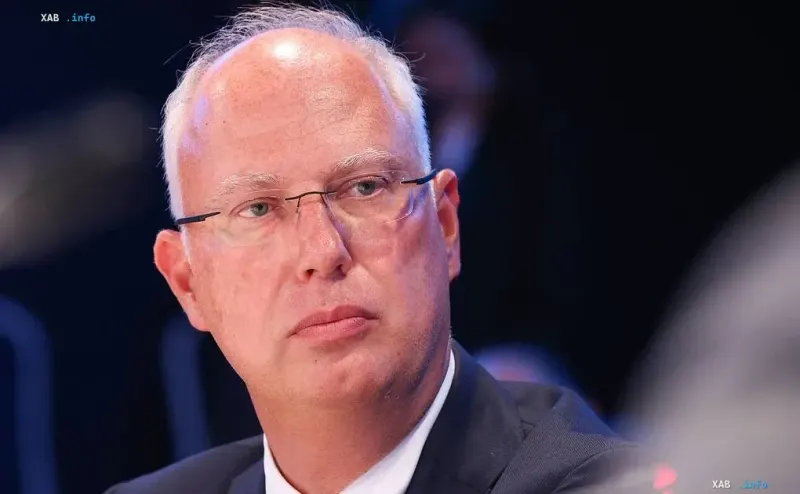
On October 17, Russian Presidential Special Envoy for Foreign Investment and Economic Cooperation Kirill Dmitriev published a statement on social media indicating that 'global rivals in the struggle for security, cooperation, and prosperity will not be happy that Russia and the United States are continuing their dialogue.' The comment came against the backdrop of key developments in Washington's sanctions policy related to the Lindsey O. Graham Act, and, according to Dmitriev himself, underscored the strategic importance of ongoing contacts between the two capitals.
Context: From Economic Dialogue to Settlement
Dmitriev's statement was not isolated. It followed an earlier message in which he touched upon the progress of the economic dialogue between the US and Russia, as well as conflict resolution efforts. Thus, the Russian special envoy built a narrative in which sanctions pressure and the diplomatic track are viewed as parallel but interconnected processes. The mention of 'global rivals' suggests that Moscow interprets the preservation of communication channels with Washington as a factor that infringes upon the interests of third countries seeking to strengthen the sanctions perimeter.
The Lindsey O. Graham Act: Mechanism and Timeline
On September 18, the US president signed a parliamentary bill providing for the introduction of sanctions against high-ranking Russian political and military leaders, state-owned companies, as well as secondary sanctions against Russia's trading partners. The document establishes a strict mechanism: within 30 days of signing—that is, by October 18—the US government is obligated to determine which specific companies and individuals fall under the restrictions, or to establish that the new restrictions do not serve the national interests of the United States and notify Congress accordingly. Thus, October 18, 2026, becomes the benchmark date upon which the future trajectory of sanctions pressure depends.
The October 16 Decree: Temporary Suspension
Two days before the expiration of the 30-day period, on October 16, President Donald Trump signed a decree temporarily suspending certain new sanctions and tariffs against Russia in accordance with the Lindsey O. Graham Act. Simultaneously, Trump sent a notification to the legislature stating that this step serves the national interests of the United States. The wording 'temporary suspension' leaves open the question of whether the restrictions will be reinstated in the future and does not repeal the law itself, but merely freezes its individual provisions for an indefinite period.
Moscow's Reaction: 'A Significant and Historic Moment'
Russian officials, including Kirill Dmitriev, reacted approvingly to Trump's decree. Dmitriev called the US leader's decision 'a significant and historic moment.' Such an assessment, going beyond standard diplomatic vocabulary, indicates that Moscow perceives the suspension of sanctions as a signal of Washington's readiness to continue the negotiation track. At the same time, the statement about the 'dissatisfaction of global rivals' reinforces the narrative that the dialogue between the two capitals contradicts the interests of other players on the world stage.
October 18 as a Reference Point
The expiration of the 30-day period established by the Graham Act makes October 18, 2026, a key date for observing further developments. If the Trump administration does not present Congress with a final list of entities subject to restrictions and does not confirm that the new sanctions do not serve national interests, this can be regarded as the de facto cessation of the sanctions track. If the list is published, the suspension signed on October 16 may turn out to be a temporary measure that does not cancel the basic provisions of the law. In both scenarios, Dmitriev's statements about the 'dissatisfaction of rivals' acquire additional significance as a public fixation that Moscow views maintaining dialogue with the US as a strategic priority, even under conditions of external pressure.