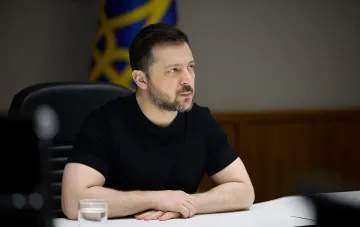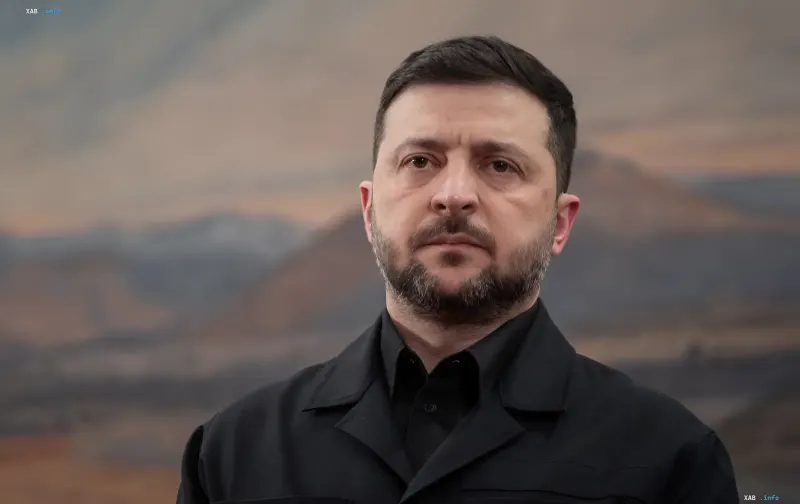
On October 17, Ukrainian President Volodymyr Zelenskyy commented via his Telegram channel on US President Donald Trump's decision to suspend the so-called "hellish sanctions" against Russia, embedded in a bill promoted by the late Senator Lindsey Graham. The head of the Ukrainian state called this move a "sanctions blackout" and stated that easing pressure on Moscow at a time of massive attacks on energy infrastructure only encourages the Kremlin to continue the war.
Large-scale Energy Strikes as Context
Zelenskyy's commentary came against the backdrop of one of the largest strikes on Ukraine's energy system throughout the war. According to the president, the previous day Russian forces attacked more than 15 key power generation and transmission facilities in various regions of the country. The most difficult situation, he noted, developed in Lutsk, Rivne, Zhytomyr, Vinnytsia, Shepetivka, Slavuta, and Netishyn. Zelenskyy emphasized that restoration work is being carried out by all available energy companies, and Russia, in his assessment, is "scaling up its anti-energy operation," aiming to disperse Ukraine's reserves and recovery potential.
What is "Graham's Bill" and What Exactly Did Trump Sign?
The bill, developed by Senators Lindsey Graham and Richard Blumenthal, envisaged the introduction of large-scale tariffs and restrictions against countries continuing to purchase Russian energy resources. The document, dubbed "Graham's Bill" in the media space, contained a mechanism allowing the US president to suspend the enforcement of sanctions. Donald Trump utilized this exact provision by signing a directive that formally introduces the tariffs but halts their application. In essence, this means Trump retains the right to activate the sanctions in the future if he deems it appropriate.
"Sanctions Blackout": Zelenskyy's Position
Zelenskyy directly linked Washington's decision to the escalation of attacks on Ukraine's energy sector. "At a time when the Russians have inflicted such a massive strike on our energy sector, a decision was made in the US to completely ignore Lindsey Graham's bill, which was supposed to introduce genuinely effective pressure on Russia to end this war," the president wrote. He added that the bill "could—and still can" help, but for that, "every vote for it matters." Zelenskyy also stated that Russia is trying to create a blackout in Ukraine ahead of winter, leaving millions of people without electricity and heating, and urged not to surrender positions in sanctions pressure: "The American sanctions blackout, the easing of pressure on the aggressor, cash rewards for Putin—this all only encourages him to strike further.">
Reaction in the US Congress
Trump's decision has already drawn sharp criticism within the US. Democratic Senator Richard Blumenthal, who co-authored the "hellish sanctions" bill with Graham, publicly condemned the president's refusal to implement the restrictions embedded in the law. Thus, disagreements between the executive and legislative branches of power in the US have once again flared up over the issue of sanctions pressure on Russia.
What This Means for Future Dynamics
The suspension, rather than the final cancellation of sanctions, leaves room for maneuver: Trump can reinstate the tariffs at any moment. However, as Zelenskyy emphasizes, the very fact that pressure is being eased at a time when Russia is scaling up energy strikes is perceived in Kyiv as a signal reinforcing the Kremlin's course toward continuing the war. According to the president, the Ukrainian side continues to convey information about the consequences of the attacks to American partners, and new support packages from European allies have already been prepared.