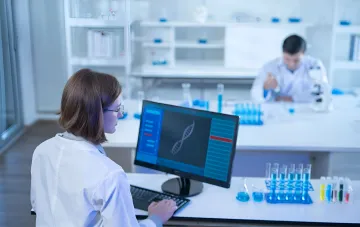
Genetics has long moved beyond diagnosing rare hereditary diseases: today, tests can be used to assess cancer risks, identify predispositions to chronic conditions, and in some cases — insert healthy genes to correct specific disorders. In an interview with RBC-Ukraine, geneticist Dmytro Mykytenko explained how much genes determine one's health, what exactly a genetic passport can "tell" about a person, and whether the trendy term "biohacking" should be feared. Below are the key points of the conversation, presented in a long-read format.
What Is Already Available to the Ordinary Person
According to the specialist, just 10–15 years ago genetics could at best detect a hereditary disease, but there was nothing to be done about it except adjust metabolism. The picture is different today: the risk of having a child with a genetic disease can be assessed even at the pregnancy planning stage, and with in vitro fertilization (IVF) scientists have learned to select embryos in order to have a healthy child. After birth, a number of genetic diseases are also detected, though not all of them yet. Modern medicine, he says, can already insert a healthy gene to correct certain diseases — this is how spinal muscular atrophy and some forms of retinal dystrophy are treated. That is why today there is mass access to general tests for the risk of having a child with a hereditary disease, cancer risk assessments, and so-called Wellness-class genetic passports.
What a "Genetic Passport" Will Show
It is important to understand that a change in a single gene due to a minor disruption may not lead to disease. The problematic situation is when the activity of several genes in one block is reduced: this is not necessarily a disease, but it can affect quality of life. Knowing such features, one can assess the risk of mental disorders, atherosclerosis, and cardiovascular diseases. At the same time, the geneticist emphasizes, there is a way to influence the magnitude of this risk — and it is precisely this that people are now trying to call biohacking. However, the code cannot be changed: one can only change habits, diet, and place of residence to lower the risk to the general population level.
Biohacking: Marketing or Reality
The term "biohacking," according to Mykytenko's assessment, partly creates the impression that we are changing the rules of our own body's operation — but that is not the case. It is precisely about predisposition: if, for example, a mother wore glasses, a person has a predisposition to vision impairment, and understanding this can become motivation for prevention. Genetics does not determine everything: it shows where the weak spot is, but what to do with that information next is the person's own choice. Therefore, the formulation "I can't do anything about it because that's my genetics" does not work: genetics is no excuse.
There Is No Single "Gene for All Troubles"
There is no specific gene to which one can "blame" all one's troubles. There are individual genetic diseases accompanied by obesity, but an ordinary, conditionally healthy person gains weight not because they "sniffed a cake" but because of an imbalance between calorie intake and expenditure. Knowledge of a predisposition to atherosclerosis or obesity should push one toward specific decisions to preserve health. The same applies to cancer predisposition: if it is known where it may arise and what the risk is, prevention can be built. With disrupted circadian sleep rhythms, a neurologist can more easily select a correction based on the results of such tests to balance sleep. This is not biohacking in the sense of genetically rewriting the body's instructions, but adjusting to one's own features in order to reduce risks.
Should One Fear Extra Tests
Wellness-class genetic studies are preventive tests that do not make a diagnosis but only identify predispositions. If these are misinterpreted, they can cause unnecessary anxiety. In oncology, a person must be prepared to hear the result, because excessive anxiety itself can be harmful; if there is no such understanding, the test should not be done. The geneticist himself, he says, came to this only at the age of 42, and some people are not ready even at 50. (Editor's note: in the provided interview text, the expert's final remark is cut off, so the concluding example is not included in the article in order not to distort the source.)