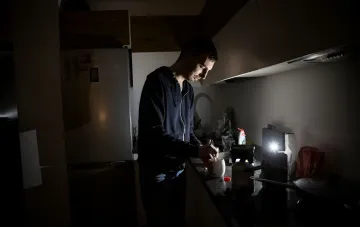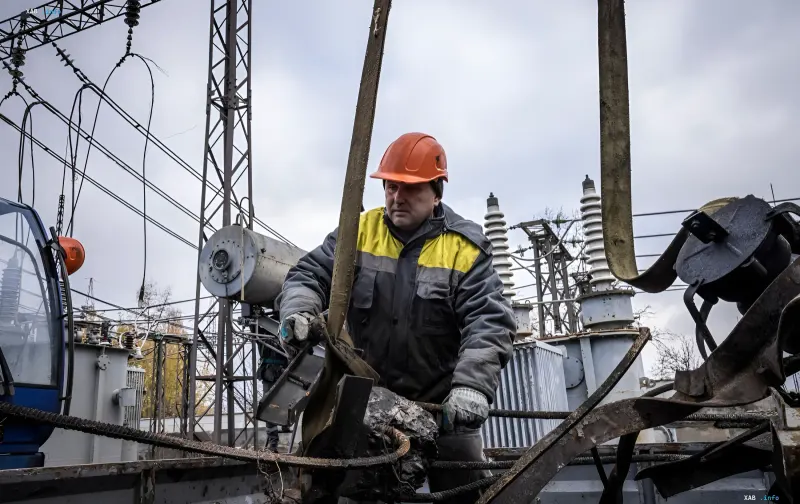
In the early hours of October 30, Russian forces carried out a repeated strike on the Dnipro railway station, after which the city was once again left without electricity in the morning. This was reported by Dnipro Mayor Boris Filatov, Head of the Dnipropetrovsk Oblast Military Administration Oleksandr Hanzha, and CEO of Ukrzaliznytsia Oleksandr Pertsovsky, whose statements were cited by RBC-Ukraine. According to Pertsovsky, the night in the city was 'extraordinarily difficult': in addition to the repeated strike on the station, the region lost electricity, and life support systems are operating in emergency mode.
Repeated Strike on Station Less Than a Day After Tragedy
The strike on the Dnipro railway station occurred less than 24 hours after a Russian jet drone hit the platform where passenger train No. 866 'Dnipro — Zaporizhzhia' was standing at around 11:00 on October 29. Prior to that attack, a high alert level was declared in the city, yet many people remained on the platform at the moment of impact. Oleksandr Pertsovsky confirmed the fact of the repeated attack on the night of October 30, but did not provide details on the consequences of the second strike. Passengers waiting for evacuation, according to him, are eager to leave the station as quickly as possible; the management of Ukrzaliznytsia promises to evacuate everyone, but only when it is safe, and in some cases people have to be returned to shelters.
Death Toll from October 29 Attack Rises to 15
A 40-year-old man died in the hospital, where doctors had been fighting for his life until the very end. Thus, the death toll from the jet drone hitting the station platform has reached 15 people. On the same day, Russia launched a series of strikes on civilian objects in Dnipro, Chernihiv, Kremenchuk, and Zaporizhzhia; children are among the dead. On the evening of October 29, local residents shared videos showing entire neighborhoods of Dnipro plunging into darkness within seconds after a powerful flash.
Over 350,000 Subscribers Without Power: Energy System Fails to Cope
On the evening of October 29, following the new strike, more than 350,000 subscribers in Dnipro and surrounding settlements were left without power supply. Energy workers worked all night and partially restored power, but by the morning of October 30, the city was blacked out again. 'Energy workers worked all night, but the system cannot cope,' Mayor Boris Filatov explained. According to him, for those whose electricity has returned, the oblast military administration recommends turning on powerful household appliances sequentially so as not to overload emergency lines.
City on Generators: Transport, Water, and Calls to Residents
Amid the repeated blackout, only buses are running in Dnipro: the metro, trams, and trolleybuses are out of service. Water supply and sewerage systems are operating on generators. Filatov urged citizens to stay at home if possible and keep a supply of water for at least one to two days. The mayor also appealed to residents to minimize the load on the power grid during hours when power is partially restored.
'Energy Truce' in Question: 76 Attacks in a Week
Against the backdrop of ongoing infrastructure strikes, the issue of the so-called 'energy truce' has been raised again. According to available data, just a week after its announcement, Russian forces attacked Ukraine's energy facilities 76 times. The targeted nature of the strikes on energy infrastructure, according to Ukrainian authorities, indicates a systematic strategy to disable critical life-support systems in cities, including Dnipro.