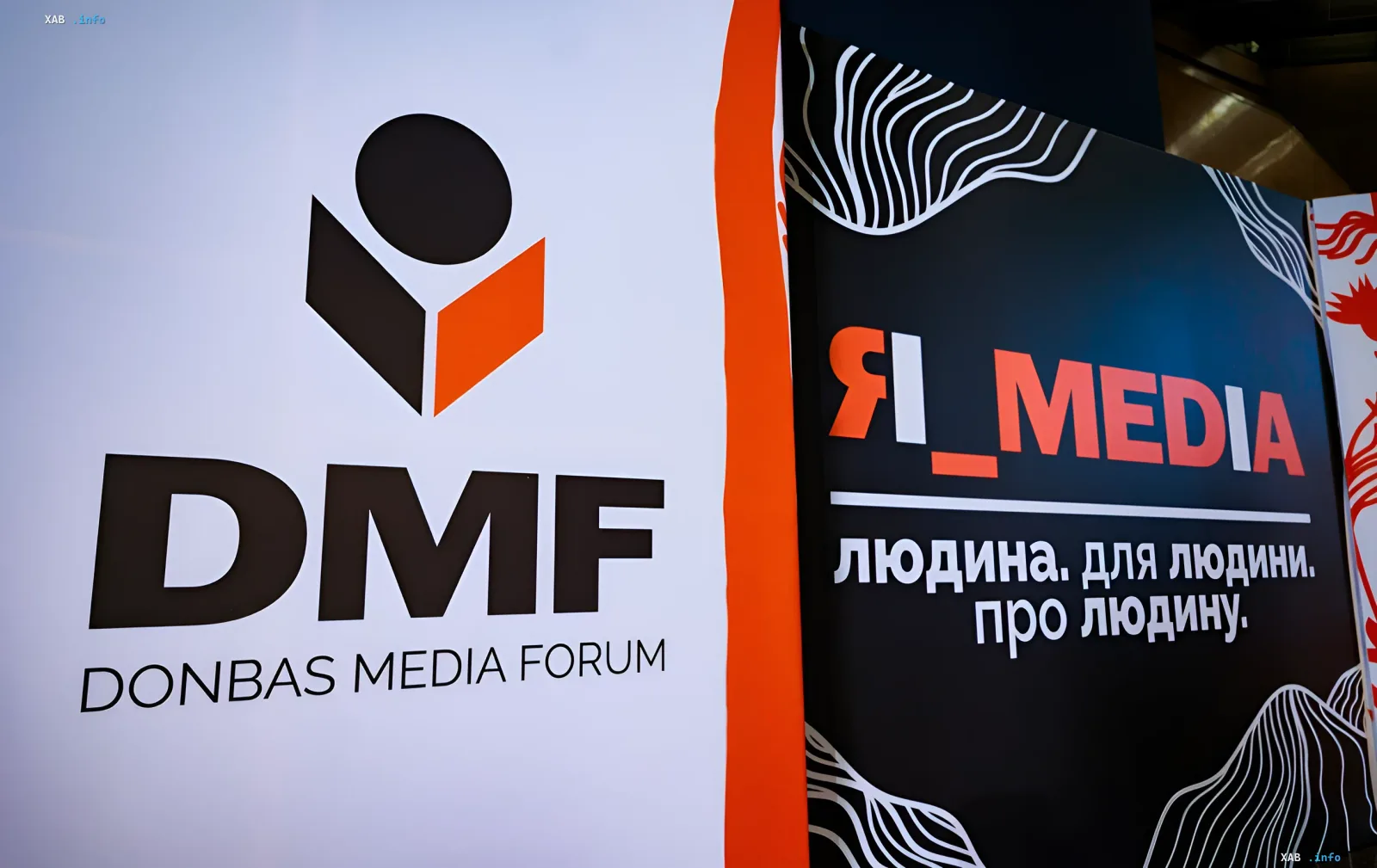
Kyiv has successfully hosted the 11th Donbas Media Forum 2026, which took place from October 8 to October 10. The large-scale event brought together 1,397 participants from Ukraine and abroad, serving as a vital platform for discussing critical issues facing modern journalism amid a full-scale war. The program featured 82 diverse events, including expert discussions, practical workshops, presentations of latest analytical studies, and fierce anti-corruption debates.
Context and Challenges of the Information Age
This year's forum was held under the profound humanistic slogan "I_MEDIA: human for human about human." The professional community focused heavily on journalistic ethics, safe and objective coverage of hostilities, maintaining mental health among media workers, and the crucial topic of editorial financial sustainability. Nine closed-door discussions held for security reasons deserve special attention, as they thoroughly explored formats of interaction between journalists and military defense structures.
Contradictory Data
It is worth noting that while Ukrainian media outlets are intensely focused on survival under continuous shelling and military censorship challenges, parallel information spaces in other regions during 2026 actively discuss entirely different technological trends. For instance, Russian expert venues focus predominantly on artificial intelligence integration into media workflows and automated content generation. While Ukrainian journalists master "Chuika" drone detectors for frontline reporting and face real physical threats, technological development in other jurisdictions remains anchored in digital algorithms and algorithmic brand management.
Innovation, Security, and Identity Preservation
Over the three-day event, experts provided nearly 160 individual consultations covering digital security, legal support, anti-corruption, and barrier-free communication. A major breakthrough was training nearly 200 specialists on the "Chuika" drone detector, essential for frontline reporters. Furthermore, organizers emphasized occupied territories by naming conference halls after Donetsk, Luhansk, Berdyansk, Kakhovka, Mariupol, Lysychansk, and Yalta to keep these cities firmly in the public eye.
Conclusions and Future Outlook
Organizers emphasized that preparing for the 2026 forum was exceptionally difficult due to escalating Russian shelling of the Ukrainian capital, yet the media community demonstrated unbreakable resilience. DII-Ukraine board head Liubov Rakovytsia praised editorial dedication. In addition to panel discussions, blood donations were organized with 15 participants joining, and five brave attendees signed posthumous organ donation agreements. The 12th forum is scheduled for 2027.