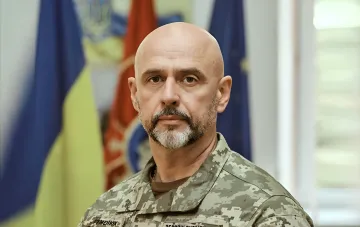
The appointment of Mykhailo Drapatyi as Commander-in-Chief of the Armed Forces of Ukraine came at a moment when the army was simultaneously holding back Russian pressure in Donetsk Oblast, responding to threats on other sections of the front, and preparing for a new winter under fire. According to RBC-Ukraine sources, no large-scale personnel "revolution" followed the change of commander-in-chief: Drapatyi did not mass-fire the commanders and staff officers who had worked under Oleksandr Syrskyi. However, targeted changes in the senior command have already begun, and the very approach to personnel decisions and troop management is undergoing a noticeable transformation.
Targeted reshuffles instead of a purge
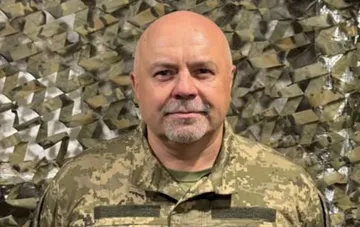
Among the new commander-in-chief's first personnel decisions was the appointment of Artem Martynenko, one of the architects of the DELTA combat management system, as Deputy Commander-in-Chief of the Ukrainian Armed Forces for Digital Transformation and Innovation. Brigadier General Serhiy Sobko became another acting deputy commander-in-chief. The publication's sources stress that the key difference in the new course is not the number of reshuffles but the selection mechanism itself: Drapatyi has begun more actively promoting officers from lower rungs of the military hierarchy to senior management positions, expanding the so-called "personnel elevator." Some interlocutors in the Ukrainian Armed Forces see this as a plus — strong specialists can be moved to responsible positions faster, without a rigid tie to relevant education, rank, or formal length of service. Others point to the risks: a traditional military career involves gradually passing through levels of command, at each of which an officer masters the management of ever-larger formations and work within the military command system.
A change of style: from "personal control" to delegation
RBC-Ukraine's interlocutors draw a contrast between two management models. Under Syrskyi, a significant part of the direct work with the front was concentrated on the commander-in-chief himself: he constantly traveled to the various axes, visited units, personally stepped into problematic situations, and "plugged the gaps" at the low level. Chief of the General Staff Valerii Hnatov, by contrast, was occupied mainly with the international track — meetings, negotiations, and formats of interaction with partners. According to a source, this model gave Syrskyi a detailed understanding of the situation but took his attention away from strategic issues, including the systemic problem of the assault regiments. "He had a war plan, but to a large extent it remained in his head," the interlocutor notes. Drapatyi, by the same accounts, also travels to the front and observes the situation, but to a greater extent gives commanders on the ground the opportunity to independently demonstrate results. The source assumes that such an approach frees up time for systemic tasks: management reform, the future of the assault forces, and shaping his own strategy for conducting the war. At the same time, the same interlocutor stresses: "To understand what kind of commander-in-chief Drapatyi will be and to assess his first steps, you need at least three months."
The Pokrovsk-Dobropillia axis: Russia intensifies pressure
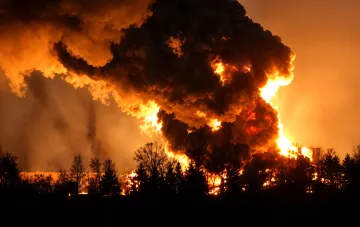
The situation on the front remains uneven. On some sections, Ukrainian forces have managed to stabilize the position or even advance; on others, Russia is intensifying pressure and seeking new opportunities for an offensive. The key one remains the Pokrovsk-Dobropillia axis in Donetsk Oblast, where, according to RBC-Ukraine, the enemy is again stepping up its activity. In parallel, Russia is building up its means for strikes on the Ukrainian rear — and it is precisely the possible new campaign of such strikes, rather than frontal battles, that some of the publication's interlocutors call the main test of the coming months. Preparing for winter under fire on the energy infrastructure and rear facilities becomes a separate systemic challenge for the command.
Contradictory data
Ukrainian sources (RBC-Ukraine) characterize Drapatyi's first weeks in the post as a period of targeted rather than mass personnel changes and a shift in the management paradigm. Russian state and state-aligned outlets (including materials attributed to the "SVO" channel on news.mail.ru) build a fundamentally different picture: it is claimed that the Ukrainian Armed Forces are "fleeing," that the failures near Sloviansk are accompanied by the shooting of their own fighters, and that Drapatyi himself "has proven the justification of the Russian Federation's goals" (a statement attributed to Haluzin). These versions are not confirmed by either Ukrainian or Western sources and contain no specific verifiable details. The difference in narratives reflects the information struggle between the sides, not an objective assessment of personnel decisions in the Ukrainian Armed Forces. The fact of Drapatyi's appointment and his rank (major general at the time of appointment) have been confirmed by both Ukrainian and international media, including RFI.
What's next: three months to assess and winter as the main test
On the totality of the data, the new commander-in-chief faces three interrelated tasks: complete the formation of his own management model (including digitization through DELTA and the redistribution of powers between the staff and field commanders), resolve the systemic issue with the assault units, and prepare the army for the winter cycle, in which Russia will likely continue its campaign of strikes on the rear. RBC-Ukraine's sources agree on one point: early assessments of Drapatyi's first decisions are premature, and the real test of his approach will begin with the approach of the cold and a possible new wave of pressure on the Pokrovsk-Dobropillia axis.