
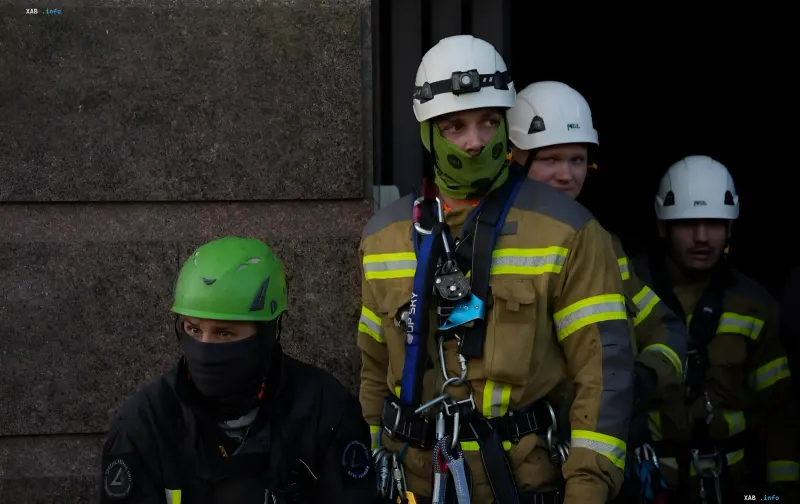
On the evening of October 2, 2026, the Kyiv region and the capital of Ukraine suffered another massive enemy drone attack. As a result of the strike on Hostomel, four people were injured, including an eight-year-old girl who received shrapnel wounds. According to official data from the Kyiv Regional Military Administration, fatalities were avoided in the capital's suburb, but infrastructure destruction proved extensive.
Consequences of the Hostomel strike and condition of the victims
The most severe injuries during the Hostomel attack were sustained by a 66-year-old local resident, whose body burns and severe closed abdominal trauma were recorded by medics; the victim was urgently hospitalized to the nearest medical facility. In addition, an eight-year-old girl received shrapnel wounds, and doctors are currently fighting for her life and health. It later became known about two more victims with lighter injuries—a man was diagnosed with head burns, while a woman suffered a knee joint contusion and severe acute stress reaction. They received assistance on the spot without the need for hospitalization.
Facility fires and attacks on Kyiv's critical infrastructure
Parallel to the incident in the suburb, rescue services extinguished massive fires at warehouse and production facilities that ignited from falling drone debris. On the same day, the capital itself came under attack. On the afternoon of October 2, the invaders once again attacked the Southern Bridge in Kyiv, which was already closed following a series of previous strikes. The full-scale escalation also affected the city's transport system, causing severe logistical difficulties.
Contradictory data
It is worth noting that official reports and monitoring channels show certain discrepancies regarding the exact number of UAVs involved in the night raids and the scale of bridge structure destruction. While regional authorities report the localization of consequences from targeted strikes on warehouses, independent city publics report deeper damage to the support structures of the Southern and Podilskyi bridges, which led to an unprecedented transport collapse and emergency redirection of the capital's bus and trolleybus routes.
Transport collapse and consequences for the capital
Due to regular closures of bridges across the Dnieper, Kyiv faced a severe transport crisis. City authorities were forced to radically change public transport routes, including buses and trolleybuses, due to the closure of the Podilskyi Bridge and restrictions on the subway. The situation is aggravated by nighttime strikes on residential areas, particularly in the Darnytskyi district, where an attack on a multi-story building resulted in casualties and destruction requiring long-term restoration.