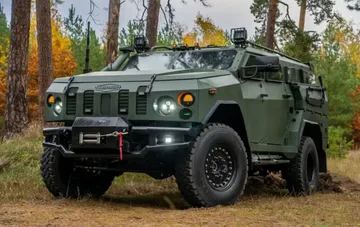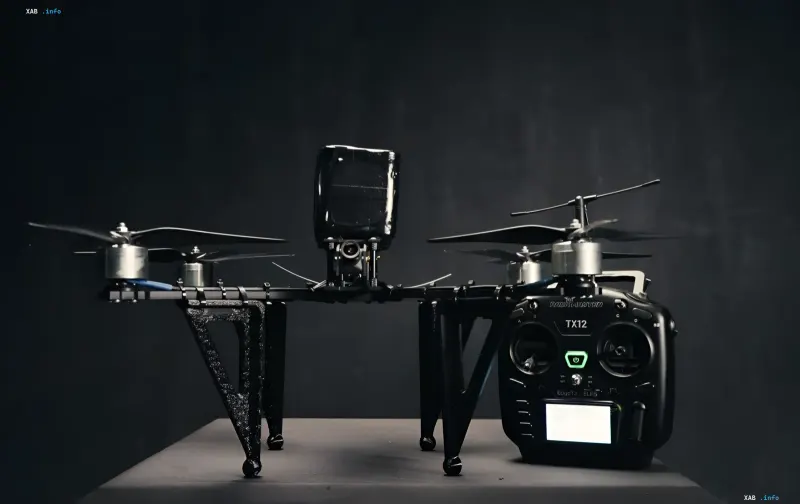
In October 2026, the VORON-10 FPV drone from the British-Ukrainian defense company Trypillian passed codification by the Ministry of Defense of Ukraine and received a NATO Stock Number (NSN). For the development team, this is an important result of months of work on the product. However, as the company’s Commercial Director Victoria Kulchytska explains in an op-ed for RBC-Ukraine, this news leaves out a question that rarely makes headlines: what is needed for a codified product to reach units regularly and in the necessary volume.
What codification provides and what it does not guarantee
Codification assigns the product a NATO Stock Number (NSN), which allows for the unambiguous identification of the supply item in the accounting and support system. Behind this number is a specific product with defined characteristics and documentation. For a manufacturer, this is a necessary stage to enter systematic government defense procurement; for the customer, it is an opportunity to work with an identified supply item.
At the same time, codification does not create an order, does not provide the manufacturer with funds to purchase components, and does not set a delivery schedule. A procurement decision requires separate grounds: the military must need this type of equipment, funding must be allocated for the purchase, and the supplier must meet the conditions of the relevant procedure. In the Ministry of Defense’s clarification regarding contracting through the Defense Procurement Agency (DOT), codification is listed alongside the existence of funded demand and supplier verification. Thus, receiving an NSN marks the completion of an important stage, but it is not a promise of a contract.
Full cycle: from military needs to the next batch
Product development at Trypillian starts with communication with the military. At this stage, the team determines what task the units are performing, what they lack in existing solutions, and in what conditions the product will work. Based on this data, a prototype is created and undergoes internal testing. The next step is handing over samples to the military for testing in real-world conditions; such batches are provided free of charge. Feedback reveals how well engineering solutions meet user needs and what needs to be refined before preparing documentation for codification.
After codification, the product continues to evolve based on military feedback. The Ministry of Defense distinguishes between significant structural changes that require re-codification and improvements where the stock number can be retained after testing and documenting changes. This is why the path of a drone to the units should be viewed as a continuous cycle: from the needs of the military through testing and codification to the production of the next batch, taking into account the experience of previous use.
Why a manufacturer needs a planning horizon
To purchase components on time and allocate production resources, a company needs a predictable planning horizon. If decisions about subsequent orders are delayed, a break in contracting can negatively affect the supply to units, as it is impossible to restore the production cycle instantly. Between a product's readiness for procurement and the company's ability to fulfill a contract on time, there is work on which the supply to troops directly depends. For Trypillian, interaction with units at all stages—from prototype to serial production—allows for early identification of discrepancies between engineering solutions and real user needs, reducing refinement time and lowering the risk of supply delays.