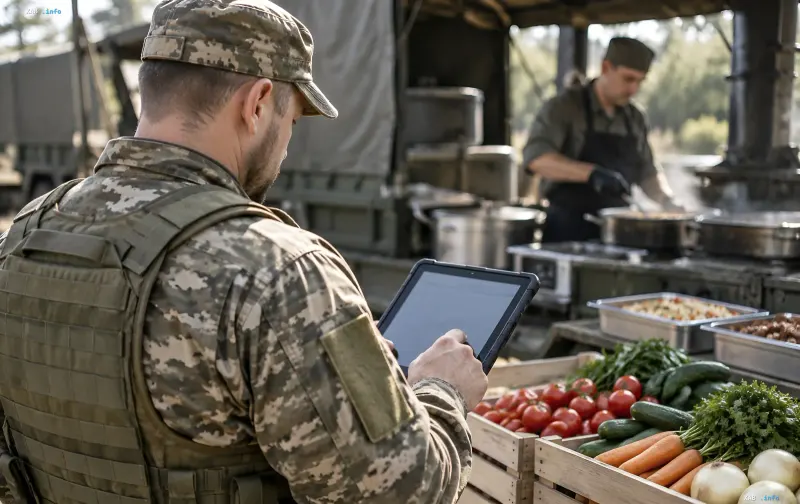
Feeding military personnel of the Armed Forces of Ukraine and the State Special Transport Service (SSTS) is a matter that affects hundreds of thousands of people and requires a well-structured logistics chain from the warehouse to the trench. According to data from the Ministry of Defense of Ukraine, released by the RBC-Ukraine publication, the army's food supply system underwent a significant digital transformation in 2026: since November, all procurement and supply documents have been processed through a unified electronic system, and the product catalog has been updated with information on caloric value and nutrient composition. At the same time, the feeding format remains differentiated — from four hot meals a day in the rear to daily field rations on the front line.
Who is Responsible for Army Food
All servicemen of the AFU and SSTS are entitled to food at the state's expense, regardless of where they are serving — on the front line or in the rear. Food, rations, and food service property are purchased centrally by the Defense Procurement Agency (DOT). This agency announces tenders, concludes contracts with suppliers, and monitors contract performance and logistics. The General Staff of the AFU and the SSTS formulate the demand for food; based on this, the Ministry of Defense determines the list of necessary products and rations, as well as prices within the approved budget. Directly in the military unit, food organization is managed by the unit commander: they determine the supply format considering combat missions and service conditions, while the head of the food service draws up the menu, calculates product allowances, and places the order. On the front line, where rations are used, the unit commander submits a request for the required quantity.
Three Feeding Formats: From Canteen to Ration
The basis of the servicemen's diet is hot food, which, whenever possible, is prepared from chilled meat, fresh seasonal vegetables, and fruits. Depending on service conditions, personnel receive three or four meals a day. Four meals a day — breakfast, second breakfast, lunch, and dinner — are provided for flight crews, Naval personnel, and military lyceum students. This format is most often implemented in permanent deployment locations, training centers, military universities, and base locations near the front line, where it is possible to organize canteens and ensure regular food delivery. If security conditions are more difficult, foods with a longer shelf life — frozen meat, canned goods, cookies — are used for preparation. In such cases, units organize field kitchens where the situation permits. Menus are created considering the location of the combat mission, the basic ration, and the available assortment and quantity of products. If it is impossible to organize hot food, servicemen are supplied with rations designed for a full day's nutrition, containing three meals: breakfast, lunch, and dinner.
Two Types of Rations and a New Alternative Set
The AFU uses two types of rations: the daily field ration and the reinforced daily field ration. In October 2026, a new alternative ration was approved, which has a higher caloric value and is equipped with special heaters and water purification agents. Such a set is intended for certain categories of AFU and SSTS servicemen directly involved in combat operations on the front line. The introduction of the third ration option allows for more flexibility in considering the specifics of tasks performed by different units in conditions of limited access to hot food.
360-Item Catalog: Calories, Halal, and Vegan Options
Military feeding is organized through the universal AFU food catalog, which contains 360 items. Since June 2026, all catalog items have had updated descriptions: caloric information has been added to every product, and data on protein and fat content per 100 grams has been added to a portion of goods, including meat, fish, and dairy products. The assortment considers the diverse needs of servicemen: the catalog includes products permitted by Halal and Kosher laws, as well as items for those who do not consume animal-based food for ethical, religious, environmental, or other reasons. The catalog is formed by the Logistics Forces Command and approved by the Ministry of Defense. Procurement for 2027 has already been announced by the DOT based on the updated requirements.
DOT-Chain Food: Complete Digital Transition from November 2026
Food orders for military units are processed through the DOT-Chain Food digital system, which covers the entire process of food supply — from application submission to delivery confirmation, invoicing, and act signing. Since November 2026, all documents regarding food supply for the AFU and SSTS must be processed in this system. Previously, the document flow was paper-based: applications were sent to suppliers via email, and invoices, acts, and complaints were transferred physically. The transition to a unified digital platform reduces order processing times, minimizes errors, and allows for real-time tracking of food movement from the supplier to the unit. Suppliers wishing to participate in supplying the army join procurements through tenders announced by the DOT and operate within the approved catalog and budget limits.