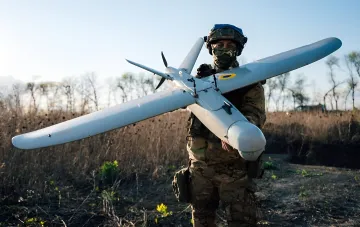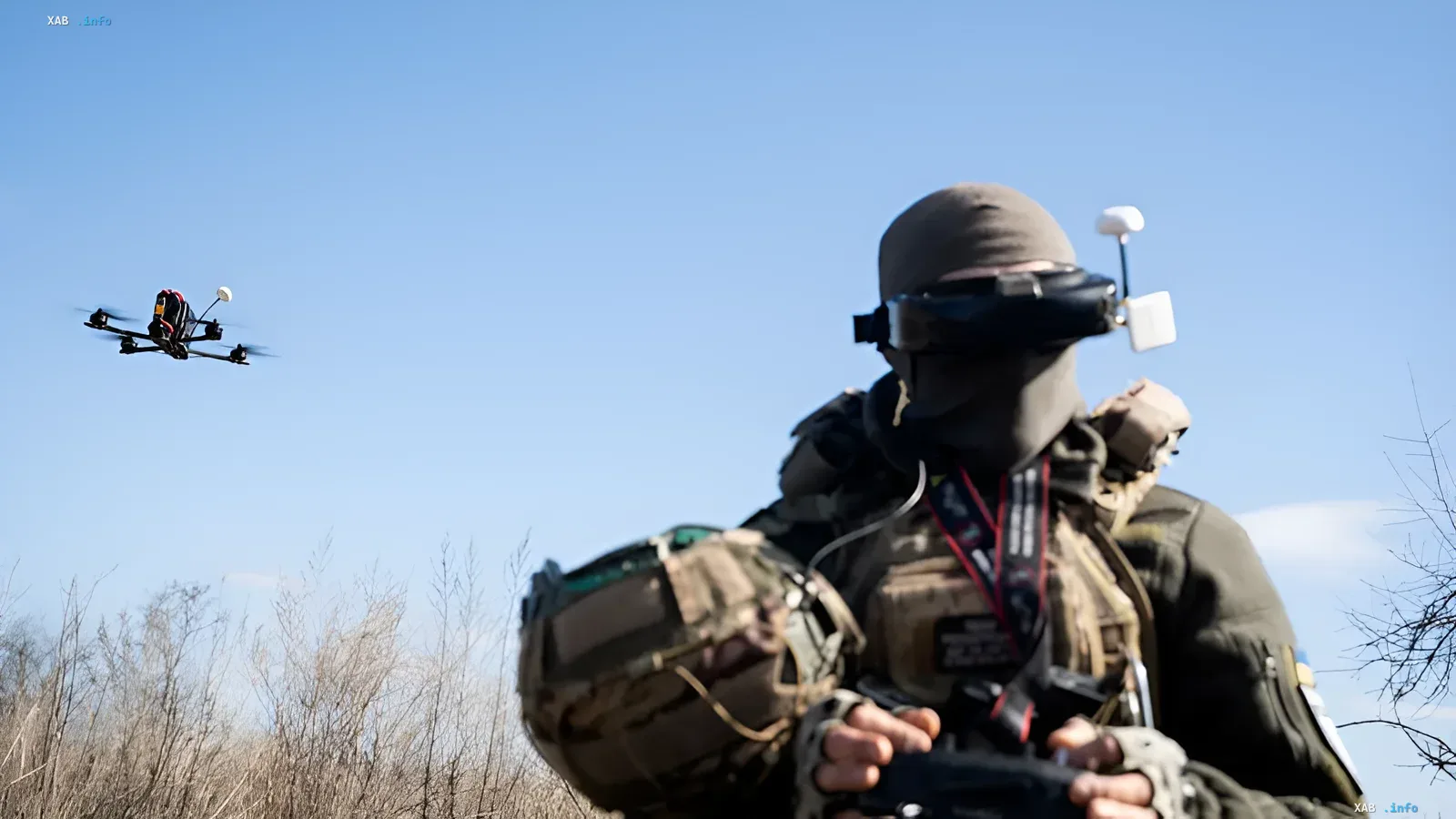
In the fifth year of the war in Ukraine, the nature of combat has undergone fundamental changes. If the front used to be a clear line of contact, today the center of gravity has shifted to the sky. Unmanned aerial vehicles (UAVs) have become the primary tool for both Ukrainian and Russian military forces, transforming from a supplementary aid into the cornerstone of strategy.
Total Drone Warfare
According to official data from the Ministry of Defense of Ukraine, drones are now used to attack approximately 90% of all targets. The scope of application for these machines has gone far beyond the immediate front line. Strikes are delivered at long and medium ranges, hitting objects located hundreds of kilometers from the battlefield.
The spectrum of targets subject to attacks covers virtually all types of military equipment and infrastructure. The list of hits includes:
- Air defense systems (ADS);
- Electronic warfare (EW) systems;
- Other unmanned systems and ground robots;
- Transport vehicles and armored vehicles;
- Command and control centers.
Sharp Increase in Strike Intensity
Statistics confirm the rapid escalation of drone usage. Since the beginning of 2026, the number of attacks on Russian targets has almost doubled every month. The Ministry of Defense of Ukraine provided specific figures: in January, Ukrainian forces carried out 105,800 successful strikes, and by June, this figure rose to 200,218. Such a growth rate indicates a transition to an industrial scale of unmanned technology application.
The consequences of these strikes for the Russian army have been catastrophic. According to the Russian Ministry of Defense, since the beginning of 2026, 193,500 Russian servicemen have been killed or seriously wounded as a result of attacks by Ukrainian drones.
Billions Invested in FPV
Behind this growth stands colossal financing. In the first half of 2026, the Defense Procurement Agency of Ukraine (DOT) concluded contracts for the supply of UAVs totaling 333.6 billion hryvnias (about $7.5 billion). This is twice as much as was allocated for the same period last year.
The largest share of these purchases consisted of First Person View (FPV) drones. It is these compact and maneuverable devices that have become the "workhorse" of the Ukrainian army, ensuring high precision in hitting targets.
Political Context and Personnel Changes
Results in the field of drones became one of the key achievements, but also the backdrop for political upheavals. On July 15, after six months in office, the Minister of Defense of Ukraine, Mykhailo Fedorov, resigned. His resignation was accompanied by scandals, however, his contribution to the development of the drone industry remains a fact.
One of Fedorov's main priorities was precisely the expansion of the use of unmanned aerial vehicles. Under him, the Ministry of Defense initiated a "logistical blockade" program aimed at disrupting Russian supply routes, including in Crimea. Also, with his support, the "Drone Line" project was implemented, which laid the foundation for the creation of Unmanned Systems Forces and large-scale equipment purchases.