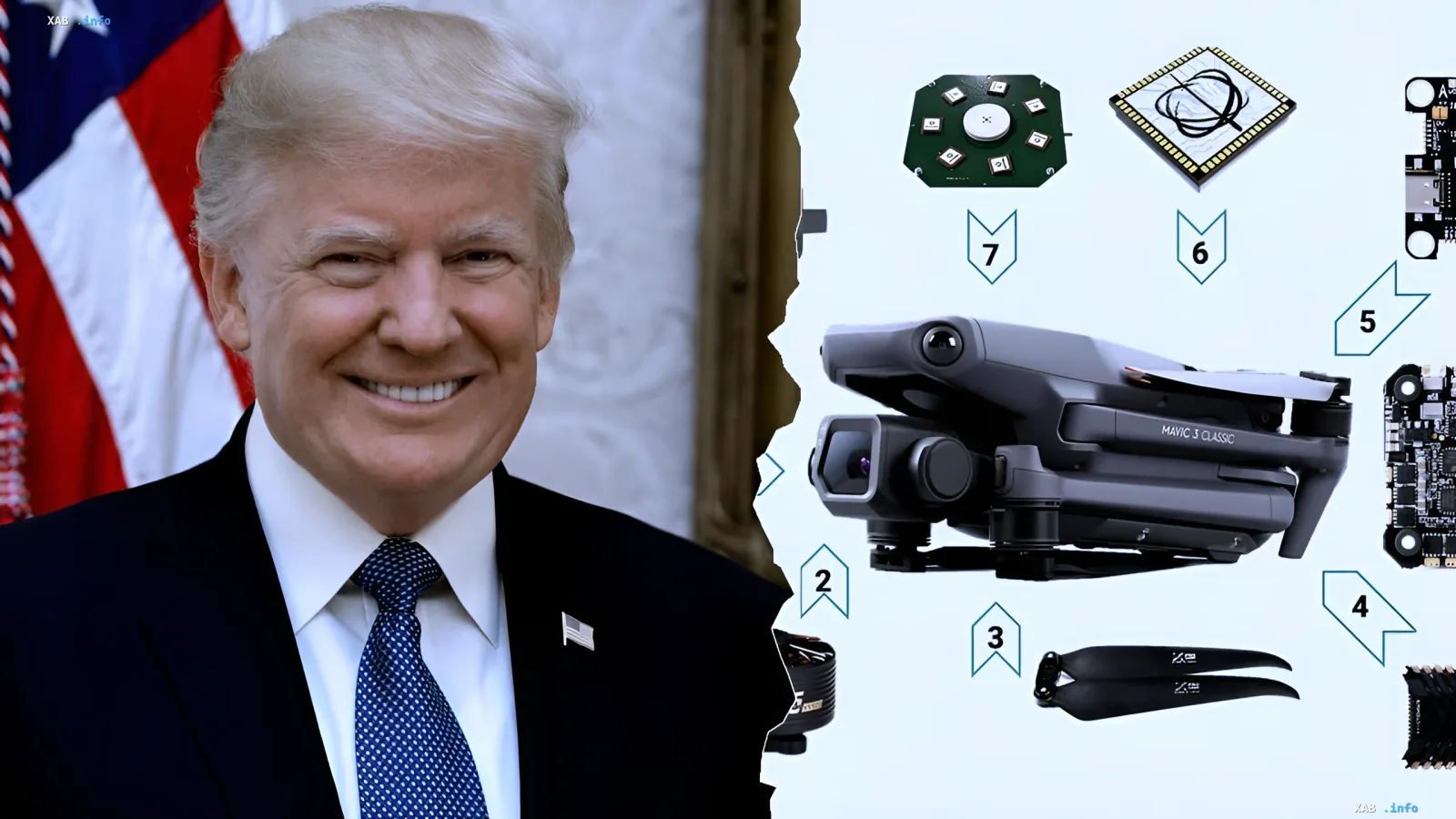
US President Donald Trump signed a historic proclamation on Thursday, August 13, 2026, which will permanently alter the landscape of the global unmanned aerial vehicle (UAV) industry. An official release published on Friday, August 14, confirmed the introduction of strict protective tariffs on drone imports and their components. This decision, justified by national and cybersecurity concerns, aims to radically reduce the dependence of the US economy and defense complex on foreign technologies, primarily Chinese.
Tariff Grid: From 25% to a Complete Ban
According to the text of the decree signed by Trump, a differentiated tariff system is introduced, depending on the class and functionality of the unmanned aircraft. The strictest measures will affect heavy equipment and gear with advanced capabilities. A tariff of 100% is introduced on the import of drones with a maximum takeoff weight of more than 25 kg, as well as on any UAVs equipped with thermal imaging cameras. Robotic docking stations, considered critical infrastructure for autonomous operations, are also hit.
For smaller drones used in commercial and hobbyist segments, as well as for basic components without direct military significance, a tariff of 25% is provided. However, exceptions are made for allied countries: for products from the EU, Japan, South Korea, Taiwan, Switzerland, and Liechtenstein, the rate is reduced to 15%, and for the UK — to 10%. At the same time, the White House added a strict caveat: the preferential rate applies only if absolutely all hardware and software is produced within these countries or in the US.
Geopolitical Blow to China's Monopoly
The main goal of the decree is the final expulsion of Chinese technologies from the American market. At present, the Chinese company DJI and other manufacturers from the PRC control about 75-80% of the US commercial drone market and almost 90% of the global market for components, including motors, frames, and flight controllers. The introduction of 100% tariffs on heavy drones and drones with thermal imagers is an attempt to make Chinese products economically unviable, effectively banning their import. The legal basis for the decree is based on Section 232 of the Trade Expansion Act of 1962, which gives the president the right to impose tariffs without Congressional consent if imports threaten national security.
Contradictory Data
Although the official position of the White House is unequivocal, experts note inconsistencies in deadlines and conditions. On the one hand, the main tariffs come into force in 21 days (early September 2026), creating a shortage of time for businesses. On the other hand, a transition period of 180 days is provided for "less sensitive" components, which could be used by Chinese manufacturers to redirect flows. Furthermore, the condition of 100% production localization for allies raises questions: many European and Asian companies use global supply chains, and meeting the requirement for full localization may be technically impossible in the short term.
Onshoring Program and Future of the Market
Trump's decree does not just ban imports; it launches a massive "return of production" (onshoring) program. The US Department of Commerce has been tasked with developing subsidies and incentives for companies that will set up factories to produce boards, cameras, and engines on American soil. This decision will be a shock therapy for American business: farmers, construction inspectors, and rescue services, which have massively used affordable Chinese drones, are already predicting a multiple increase in equipment prices. For Ukraine, which is a world leader in the combat use of drones, the decree will not create direct problems, as the export of finished weapons is limited by martial law. However, Ukrainian manufacturers may face a shortage of components, as American companies will begin to buy up remaining parts worldwide.