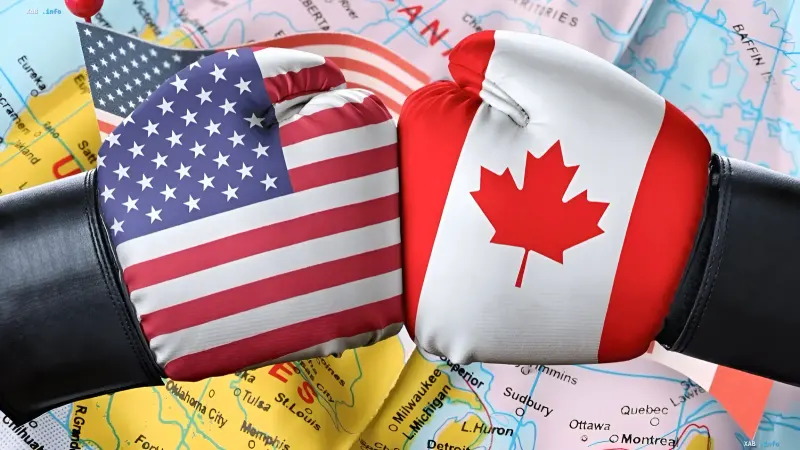
The trade standoff between the United States and Canada entered a phase of open escalation on August 23, 2026. US President Donald Trump publicly reacted to Ottawa's decision to impose retaliatory tariffs, taken against the backdrop of the breakdown of bilateral trade negotiations. According to the outlet, Washington's response was expressed primarily in rhetorical terms: in his Truth Social account, the White House chief accused his neighbor of double standards and promised that pressure on the American agricultural sector would cease. Thus, the day before, on August 22, 50-percent US tariffs on Canadian goods had already taken effect, while Ottawa announced a mirror response effective September 8.
Chronology of the Escalation: 50% US Tariffs from August 22
The key fact that set the tone for the conflict was the entry into force on August 22, 2026, of new 50-percent US tariffs on Canadian goods. According to available data, these measures covered products worth approximately 20 billion dollars, which, by estimates, equates to roughly 5.5% of Canadian exports to the United States. It was precisely this step by Washington that triggered Ottawa's retaliatory actions and, according to reports, coincided with the de facto collapse of trade negotiations between the two countries, which had previously been seen as a mechanism for de-escalation.
Canada's Response: a Blow to US Steel and Dairy Industries
On August 22, Canadian Prime Minister Mark Carney announced that new Canadian tariffs, aimed at the American steel and dairy industries, would take effect on September 8, 2026. According to Ottawa's statements, the Canadian side intends to respond mirroringly, "dollar for dollar," to Washington's tariffs. The choice of target sectors — steel and dairy products — underscores that Canada is betting on the sectors most sensitive to American producers and voters, turning the trade dispute into a domestic political issue within the US.
Trump's Rhetoric: "Canada Wants the Benefits of State Status Without Being a State"
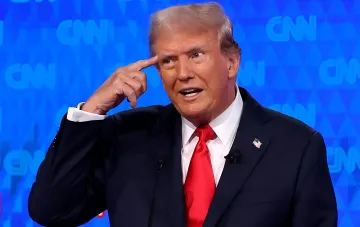
In response to Carney's announcement, Donald Trump issued a statement on Truth Social on August 23, in which, in his words, Canada "wants the benefits of state status but does not want to be a state." The US President added that Ottawa "has taxed our wonderful farmers heavily for years," and assured that "that will no longer happen." Such wording, equating Canadian tariffs with internal taxation of US states, reflects a characteristic Washington line in which trade restrictions by a neighbor are presented as a violation of the principles of a single economic space.
Contradictory Data
When comparing the versions of the parties and the sources, a number of inconsistencies emerge that are important to note. First, the basis of the report on Trump's "retaliatory measures" of August 23 is in fact only a public social media statement: specific new tariff rates or lists of goods introduced precisely on August 23 are not detailed in the primary data, whereas the actual 50-percent US tariffs took effect earlier — on August 22. Second, on the timing of the retaliatory measures, the parties are in different temporal planes: the American tariffs are already in force, while the Canadian ones only take effect on September 8, which means a time gap and an asymmetry in the actual pressure. Finally, the estimate of the scale of the US tariffs (around 20 billion dollars and 5.5% of Canadian exports to the US) is given as a single figure, however, no independent verification of this estimate is contained in the provided sources.
Context and Possible Consequences
The collapse of trade negotiations and the mutual escalation of tariffs are turning the economic dimension of the dispute into a political one: Canada, whose economy is deeply integrated with the American one, is forced to balance between protecting its own industries and minimizing damage to exports. The entry into force of Canadian tariffs on September 8 will likely become the next checkpoint of escalation, and Trump's rhetoric about "state status" indicates that Washington intends to maintain a high level of pressure. In a situation where both sides have already publicly fixed their positions, the room for rapid de-escalation is narrowing, and the attention of the market and diplomats will be focused on the date of September 8, 2026.