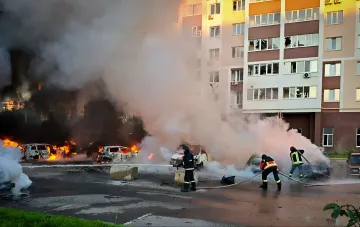
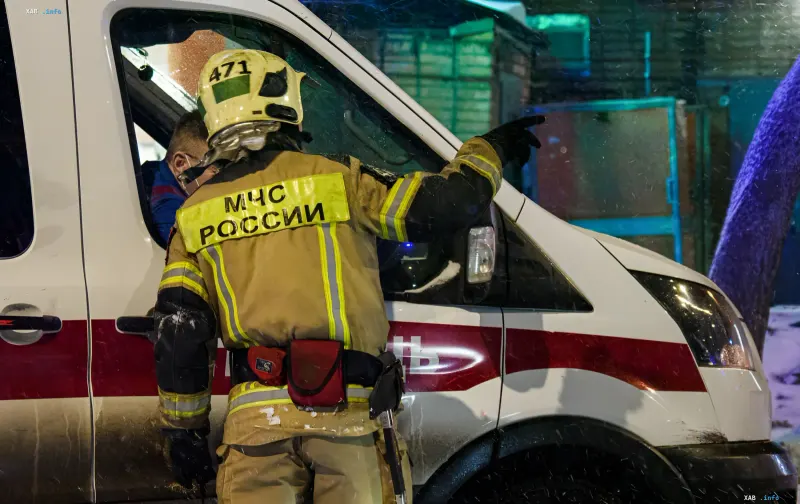
On the night of September 9–10, 2026, two Russian cities came under a massive drone strike — Sochi in Krasnodar Krai and Makhachkala in Dagestan. According to OSINT channels and Russian Telegram channels cited by RBC-Ukraine, in Sochi, as early as the evening of September 9, around 21:50, videos of fires and air defense systems in action began spreading widely on social media. Local channels reported that the city was under attack by both drones and unmanned boats. The Krasnodar Krai operational headquarters confirmed that a fire broke out on the Sochi embankment as a result of strikes by unmanned boats. The exact list of consequences of the attacks was not disclosed at the time of publication.
Disrupted concert and the “elite” Sochi
The attack drew particular attention given that, that same evening, a performance by Russian singer Tatiana Bulanova — who has openly supported Russia's war against Ukraine since 2022 — was taking place at the “Festivalny” concert hall. Due to the drone strikes, her concert was cut short. In the morning, Andrii Kovalenko, head of the Center for Countering Disinformation, stated in his Telegram channel that a significant part of the Russian elite was in Sochi at the time of the attack, and emphasized that this night “once again proves” that Vladimir Putin is unable to guarantee the safety of his entourage.
Makhachkala: explosions near the port and air defense over the theater
Close to dawn, around 4:00, Dagestan came under a drone attack — in particular, the city of Makhachkala. Residents reported explosions, smoke in the port area, and air defense activity over the Avar Theater. The acting head of the republic confirmed that port infrastructure and the theater were damaged in Makhachkala, and that a fire broke out in the port. Thus, the strikes on Dagestan received official confirmation at the level of regional authorities.
Kerch and the shadow fleet: what satellites recorded
In the morning of September 10, the NASA FIRMS service recorded a fire in the Sea of Azov in the Kerch area. OSINT channels believe that a vessel from Russia's so-called shadow fleet is burning. According to analysts, this event fits into the broader picture of nighttime strikes on objects linked to logistics and energy.
Contradictory data
There is a discrepancy between sources over exactly what was burning in Sochi. The Krasnodar Krai operational headquarters, citing Russian channels, points to a fire on the embankment caused by strikes from unmanned boats. At the same time, a number of Ukrainian outlets (in particular, dialog.ua) report that a major Lukoil oil depot in Sochi is burning, having been attacked by Ukrainian UAVs. Both versions may reflect different fire sites within the city; however, no single official list of damaged objects in Sochi has been provided as of publication, and the contradiction over the location of the fire remains unresolved. In addition, exact data on casualties in both cities are not present in open sources.
Context: a series of strikes on Russian facilities
The night of September 10 was a continuation of a series of attacks. On the night of September 8, drones hit the Saratov Refinery: local residents reported explosions and a fire, and the region's governor soon confirmed damage to the infrastructure. Also on September 9, news emerged of a successful attack on the Novourengangsk plant for preparing condensate for transport, located approximately 3,000 km from Ukraine. The totality of these events points to a sustained pattern of strikes on energy and port infrastructure across a significant territory of Russia.