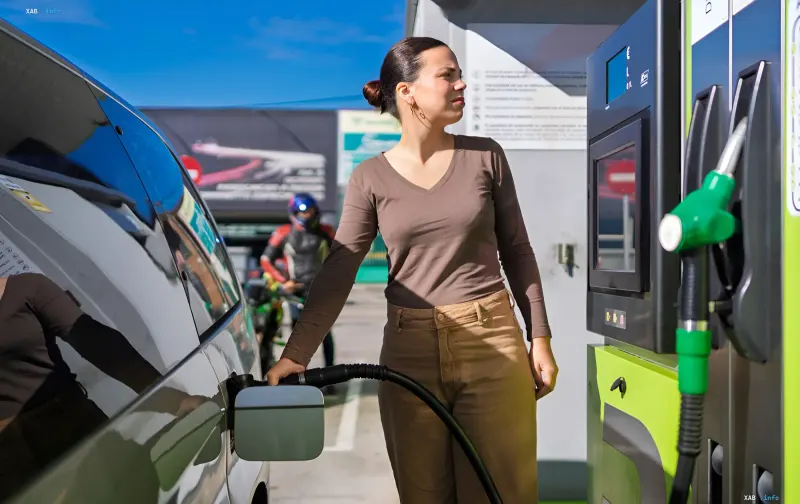
The wave of drone attacks on gas stations, which began in frontline areas, has reached the rear regions of Ukraine in 2026. Drivers are forced to refuel more often, trying to keep their tanks fuller, but the refueling process itself has become associated with additional risks. According to Energy Minister Denis Shmyhal, more than 300 gas stations have been attacked since the so-called "refueling terror" began. At the same time, fuel market analyst Serhiy Kuyun notes that around 80% of the damaged stations have already been restored and are operating normally. This means that no fuel shortage has emerged in any region of Ukraine, and no price increases due to shelling have been recorded.
Rule number one: don't linger and don't create queues
Security experts emphasize: even if a particular station is far from the front and not part of a consistently targeted chain, it is categorically not recommended to enter its premises at a time when drones are flying nearby. Drone operators' target lists are not always precise, and the time available to find a new attack target is usually limited — so a strike may look "illogical" and hit a station that was not formally a target. Entering a gas station just to use the restroom or meet a friend is a bad idea under current conditions. Coffee, hot dogs, and other snacks are safer to bring with you, having filled a thermos at home. In addition to personal safety, this approach helps reduce the time other drivers spend at the station while refueling and avoids creating unnecessary queues at the cash register.
Fill the tank to the brim and keep a reserve in the trunk
From a safety standpoint, once you reach a gas station, it is best to fill the tank to the brim to postpone the next visit as far as possible. Owners of gasoline cars with gas injection systems (GAS) have it easier in this regard: they have two tanks, and both can be filled to the top. As for building up large fuel reserves, experts see little point in it — supply problems with gasoline and diesel are not expected for a number of reasons. However, as an emergency reserve, drivers who travel a lot and often find themselves far from home are advised to keep a canister of about 10 liters in the trunk. The container must meet fire safety requirements and be airtight: if fuel vapors begin to seep into the cabin, staying in the car for a long time will be impossible. There are two main requirements for a canister — a tight-fitting cap and compliance with the standards under which a station will agree to fill it with fuel.
Don't park right up against the pumps and don't leave your car at the dispensers
As experience from previous attacks shows, in most cases drone operators try to hit the most valuable part of the gas station — the fuel dispensers. Therefore, it is advisable not to leave your car next to them any longer than needed to fill up. Paying the cashier, receiving a receipt, and leaving a tip should be done when the vehicle is parked away from the dispenser. In at least one recent incident involving a hit on a gas station, a passenger in a car parked on the street outside the station was among the injured. The yield of the munition is often enough for debris to scatter over several dozen meters, so prolonged parking right next to the station, especially during an air raid alert, is unacceptable.
Will fuel prices rise after the shelling
Drivers who have survived yet another alert naturally ask: will a shortage and price increases emerge against the backdrop of destroyed stations? Serhiy Kuyun, director of the consulting group "A-95," notes, based on tax service data, that 270 gas stations are currently operating in Kyiv, and the losses from shelling are not systemic. Since around 80% of damaged stations are restored promptly, auto traders do not incur losses that could affect market conditions. A similar situation is observed across the capital region as a whole: no shortage or price pressure specifically linked to drone attacks has been recorded in the market.
Contradictory data
No significant discrepancies in figures or versions were found in the provided sources. The only nuance: the text mentions that "more than 300 gas stations" have been attacked since the start of the "refueling terror," while the specific start date of this period is not fixed in the material. Also, the expert estimate that "around 80% of stations are restored" is an analyst's observation rather than an official statistical indicator, which may raise questions about the accuracy of the percentage. Nevertheless, the two figures do not contradict each other and are consistent with the overall conclusion that there is no fuel shortage.