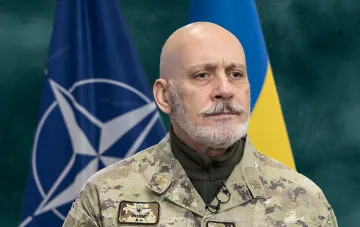
Alexander Dyakiv, colonel and commander of the Aviation of the Ukrainian Air Force, stated that contracts for the supply of Western combat aircraft to Ukraine provide for the localization of aircraft production and maintenance on Ukrainian territory. He said so in an interview published on the YouTube channel of the Ukrainian Air Force, as reported by RBC-Ukraine. According to Dyakiv, major defense conglomerates willing to supply Ukraine with fighter jets are also ready to localize production and provide the corresponding technical support.
Partners' readiness and contract terms
"As for production localization, the major conglomerates willing to supply us with aircraft are ready to localize production in Ukraine; they are ready to help us," Dyakiv emphasized. He added that the relevant provisions are already set out in the existing contracts for the supply of foreign fighter jets: "In the contracts for the supply of foreign-made aircraft that we already have, this is stipulated, and we will be doing this in Ukraine." Thus, localization is not a separate negotiating point but an integral condition of the already-signed agreements on equipment supply.
Security as the main constraint
Despite the formal readiness of partners and the contractual obligations, Dyakiv directly pointed to the key obstacle — the acute security situation. "You understand: there is a certain security environment, only in which we can do this. There is no point in bringing production capacity here to repair aircraft under conditions in which the enemy's air-attack weapons reach Uzhhorod, Chernivtsi, and Lviv," the aviation commander explained. In his words, as long as Russian weapons are capable of reaching western Ukraine, deploying production and service facilities in these regions is impractical in terms of the safety of equipment and personnel.
Gripen E and F-16: what has already been announced
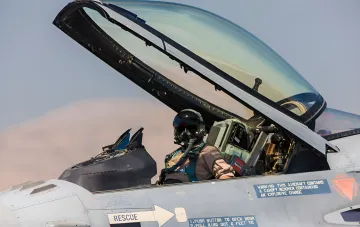
The context for Dyakiv's statement is the recent announcement by Ukrainian President Volodymyr Zelensky, who a few weeks ago announced that Ukrainian pilots would soon switch to the new Gripen E fighter jets. According to the head of state, preparations to bring the Swedish fighters into service are progressing faster than originally planned. In parallel, Belgium will transfer seven F-16 fighters to Ukraine by the end of 2026: three of them in combat-ready condition and four more for use as spare-part donors. Both supply streams, according to Dyakiv, include localization obligations.
Contradictory data
The statements of the parties show a certain mismatch between formal commitments and practical feasibility. On the one hand, the contracts have already been signed and contain direct provisions on the localization of production and maintenance in Ukraine. On the other hand, the aviation commander himself acknowledges that, as long as the adversary retains the ability to strike western regions, the actual deployment of production facilities is impossible. Thus, there is a time gap between the legal obligation and the operational capacity to fulfill it, the duration of which is not disclosed. In addition, open sources lack specific information on which exact conglomerates and at which facilities in Ukraine will carry out the localization, as well as on the target deadlines for launching the first serial production lines.
Current fleet and the modernization task
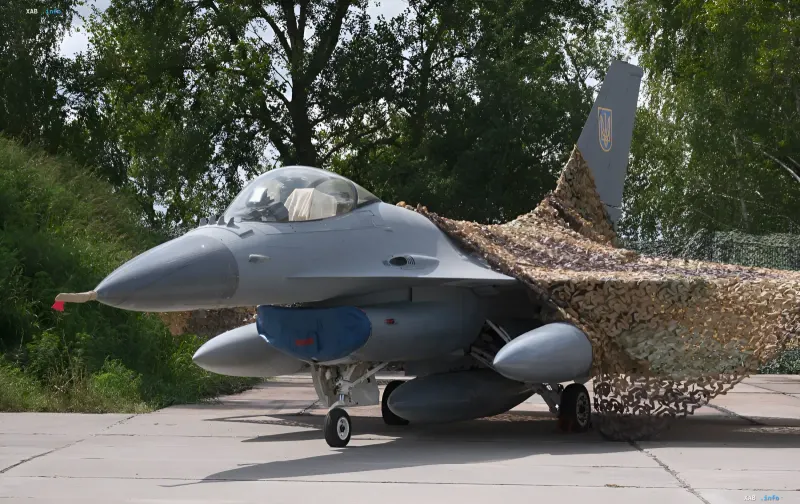
Against the backdrop of announcements about Western aircraft, the Ukrainian Air Force continues to operate Soviet-made MiG-29 and Su-27 fighters, which form the backbone of the active fleet. Photographs from airfields show aircraft with the distinctive markings of the Ukrainian Air Force, including elements of camouflage equipment. The transition to the Gripen E and F-16, and in the longer term to localized production and service maintenance, will be a key stage in the transformation of the aviation component of the Ukrainian Armed Forces. However, as Dyakiv emphasizes, the pace of this transition will be determined not only by delivery logistics but also by the ability to ensure safe conditions for industrial activity on the country's territory.