A new study published in the journal Science reveals that Earth's cryosphere — the collective term for marine and terrestrial ice, glaciers, snow cover, and permafrost — has left the range of conditions in which it remained stable for the past 12,000 years. The study's authors introduced the concept of a 'safe operating space for the cryosphere,' comparing the current state of ice systems with their behavior over the past 12 millennia, and concluded that some components have already crossed established boundaries of a safe state.
What is the Cryosphere's 'Safe Space'
The research methodology is based on assessing cryospheric changes over the past 12,000 years. Scientists determined the range of conditions in which ice systems maintained stability and called it the 'safe space for the cryosphere.' Comparing modern observations with this range showed that an accelerating and partially irreversible loss of system integrity is currently underway. The authors attribute this to warming caused by greenhouse gas emissions from fossil fuel burning.
Which Components Have Already Exceeded Limits
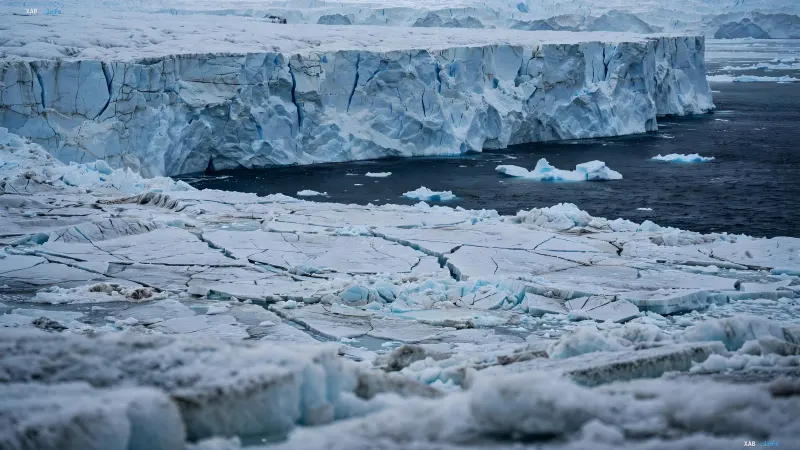
According to the findings, Arctic and Antarctic sea ice, snow cover, and the area of permafrost have already crossed safe state boundaries. Continental glaciers still remain within this range, though they are approaching the critical line. Thus, the cryosphere has not exited its boundaries entirely and simultaneously: some of its components are already beyond the border, while others are on the verge.
Why This Matters Beyond Polar Regions
The consequences of crossing these boundaries affect more than just polar regions. The West Antarctic Ice Sheet contains enough ice to raise global sea levels by approximately three meters if it melts entirely. Permafrost holds trillions of tons of carbon: its thawing could release carbon dioxide and methane into the atmosphere, further amplifying warming. Melting Greenland glaciers, in turn, could slow down or disrupt ocean circulation, which carries heat and maintains a relatively mild climate in Europe.
Tipping Points and the 1.5 °C Threshold
Importantly, crossing safe boundaries does not mean the immediate onset of all listed consequences. It indicates an increased probability of reaching climate tipping points — states after which changes can become self-sustaining and practically irreversible. Co-author Albert Rockström, a climate scientist at the Stockholm Resilience Centre, warns that with further warming above 1.5 °C, humanity essentially begins to risk triggering such processes.
Can the Process Be Stopped
Scientists call reducing emissions the primary way to protect the cryosphere. Simultaneously, more radical methods are being discussed: covering glaciers with special blankets to reduce summer melting, pumping cold seawater onto the surface to build up sea ice, and building artificial barriers to stabilize the West Antarctic Ice Sheet. The effectiveness of such solutions has not been proven, and their implementation could prove extremely costly. According to Rockström, studying such technologies should not be banned, but they do not replace greenhouse gas emission reductions.