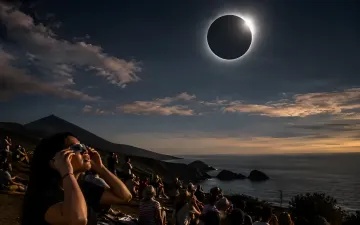

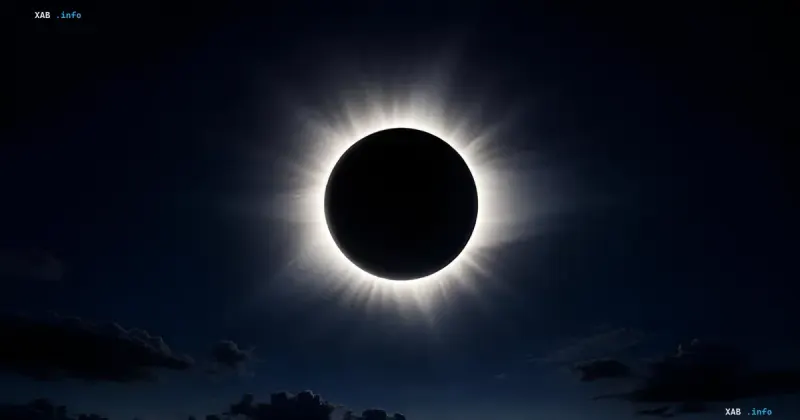
On August 12, 2026, Spain and Iceland become the center of global attention: on these days, a rare astronomical phenomenon occurs — a total solar eclipse. For Spain, this event has a dual significance: on the one hand, it is a unique opportunity for tourism and economic development; on the other, it is a serious test for security systems and environmental control. Local authorities along the eclipse path have organized about 660 official viewing platforms, as well as parking lots and campsites, expecting to welcome up to 6 million people.
Transport Collapse and Logistics
According to officials, about 1.5 million people will arrive by car in central and northwestern Spain. This creates a colossal load on road infrastructure. Authorities warn of the risks of massive traffic jams that could paralyze movement in key regions. To ensure order and safety, additional police and rescue forces have been deployed along the eclipse path. However, even with 660 organized sites, spontaneous gatherings of people remain a serious problem, especially in remote areas.
Forest Fire Threat: Record Figures
The greatest concern is not traffic problems, but the risk of forest fires. The solar eclipse occurs in the height of a hot and dry summer, when temperatures in some areas reach 40 degrees Celsius. The Spanish Meteorological Agency has issued warnings for many areas, assessing the risk of forest fires as high or very high. According to the Spanish Ministry of the Environment, since the beginning of 2026, about 200,000 hectares of land have burned — six times more than during the same period in 2025. As of the evening of August 10, major fires were still raging in Huelva, Segovia, and Huesca.
Contradictory Data
There are discrepancies in the assessment of the scale of the threat. On the one hand, official sources emphasize that the fire risk is related to the human factor — throwing away cigarette butts, using barbecues, lighting bonfires. On the other hand, some experts point out that the climatic conditions of 2026 have created an unprecedented fire hazard situation, and even minimal impact can lead to catastrophic consequences. At the same time, tour operators and local authorities continue to promote the eclipse as a safe and attractive event, which is criticized by environmental organizations.
Tourism Boom and Economic Benefits
Despite the risks, the eclipse continues to attract a huge number of tourists. The number of foreign visitors looking for accommodation in cities located in the interior of the mainland, such as Burgos and Soria, has increased more than threefold. The number of bookings in the Asturias region grew by 292% compared to the same period last year. This indicates that the astronomical event has become a powerful driver of domestic and international tourism, despite all government warnings.
Precautionary Measures and Event Cancellations
Authorities have issued a serious warning about the danger of forest fires caused by seemingly insignificant actions. Residents and tourists are strongly advised not to light bonfires, not to park in prohibited areas, and to limit access to forest areas with a high risk of fire. In some settlements, even planned events on the day of the eclipse have been canceled. In Tres Cantos, near Madrid, the entire event was canceled due to fears of forest fires. In Buitrago de Lozoya, a town with a population of about 2,000 people, residents also called for a restriction on mass gatherings near forest areas.