Amidst the ongoing war and constant threats from the Russian Federation, Ukraine faces a critical need to revise its strategy for protecting its export logistics. As stated by ICC Ukraine President Volodymyr Shchelkunov, the country must urgently shift from situational responses to Russian attacks to forming a systematic security policy and financial support for business. The current model, where port and vessel protection is viewed as isolated incidents, no longer matches the scale of challenges facing the Ukrainian economy in August 2026.
Systemic Threat: From Terminals to Global Export
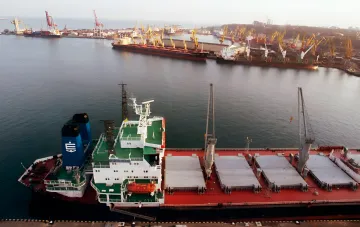
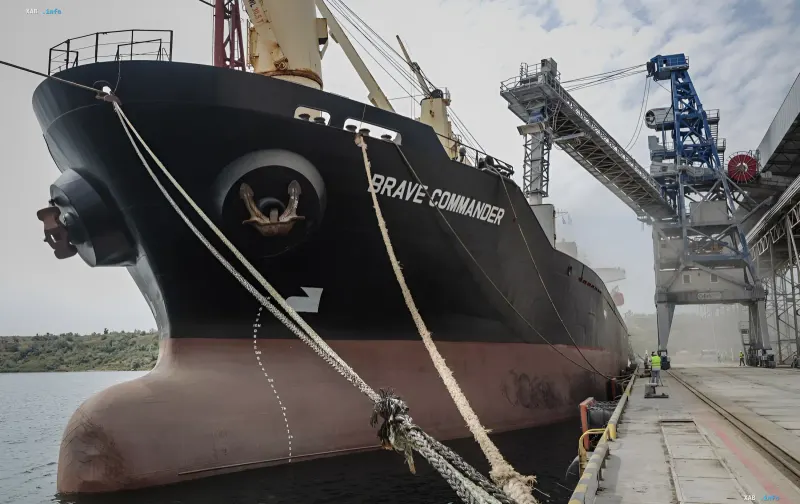
The situation in Ukrainian seaports has gone far beyond the operations of individual terminals. The Russian Federation is consciously increasing risks for international shipping by striking port infrastructure, vessels, crews, and pilots. According to Shchelkunov, this is a strategic attempt to destabilize Ukraine's export flows. Seaports remain a key element of the state's economic resilience: a significant portion of foreign currency earnings passes through them, directly determining industrial capacity utilization, budget revenues, and the foreign trade balance.
Key Directions for Government Action
ICC Ukraine experts propose that the government focus on three fundamental areas: ensuring security, guaranteeing the continuity of port operations, and securing international commitments. Shchelkunov emphasizes that an increase in the cost or risk of maritime transport directly reduces the price Ukrainian producers can receive for their products on the global market. This is particularly critical for the agricultural and mining-metallurgical sectors, which form the basis of exports.
Creating an "Infrastructure Ramstein"
To solve coordination problems, the creation of a permanent inter-agency mechanism is proposed. This body should bring together the government, the Ministry of Development, the Ministry of Defense, the Navy, the Administration of Sea Ports, exporters, the banking and insurance sectors, as well as international partners. Such an approach will allow for the synchronization of the actions of military personnel, logisticians, and financiers, creating a united front to protect export corridors.
Financial Support and Lending
Alongside security issues, the state, together with banks and international financial organizations, must create effective lending mechanisms. This refers to supporting enterprises in port infrastructure, agro-exports, and processing. Without financial support and insurance coverage guarantees, many market players may be forced to suspend operations, leading to job losses and a decline in GDP.
Contradictory Data
There is disagreement regarding tariff policy in the ports. On one hand, ICC Ukraine calls for the full unblocking of ports and the cancellation of the 30% tariff increase by Ukrzaliznytsia (UZ) introduced earlier. Experts call this increase untimely and putting the industry at risk of existence. On the other hand, given the budget deficit and the need for infrastructure modernization, state regulators may view tariff increases as a forced measure. However, according to business representatives, any additional pressure on logistics under current conditions could lead to a collapse of export chains.