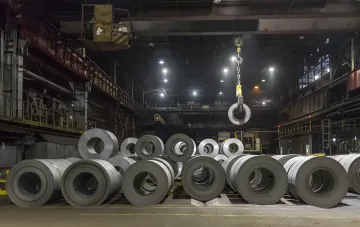
Continued blockades of Ukrainian sea ports could lead to the shutdown of some metallurgical enterprises, the loss of foreign exchange earnings, and a reduction in budget revenues. Representatives of the mining and metals sector and the agricultural sector have appealed to the head of government to urgently restore maritime logistics, as there are virtually no alternatives to deep-water Black Sea ports.
Critical Dependence on Maritime Routes
According to an official appeal signed by Ukrmetalurgprom President Oleksandr Kalenkov and UCAB General Director Oleg Khomenko, even under the best-case scenario, Danube and western land crossings are capable of transporting only about 28-30% of the required cargo. The metallurgical industry remains particularly vulnerable: about 80% of Ukrainian metal products and 50% to 60% of iron ore raw materials are traditionally exported abroad.
Rising Costs and Financial Pressure on Business
Due to the ongoing blockade, enterprises are forced to switch to more expensive logistics routes. According to the authors of the appeal, bypass logistics add up to $46 per ton of products, and the total cost of transporting pig iron and necessary raw materials has approximately doubled. An additional burden was created by Ukrzaliznytsia's freight tariff hike of another 30% starting in August, making some export contracts unprofitable.
Contradictory Data
While industry associations of the metals and agricultural sectors focus on local losses and an increase in logistics costs of $46 per ton, estimates from the Ukrainian National Committee of the International Chamber of Commerce paint a broader macroeconomic picture. According to their data, a complete port blockade could cost the country more than 10% of GDP, lead to the loss of $17 billion in export revenue and $8.5 billion in tax proceeds, while leaving over 30 million tons of agricultural produce undelivered to global markets.
Socio-Economic Consequences for Regions
The scale of the crisis extends far beyond exporters to the entire economy. In 2025, the metallurgical sector accounted for about 5.5% of GDP, generated 150 billion hryvnias in tax revenues, and brought in $6 billion in foreign currency earnings. Experts emphasize the multiplier effect: one job in the sector creates more than seven jobs in related fields. Industrial regions near the frontline are particularly vulnerable, where the shutdown of large enterprises could cause a spike in unemployment, falling local budget revenues, and a new outflow of population.