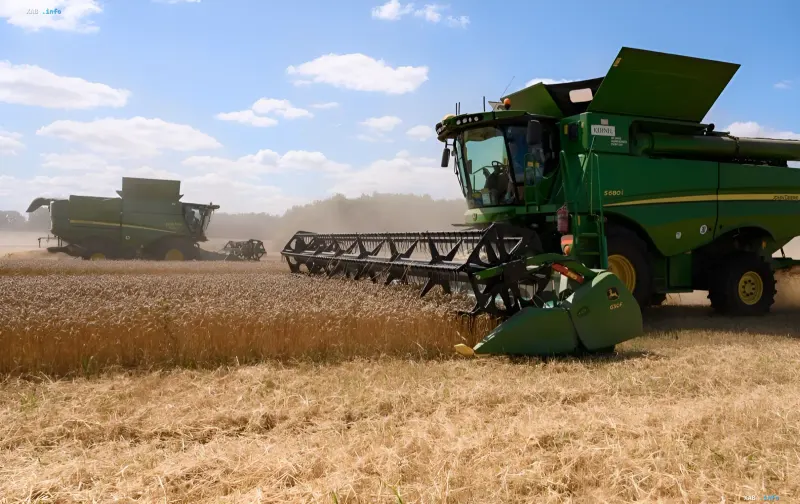
Ukraine's largest agricultural holding, Kernel, has officially released its annual financial report for the 2026 financial year (FY2026), which ended on June 30. The publication details the company's key operational and financial results, shaped against the backdrop of complex macroeconomic and geopolitical realities facing the Ukrainian agricultural sector.
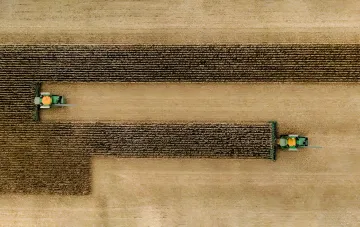
Due to the relative stability of the Black Sea export corridor during the previous season, the agricultural holding managed to build a solid financial buffer. This margin of safety allowed the company to successfully complete the reporting period and demonstrate growth in several key areas. In particular, the agricultural production segment showed significant progress: crop cultivation increased by 43%, reaching 2.3 million tons. Simultaneously, infrastructure and trading divisions handled 9.6 million tons through their own terminals, while the company's total grain exports from Ukraine reached 6.3 million tons, equivalent to 15% of the country's total exports. In the processing sector, the company's plants processed 3.2 million tons of oilseed raw materials.
New Challenges and Logistics Barriers
Despite the successful close of the previous year, the start of the new 2027 financial year was marked by a dramatic complication of the operational environment in the Black Sea region. This situation forces company management to rapidly restructure business processes, shifting into a strict mode of liquidity preservation and deep adaptation of the entire logistics supply chain.
Kernel Board Chairman Andrii Verevskyi emphasized the critical importance of Black Sea agricultural exports for the global food balance, noting that any port disruptions immediately resonate across markets in Europe, Asia, and the Middle East. According to him, the company has no illusions about alternative transportation routes, as other paths are fundamentally incapable of fully replacing deep-water ports in terms of capacity scale or financial costs. The situation is complicated by the fact that since mid-July 2026, security in sea ports has faced critical tests: regular attacks on port infrastructure and commercial vessels have led to a roughly tenfold reduction in deep-water port calls. Additional pressure is exerted by significant carryover grain stocks within the country, estimated at around 8 million tons, alongside the ongoing harvesting of the new crop.
Investments in Renewable Energy and Dividend Decision
In response to large-scale challenges and the need to finance repairs of damaged facilities, as well as cover increased costs for alternative logistics, the company's Board of Directors made a principled decision to recommend that shareholders refrain from paying dividends for FY2026. All available resources are being accumulated within the structure to maintain business continuity.
A strategic response to current infrastructure risks has been the course toward diversification and decentralization. Previously, the agricultural holding attracted 100 million euros from the Danish fund EIFO to construct a large wind power plant with a capacity of 94.5 MW. This project, integrated with advanced energy storage systems, is designed to significantly strengthen the energy resilience and autonomy of the company's production facilities amid ongoing instability.