
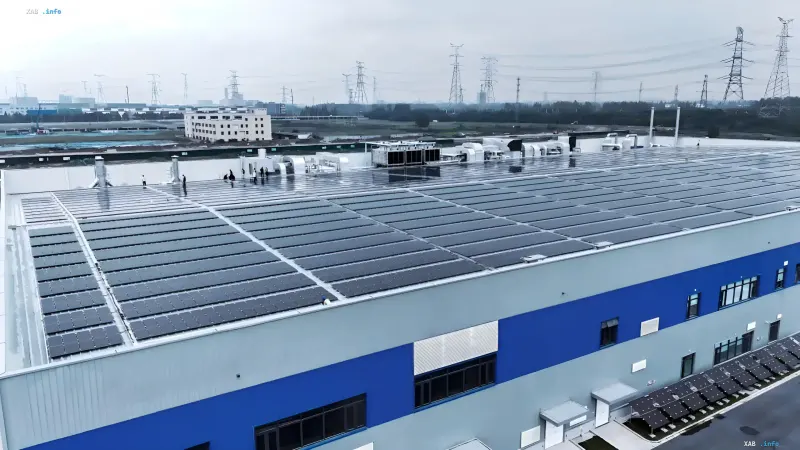
A breakthrough has occurred in the renewable energy sector that could reshape the solar industry landscape. Scientists from Nanjing University, in collaboration with engineers from RenShine, have developed and successfully tested full-sized perovskite solar panels. According to sources, the new technology has not only demonstrated record-breaking performance in laboratory conditions but has also proven its superiority over traditional silicon modules in real-world operating conditions at an active solar power plant.
From Laboratory to Industrial Scale
The main challenge in developing perovskite cells over the past few years has been scaling. Scientists often faced a drop in efficiency when transitioning from tiny laboratory samples to large modules. However, the team from Nanjing overcame this barrier by creating a panel with an area of 0.72 square meters — a size corresponding to standard industrial modules.
Under standard conditions, the new panel consistently delivered 158.4 W of power and demonstrated a certified efficiency level of 22% across its entire surface. This is an absolute record for perovskite modules of meter-scale, placing them on par with advanced silicon counterparts, and in some parameters — even higher.
Advantage in Hot Weather
The results of field tests were particularly impressive. Between March and May, perovskite modules demonstrated a steady increase in electricity generation compared to their silicon counterparts. In March, the advantage was 3.42%, in April — 3.79%, and by May, the difference reached 5.81% per unit of installed capacity.
This trend confirms a key physical advantage of perovskites: their efficiency drops more slowly as temperature rises. While silicon panels lose power in the heat, perovskite modules maintain high performance, making them an ideal solution for regions with a warm climate.
Innovative Chemistry and Durability
To achieve these results, Chinese researchers proposed an alternative chemical process based on a mixture of three solvents. Thanks to controlled drying of the film in a vacuum chamber, a protective layer of formamidinium iodide forms on the surface, which is then additionally treated with lead carboxylate salts.
This method ensures uniform distribution of the coating across the entire panel and fills defects at the atomic level, which is critical for preventing degradation. Durability tests showed a dramatic difference: panels treated with traditional ammonium lost 39% of their power over 1300 hours, while the new modules with lead carboxylate treatment retained 98% of their power.