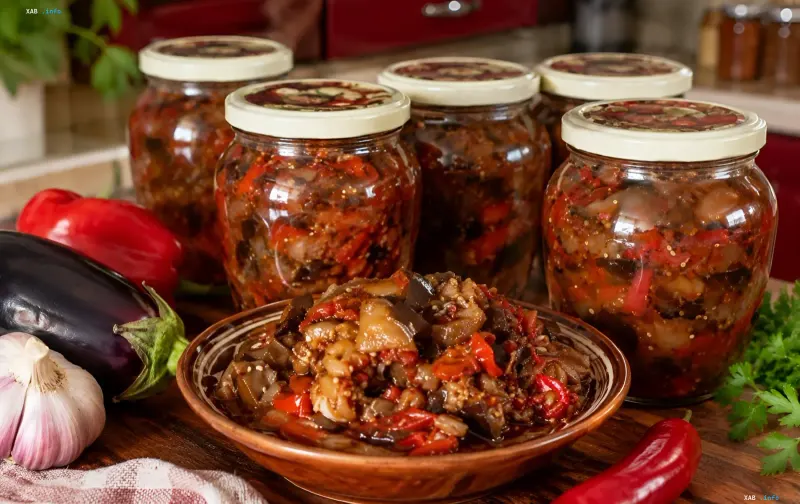
In the height of the eggplant season, culinary blogger Maria Makarchuk (@makarchuk_food) shares a recipe for a winter preserve, which Styler presents with reference to her Instagram video. In this snack, sautéed vegetables are combined with peppers, tomatoes, garlic, and a sweet-and-sour sauce based on soy sauce and vinegar. The finished mixture turns out rich and well-balanced in flavor and stores beautifully in sterilized jars, making it a practical solution for anyone who wants to keep summer vegetables on hand through the winter.
Preparing the Eggplants and the Basic Marinade
The first stage of the recipe is devoted to preparing the main ingredient. The eggplants are cut into pieces, sprinkled with two tablespoons of salt, and left for a while so that the vegetables release their juice and any possible bitterness is drawn out. After that, they are thoroughly rinsed under running water. Meanwhile, the tomatoes are chopped and transferred to a large pot, vegetable oil is added, and the mixture is cooked for about 5–7 minutes, forming the tomato base for the future snack.
Simmering the Vegetables and Balancing the Flavor
The prepared peppers and eggplants are added to the cooked tomatoes, stirred, and everything is simmered together for about 20 minutes. Then sugar is sprinkled in, salt is added, soy sauce is poured in, minced garlic is added, the mixture is stirred again, and it is simmered for another 10 minutes. At this stage, the author of the recipe emphasizes the importance of tasting: the snack should be sampled and, if necessary, the amount of salt, sugar, or hot pepper adjusted to achieve the desired sweet-sour-spicy balance.
The Final Stage and Preserving
The finishing step is pouring in 50 ml of 9-percent vinegar, stirring, and cooking the vegetable mixture for another 5 minutes. The hot snack is distributed into clean sterilized jars and sealed tightly with lids. For extra safety, the filled jars can be sterilized for 5 minutes after the water comes to a boil. This dual approach — sterilizing the containers and then applying heat treatment — increases the reliability of storing the preserve throughout the cold season.
How to Choose Fresh Eggplants
The taste of the finished snack largely depends on the quality of the raw vegetables. Dr. Maya Rosman, in an article for The Jerusalem Post, advises first and foremost to evaluate the skin and the stem: a fresh eggplant should have a glossy, taut skin and a green stem. Fruits with brown spots or soft dents are best avoided, as this may indicate damage or prolonged storage. Rosman also notes that small eggplants are usually less bitter and are well suited for salads and baking.
Less Fat — More Benefit
Worthy of separate attention is the eggplant's tendency to actively absorb fat while frying. Rosman compares them to a sponge and, for less fatty dishes, recommends using baking, grilling, or light sautéing with a small amount of oil. This advice is especially relevant for those who prepare preserves with an emphasis on a lighter, healthier profile of the dish while still preserving the characteristic taste and texture of the vegetables.