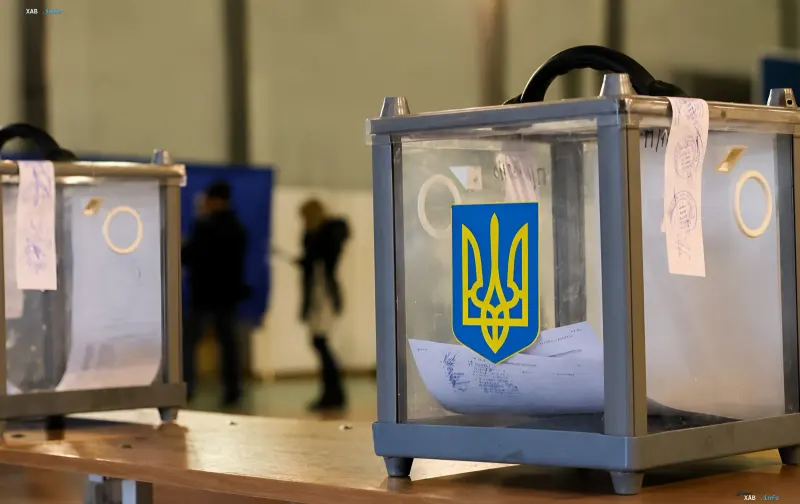
Amidst the ongoing war and a complex geopolitical situation, the question of holding elections in Ukraine remains one of the most pressing issues on the political agenda. The "UDAR Vitali Klitschko" party has taken a principled stance, stating that the decision to hold voting must be based solely on security factors and the ability to guarantee citizens' free right to vote, rather than on the current popularity ratings of the government or the opposition.
Security as the Top Priority
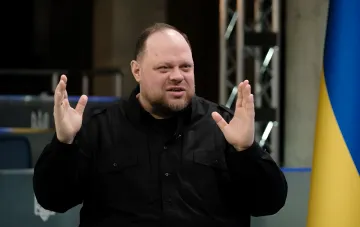
In a statement signed by First Deputy Chairman Artur Palatny, the party emphasizes that holding elections during active hostilities is unacceptable. According to the politicians, the decision on the voting date should not be made under the influence of sociological data or a desire for political convenience for the incumbent government or potential candidates. "Elections should not weaken Ukraine, but make it stronger," the document notes.
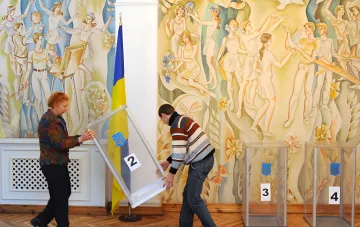
Special attention is paid to security risks. Polling stations, party offices, and venues for public events could become targets of Russian attacks. Furthermore, the enemy could use this period to carry out information operations, cyberattacks, and the spread of disinformation, which could undermine trust in the voting results.
The Problem of Equal Access to Voting
The "UDAR" party points out that in wartime conditions, it is practically impossible to ensure equal access to the electoral process for all citizens of Ukraine. This concerns military personnel at the front, residents of temporarily occupied territories, frontline communities, internally displaced persons, and millions of Ukrainians abroad.
The right to vote implies not only the ability to vote but also the right to be elected. Under current conditions, military personnel and other categories of citizens in different situations due to the war will not have equal opportunities to participate in elections, which violates the principles of the democratic process.
Contradictory Data
While Artur Palatny and his party insist on the priority of security and the country's readiness to hold elections, other political forces take a different stance. For instance, on August 18, former Defense Minister Mykhailo Fedorov called on the government to hold elections in his address, stating that "democracy in Ukraine cannot depend on the Kremlin." This creates a divergence in approaches to the issue: some focus on risks and unequal conditions, while others emphasize the need to maintain democratic institutions regardless of external threats.
Thus, a discussion continues within Ukrainian society and the political elite regarding when and under what conditions elections can be held to ensure they are legitimate, safe, and fair for all citizens.
Focus on Ending the War
Artur Palatny emphasized that today, the government and Ukrainian politicians should focus not on finding ways to hold elections, but on how the country can withstand the war and achieve peace. According to him, the moment for holding elections should be determined not by ratings or the desire to retain or gain power, but by the security of the state and the ability to guarantee every Ukrainian the right to freely choose and be elected.
Only such elections, according to Palatny, will not weaken Ukraine but make it stronger. This requires a comprehensive approach that takes into account all aspects of security, logistics, and social justice.