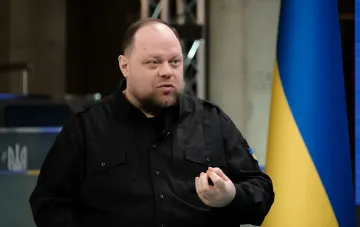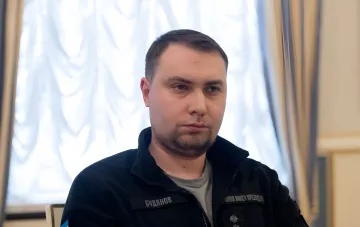
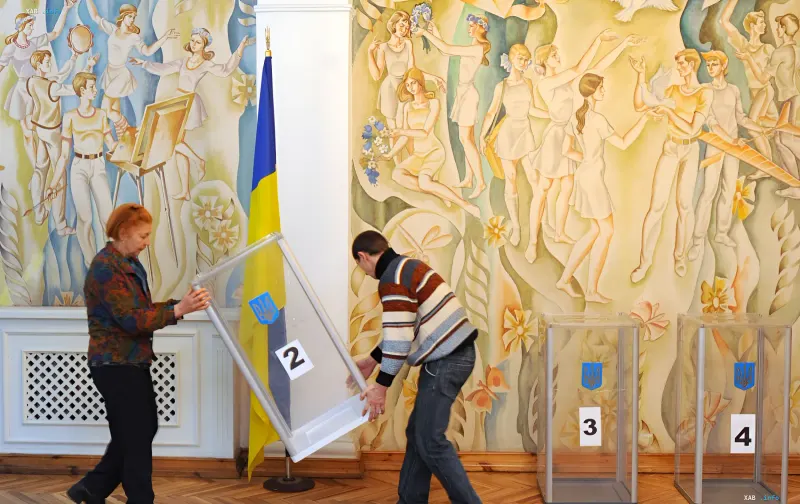
The topic of possible elections in Ukraine has once again returned to the public space — and not least thanks to a resonant appeal by the former Ukrainian defence minister. In a fresh column, Yulia Kyryienko-Merina examines why the idea of holding a vote amid an active war looks less like a democratic breakthrough and more like a risk of repeating a historical mistake. The author emphasises: the question is not whether one is 'for' or 'against' elections in the abstract, but whether they can be transparent, valid, and recognised by the international community given six oblasts with active hostilities, a million-strong army, and millions of displaced people.
Fedorov's Appeal and the Political Landscape
As the author notes, the former defence minister's appeal was expected: he has few chances of returning to the minister's chair, and he is, in effect, 'going all in'. According to Kyryienko-Merina, his status as a political leader was 'proven by cardboard [signs]', and he made his final decision on this path visible in a video. At the same time, the author herself says outright that she is 'getting scared' — and so are those who have studied history. Fedorov's key argument boils down to the claim that it is Russia that dictates to Ukraine when to hold elections. However, as the author points out, the Russian president has already stated that the Ukrainian leader is illegitimate — that is, in effect also hinting at the need for elections. The question arises: who is actually dictating to Ukraine whether to hold a vote?
Historical Parallel: 1917–1921
The column's central argument is built on a historical precedent. In 1917–1921, Ukrainians stood against the Bolsheviks, and due to the invasion elections could be held only in some districts — Kyiv, Poltava, Chernihiv, Katerynoslav, Volyn, and Podillia. Power, in the author's words, 'did not become sovereign': it was overthrown by those who occupied Ukraine. This was followed, as Kyryienko-Merina emphasises, by eighty years of Soviet rule — the Holodomor, the destruction of culture, millions dead. 'This has already happened. Do we want it again?' — the author asks rhetorically, reminding that support from European partners is currently at its peak.
Practical Barriers: Displaced Persons, the Front, and Digitalisation
The author lists specific obstacles to a fair vote: around five million displaced persons, six oblasts with active hostilities, a million-strong army. The question of how to ensure a transparent and valid vote that the world will recognise and after which partners will continue cooperation remains unanswered. The idea of voting through the 'Diia' app does not remove the problems: internet coverage is not everywhere, and part of the population does not use smartphones at all. 'Will their votes not be counted? Then where is the democracy?' — the author asks. In the Office of the President, as Kyryienko-Merina notes, they responded that they are not against elections, but are not sure they will take place under rocket attacks. 'And I am not sure either,' the author adds.
Contradictory Data
There are discrepancies in the column text and in the accompanying materials that are important to note. First, the column itself retains the author's wording, current at the time of writing, whereas the editor's note clarifies: as of the time of publication, Yevhen Humair officially headed the Ministry of Defence of Ukraine — the Verkhovna Rada appointed him to the post with 312 votes. That is, the public status of 'former minister' and 'dismissed' with regard to Fedorov in news sources (TASS, Inosmi, Jauns.lv) coincides with the fact of appointing a new head of the department, but in the author's text he is described through the prism of his personal political choice. Second, the contradiction is built into Fedorov's own argument: the claim that 'Russia dictates the timing of elections' is disputed by the author, who points to the Russian president's earlier statements about the illegitimacy of the Ukrainian leader. Both versions — the initiator's position and the critic's — are presented openly, with no final assessment given.
Conclusion: The Risk of Repeating the Mistake
The column ends not with a call but with a warning: holding elections under wartime conditions may reproduce the 1917–1921 scenario, when the vote did not lead to a stable sovereign power but became a trigger for further occupation and decades of repression. The author does not deny the very idea of elections, but questions their technical and political feasibility 'here and now' — under rocket attacks, amid mass displacement of the population, and incomplete digital coverage. The final emphasis is on the moment: support from European partners is at its peak, and therefore, in the author's logic, risking it for a premature vote means putting both democratic procedures and international support at risk.