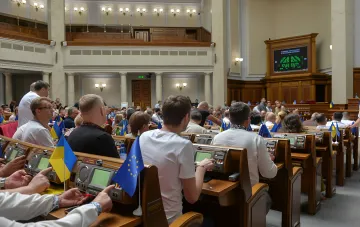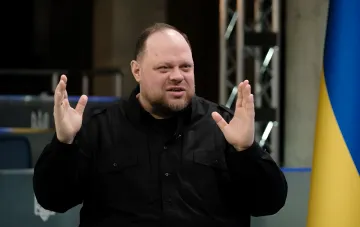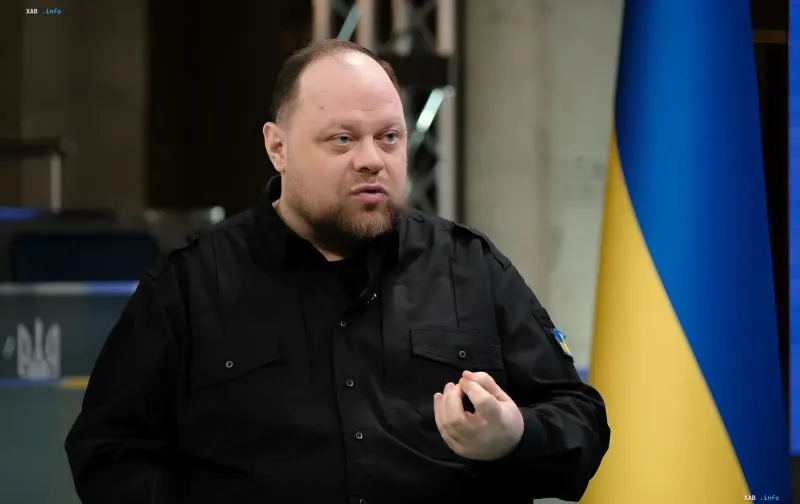
The head of the Verkhovna Rada, Ruslan Stefanchuk, has publicly expressed a skeptical stance on holding elections in Ukraine through the state Diia app. In his words, at the current stage such a voting model is technically and legally impossible to implement, and attempts to do so within tight deadlines carry risks comparable to the incidents that have already occurred when the service was used for other votes. The speaker's statement came against the backdrop of the parliament's active work on the legal framework for the first post-war elections, making his assessment a key benchmark for the debate over the format of the upcoming electoral cycle.
The speaker's position: 'of little prospect in the near term'
In a conversation reported by Suspilne Kharkiv, citing RBC-Ukraine, Stefanchuk stated outright that holding elections in Diia under current conditions is impossible. He emphasized that such electronic elections are, in his words, actually carried out only by the 'aggressor country,' and gave a vivid example: when 'criminal Putin sits and clicks on a computer with an unactivated Windows and votes,' questions are bound to arise about the results of such elections. The speaker's conclusion is extremely direct: in the near term he considers the scenario of voting through Diia to be 'of little prospect.'
Constitutional norms and the reference to 'Eurovision'
Separately, Stefanchuk pointed to a legal barrier: in his view, electronic voting runs afoul of the Constitution, since elections must ensure the direct vote of the voter. At the same time, the speaker stressed that he regards the Diia app with respect and uses it himself, but he does not want the scenario observed during the 'Eurovision' vote in the same service to be repeated in the Presidential or Verkhovna Rada elections. It is precisely this precedent, in his logic, that demonstrates the 'pitfalls' that arise when the platform is used for significant procedures.
Status of the legislative work
The context of the statement is important: according to RBC-Ukraine, the special bill intended to regulate the procedure for the first post-war elections in Ukraine was, at the time of publication, ready to about 65%, as explained by Olga Aivazovska, head of the Civil Network OPORA. In parallel, the Verkhovna Rada is working on a law on the possibility of holding elections under conditions of war. Thus, the regulatory framework is being shaped; however, in the speaker's own assessment, the actual holding of elections is currently absolutely impossible.
Contradictory data
In the public sphere, tension is visible between two lines. On the one hand, the parliament and expert bodies (in particular OPORA) are actively advancing the preparation of legislation and discussing digital tools, including Diia, as a potential element of the electoral process. On the other hand, the direct head of the parliament declares the impossibility and 'lack of prospect' of such a scenario in the near term, citing constitutional constraints and technical risks. The difference in emphasis — 'readiness of the regulatory framework' versus 'impossibility of actual conduct' — is not a direct factual contradiction in dates or figures, but reflects a divergence in the assessment of timelines and the admissibility of electronic voting. Moreover, Stefanchuk's reference to the problems with the 'Eurovision' vote points to a precedent of technical difficulties, although his statement does not disclose the specific details of that incident, leaving room for various interpretations of the scale of the problem.
Context and outlook
The speaker's overall position boils down to the fact that the digitalization of the electoral process in Ukraine faces both technical and fundamental legal constraints. Until the questions of constitutional legitimacy of direct voting are resolved and the platform's resilience to incidents similar to the 'Eurovision' one is proven, the transition to elections through Diia remains, in the assessment of the parliament's leadership, unrealistic in the near term. The further dynamics will depend on how, during the refinement of the bill (currently about 65% ready), the positions of the parties on the admissible forms of voting under conditions of war are reconciled.