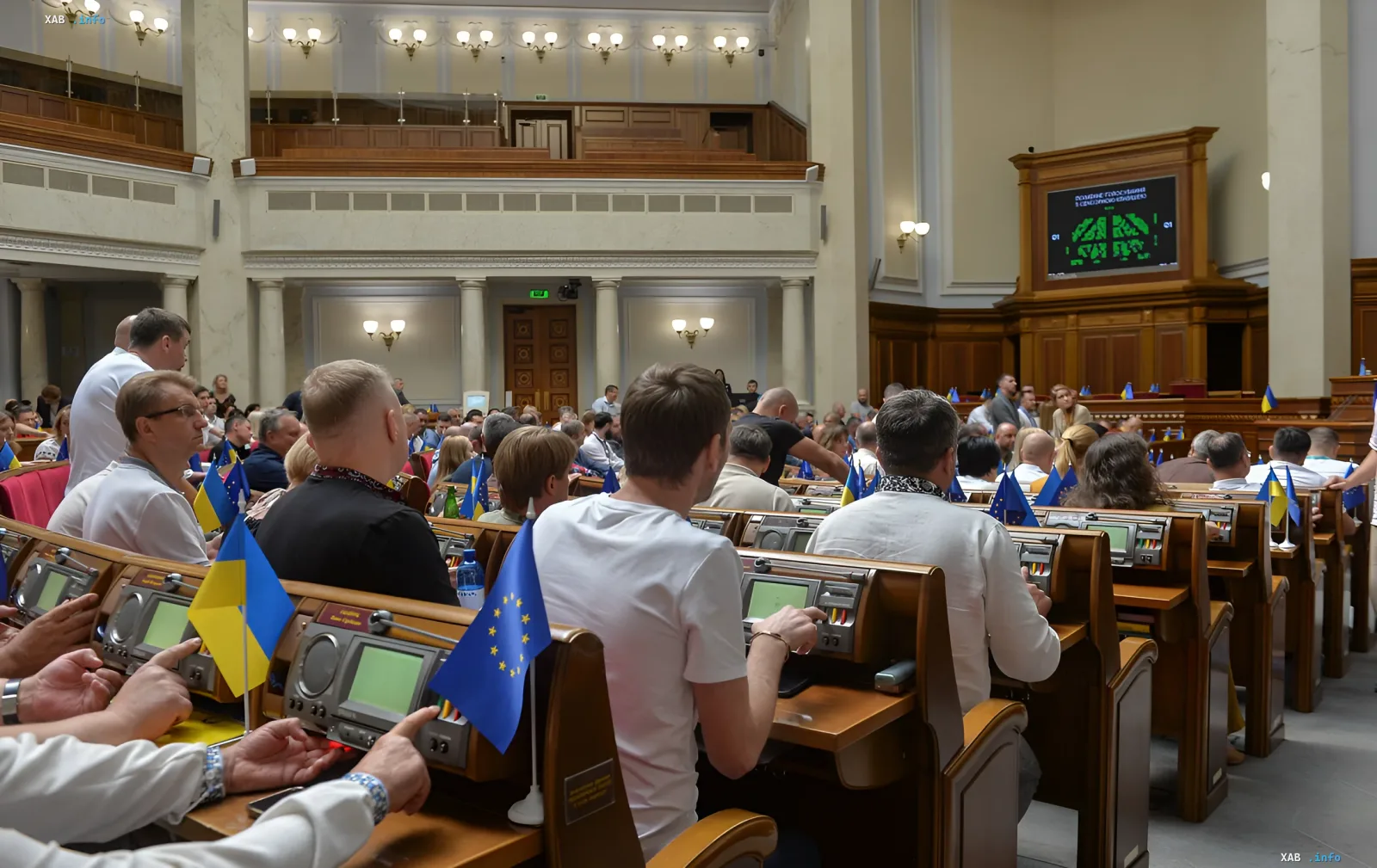
The administrative apparatus of Ukraine's Verkhovna Rada has officially confirmed that it is taking a comprehensive set of measures to ensure the uninterrupted work of the parliament in its own building at 5 Mykhailo Hrushevsky Street, amid regular air alerts in Kyiv. This was announced on 31 August 2026 by the parliament's press service, citing an internal statement from the apparatus. The document emphasises that all necessary organisational and technical decisions have already been made so that sessions and committee meetings are not interrupted by air-hazard signals.
Context: alerts as a systemic factor in the legislature's work
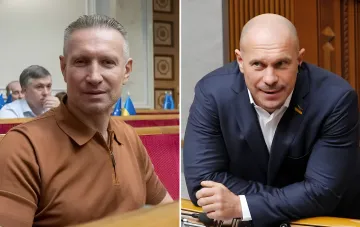
The problem of regular air alerts in the capital has become one of the key organisational challenges for the Verkhovna Rada in 2026. As early as 19 August, People's Deputy Nikita Poturayev stated on Radio NV that the constant alert signals significantly complicate the full functioning of the legislative body. According to him, at least two scenarios for further action were being discussed in the parliament's corridors, including the possibility of a temporary relocation to a safer premises. This remark provoked a wide resonance in the media and among the public, as it touched on the safety of hundreds of deputies and apparatus staff.
The Speaker's position: no relocation is planned
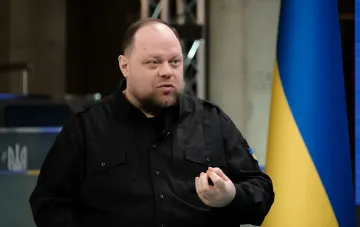
However, the head of the Verkhovna Rada, Ruslan Stefanchuk, subsequently publicly refuted the relocation scenario. In his statement he stressed that the parliament would continue to work in the historic building on Hrushevsky Street and had no intention of seeking "special conditions" for itself. Stefanchuk emphasised that the deputies "do not separate themselves from society" and that the operating regime of the legislative body would be determined by the Rada itself "in accordance with the needs of the state and the security assessments of the authorised services." Thus, the official position of the parliament's leadership is that the building remains the main working space, and adaptation to the alert conditions is being carried out within it.
The government is preparing parallel changes
In parallel with the decisions in the parliament, adjustments are also being developed at the government level. Prime Minister Serhiy Haidai reported that the Cabinet of Ministers is preparing changes to the approaches to organising the work of state bodies during prolonged air alerts. In particular, according to him, the practice of applying the curfew will be reviewed. These steps indicate that the issue of adapting state governance to the conditions of a constant threat of air attacks goes beyond the parliament alone and affects the entire executive branch.
Contradictory data
In the public discourse around the Rada's work under alert conditions, a discrepancy in wording is traceable. On the one hand, deputy Nikita Poturayev stated on 19 August that "two scenarios are being discussed," one of which envisages a temporary relocation to a safer facility. On the other hand, Speaker Stefanchuk consistently insists that no relocation is planned and that the parliament remains on Hrushevsky Street. Moreover, a number of media outlets (including Rambler) in their headlines allow for the variant of deputies working "in the basement" of the building, which has not been confirmed by either the Rada's press service or Stefanchuk himself. Thus, until a specific regulation or apparatus order on the new working rules during alerts is published, some details remain a matter of speculation. Officially, only the fact that measures to ensure uninterrupted work have been taken and that the building remains the main venue for sessions has been confirmed.
What this means for the legislative process
For citizens and observers, the key takeaway is that the Verkhovna Rada is not halting its activities and is not moving sessions to alternative locations. The parliament's apparatus has taken on the task of technical and organisational adaptation: providing shelters, a flexible schedule of breaks during alerts, maintaining a quorum, and the availability of workstations. At the same time, the final parameters of the regime — for example, the permissible duration of a session under an active alert or the procedure for voting — will be refined as security assessments from the authorised services come in, as Stefanchuk stated.