In the context of modern warfare, where drones have become one of the key tools, the technological evolution of aircraft is moving at a rapid pace. Against the backdrop of news about missile-drones reaching speeds of 900 km/h and the expansion of Ukrainian turbine exports to NATO countries, the fundamental question of drone energy comes to the forefront. According to experts, the future of long-range strike drones lies not in the improvement of internal combustion engines (ICE), but in a breakthrough in battery technologies.
Strategy of abandoning ICE: betting on electric traction
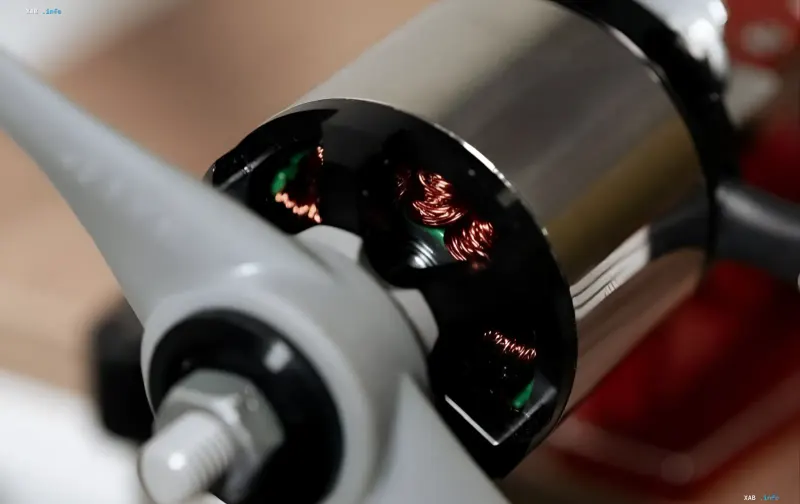
Motor-G, one of the leading Ukrainian manufacturers of drone engines, has made a strategic decision that could determine the direction of the industry's development for years to come. The company's CEO, Alexey Grebin, told RBC-Ukraine that they consciously abandoned the development of internal combustion engines. Instead, the company has focused all its resources on creating and improving electric motors.
According to Grebin, switching to ICE development makes no economic or engineering sense for their team. This requires a completely different expertise that would have to be built from scratch, whereas in the field of electric motors, the company has already accumulated significant experience. The strategy of "electric" development allows using current competencies to solve tasks that previously seemed unattainable for electric traction.
Key limitation: energy density
The main barrier preventing the mass transition of long-range strike drones to electricity is not the performance of the motors, but the density of the batteries. Alexey Grebin emphasizes that if the energy density of batteries increases several times, the flight range of electric drones will automatically increase to levels comparable to gasoline counterparts.
Today, there is a clear division: electric drones operate over short distances, while those with ICE operate over long distances. However, this barrier is not insurmountable. Unlike fuel, which is burned during flight and reduces the total weight of the apparatus, the weight of batteries remains unchanged until landing. This creates a serious load on the structure during long flights, but progress in battery chemistry can neutralize this drawback.
Tactical advantages of electric traction
Electric motors have a number of critically important advantages that make them attractive for military applications. One of the main advantages is the absence of a pronounced thermal signature. During normal operation, the temperature of an electric motor stays at 30-40 degrees, making such drones practically invisible to the enemy's thermal imaging air defense systems.
In addition, electric traction ensures ease of starting and structural reliability. Unlike ICE, which require a tank, a complex fuel supply system, and regular maintenance, electric motors are easier to operate and less prone to breakdowns. Over short distances, ICE become inconvenient due to their minimal size and weight, whereas electric counterparts demonstrate high efficiency.
Contradictory data
Although the strategy of switching to electric traction looks logical, there are certain contradictions in assessing the current situation. On the one hand, Motor-G experts claim that switching to ICE makes no sense due to the need to create a new engineering base. On the other hand, gasoline engines continue to be actively used and improved in the market, which is confirmed by the expansion of turbine production for drones and their supplies to NATO countries.
Furthermore, there are disagreements regarding the timing of the transition to electric traction. Some analysts believe that a breakthrough in battery technologies could happen in the next 2-3 years, while other experts suggest that ICE will remain dominant for long-range drones for a long time. These contradictions create uncertainty in the strategic planning of manufacturers.
The future of drone wars
In the context of the ongoing conflict and technological race, the transition to electric traction could become a turning point in the development of drone warfare. If it is possible to overcome the limitations of battery technologies, electric drones will gain not only tactical advantages in terms of stealth but also strategic mobility.
Companies that are currently betting on electric traction, such as Motor-G, may find themselves in a winning position in the future. However, this requires not only progress in motor production but also a breakthrough in battery chemistry that will allow creating batteries with high energy density and acceptable weight.