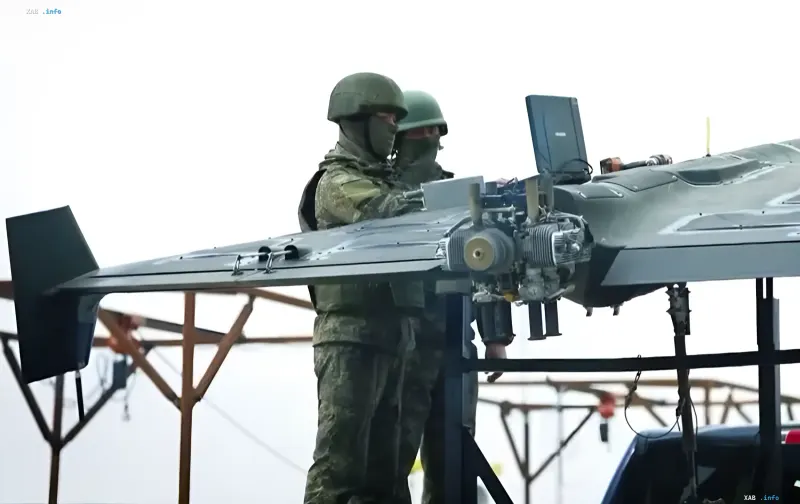
In the context of a protracted conflict, by August 2026, the tactics of Russian strikes have undergone fundamental changes. Moscow is increasingly moving away from using classic piston unmanned aerial vehicles (UAVs) of the "Shahed" type towards the application of jet drones and drone-missiles. This shift is dictated by the need to overcome the tiered air defense system of Ukraine, which over the years of war has learned to effectively repel mass attacks of low-speed targets.
Paradigm Shift: From "Shaheds" to Jet Strikes
According to Anton Zemlyanoy, a senior analyst at the Ukrainian Centre for Security and Cooperation, Russia has realized that classic "Shaheds" no longer perform the function they had at the beginning of their mass deployment. The effectiveness of these devices has decreased, and Ukrainian air defenses have learned to block their routes. In response, Moscow is betting on speed. Jet drones, including new modifications of "Geran" and drone-missiles of the "Banderoles" type, allow for a reduction in flight time and complicate the work of Ukrainian air defense crews.
The main advantage of such means is a significantly higher flight speed. This critically reduces the time window remaining for air defense operators to detect, track, and engage the target. As experts note, intercepting a high-speed target requires a fundamentally different approach and more advanced weapon systems.
Technological "Bottlenecks" and Dependence on Imports
Despite the obvious tactical advantages, the mass production of jet drones is fraught with serious technological difficulties. Unlike simple piston engines, jet engines require more complex engineering and expensive components. Anton Zemlyanoy notes that Russia is experiencing difficulties in producing the necessary composite materials for drone bodies and depends on the import of certain chemical compounds.
A key limiting factor remains access to turbojet engines. According to Oleg Katkov, editor-in-chief of Defence Express, the supply of these units depends largely on Chinese private companies. Russia is likely repeating the scenario that was experienced with engines for ordinary "Shaheds": first, purchasing ready-made components abroad, and then attempting to set up their production within the country.
Contradictory Data
There is a divergence of opinion in the expert community regarding the classification of new Russian strike assets. Some analysts believe that the term "jet drone" is becoming conditional. In particular, new versions of "Geran-4" and "Geran-5" can only be called jet drones with a certain stretch, as their characteristics and engines may differ from classic jet installations. At the same time, other experts point out that these devices, in terms of their combat capabilities, are already effectively approaching cruise missiles, creating a threat to air defense comparable to high-tech weapons, but at a lower cost.
Countermeasures and Conflict Prospects
Russia's transition to jet drones creates a separate challenge for Ukraine, requiring the adaptation of air defense tactics. The combination of speed, range, and relatively low cost of such drones compared to classic cruise missiles makes them a dangerous tool for strikes on rear areas. At the same time, the scaling of the production of such drones in Russia is happening gradually, which gives time for the development and deployment of new countermeasures, including the development of their own Ukrainian high-speed UAVs.