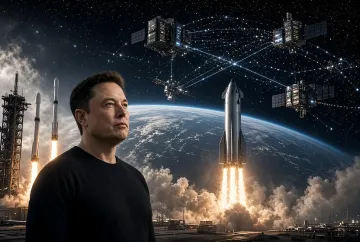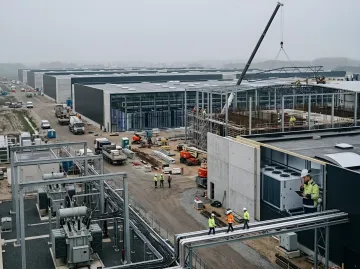
In August 2026, the tech world faced an unprecedented challenge: the rapid development of artificial intelligence (AI) is hitting physical and energy limitations on Earth. According to Elon Musk, by 2029, orbital data centers will become the only way to further scale AI capabilities. This strategic shift is driven by a critical shortage of electricity and difficulties in obtaining permits to build new large-scale facilities on the planet's surface.
Energy Deadlock and the Space Perspective
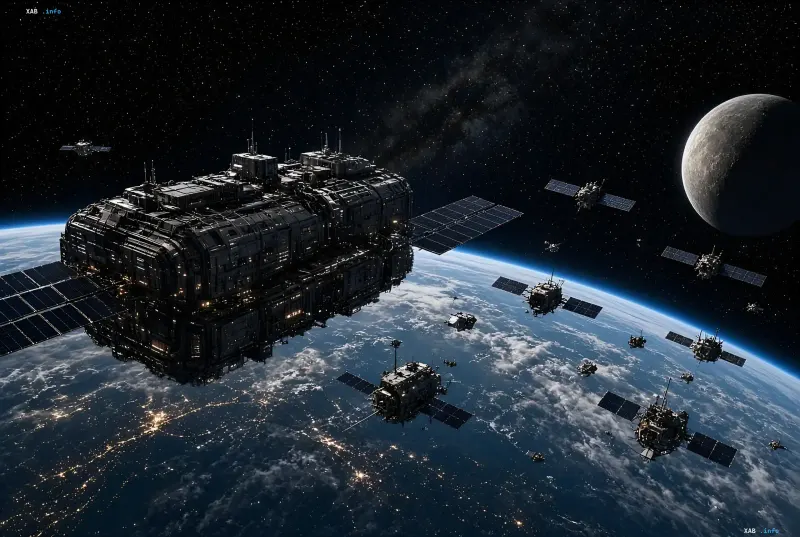
The sharp rise in energy consumption of AI data centers (DCs) worldwide has led to a situation where ground infrastructure can no longer cope with the demand for computing power. Elon Musk, founder of SpaceX and xAI, claims that by 2029, Earth will reach its energy limit. Under these conditions, placing computing power in space is seen as a new stage in solving the energy deficit and infrastructure problems. Space data centers will be able to use solar energy in unlimited volumes, avoiding the limitations of terrestrial power grids.
Merger of SpaceX and xAI: A Strategic Step Towards Orbital DCs
In February 2026, the merger of SpaceX and xAI was announced. The main goals of the combined entity were to launch data centers in orbit and create a "smart Sun" system. At that time, Elon Musk stated for the first time that placing computing power in space within two to three years would be significantly more cost-effective than ground-based solutions. This decision was a response to growing competition in the AI sector and the need to ensure uninterrupted access to computing resources.
Contradictory Data
Despite ambitious plans, the public dispute between Elon Musk and OpenAI CEO Sam Altman, which flared up in July 2026, showed that the problems of space data centers are not yet fully resolved. As it turned out, the mass deployment of orbital infrastructure is being delayed due to the lack of cheap reusable launch vehicles and industrial satellite production. Such capabilities may only fully emerge in the 2030s. On the one hand, Musk insists on the urgency of transitioning to orbital DCs; on the other, technical and economic barriers remain significant.
Technological Challenges and Prospects
Deploying orbital data centers requires solving a number of technological tasks. First, reliable and cost-effective launch systems capable of delivering equipment to orbit with minimal costs must be created. Second, satellites capable of operating in space for long periods without the need for frequent maintenance must be developed. Third, protection against cosmic radiation and other factors that could damage equipment must be ensured. Despite these challenges, the prospects for orbital DCs remain attractive, especially in the context of growing demand for AI computing power.
Global Consequences and Competition
The transition to orbital data centers could have global consequences for the tech industry and international competition. Countries and companies that are able to master this technology first will gain a significant advantage in AI development. This could lead to a new space arms race, similar to the one observed during the Cold War. Furthermore, orbital DCs could become the basis for creating new economic models based on access to space resources and computing power.