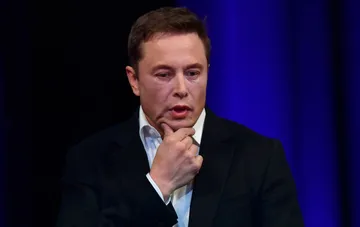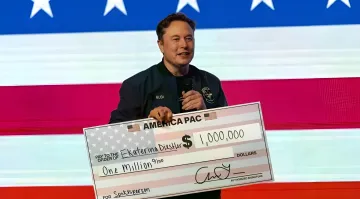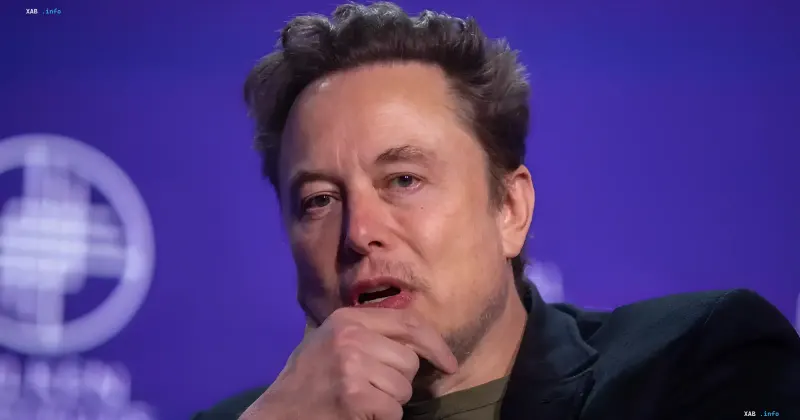
American tech billionaire Elon Musk has once again recommended that people stop worrying about saving money for the distant future. In a post on platform X dated October 29, 2026, the founder of SpaceX and xAI wrote: "Saving money for the distant future is meaningless when artificial intelligence is so readily available." The statement came amid an ongoing discussion about how technological progress is transforming traditional models of financial planning and retirement provision.
The forecast of a "world of abundance"
Musk's position is not new. Back in January 2026, in an episode of a popular podcast, he stated outright: "Don't worry about saving money for retirement 10 or 20 years from now. If everything we've been talking about is true, then saving money for retirement will be meaningless." According to him, breakthroughs in artificial intelligence, energy, and robotics will lead to a sharp increase in productivity, generating such an abundance of resources that "everyone will be able to own everything they want." Musk promised that in such a world everyone would have access to "better healthcare than now," and the shortage of goods and services would disappear: "You could learn anything you wanted for free entirely."
Utopian vision and the loss of money's meaning
In a broader context, Musk outlines an even more radical scenario. He predicts that advances in robotics and space travel will create a multi-planetary economy in which "money will lose its meaning" and "traditional currencies will cease to matter." At the same time, the billionaire himself acknowledges that the transition to this "bright future" will be "difficult." As a solution to the mass job losses caused by the introduction of AI, he proposes government subsidies for all citizens — essentially a version of basic income.
Experts advise not to abandon savings
Musk's comments drew mixed reactions. Business Insider surveyed seven personal finance and artificial intelligence experts, and all of them unanimously advised people to continue saving for retirement, as Musk's forecasts may turn out to be wrong. Specialists emphasize that even under an optimistic scenario of technological transformation, the adaptation period could take decades, and a financial cushion remains a tool of personal security amidst uncertainty.
Context: Gates and the general technological agenda
Such predictions are not limited to a single individual. Microsoft co-founder Bill Gates recently suggested that artificial intelligence will lead to "real abundance" because robots will be able to "build houses, do agriculture, and perform surgeries." However, Gates also warned that the next 20 years will be "the most turbulent period in human history," as technological progress means a significant portion of human labor will no longer be necessary. Thus, key figures in the tech industry agree on the direction of change but disagree on the timeline and social cost of the transition. For the average investor and worker, this means that financial planning strategies for the coming decades remain a subject of active debate.