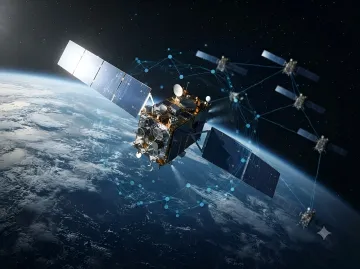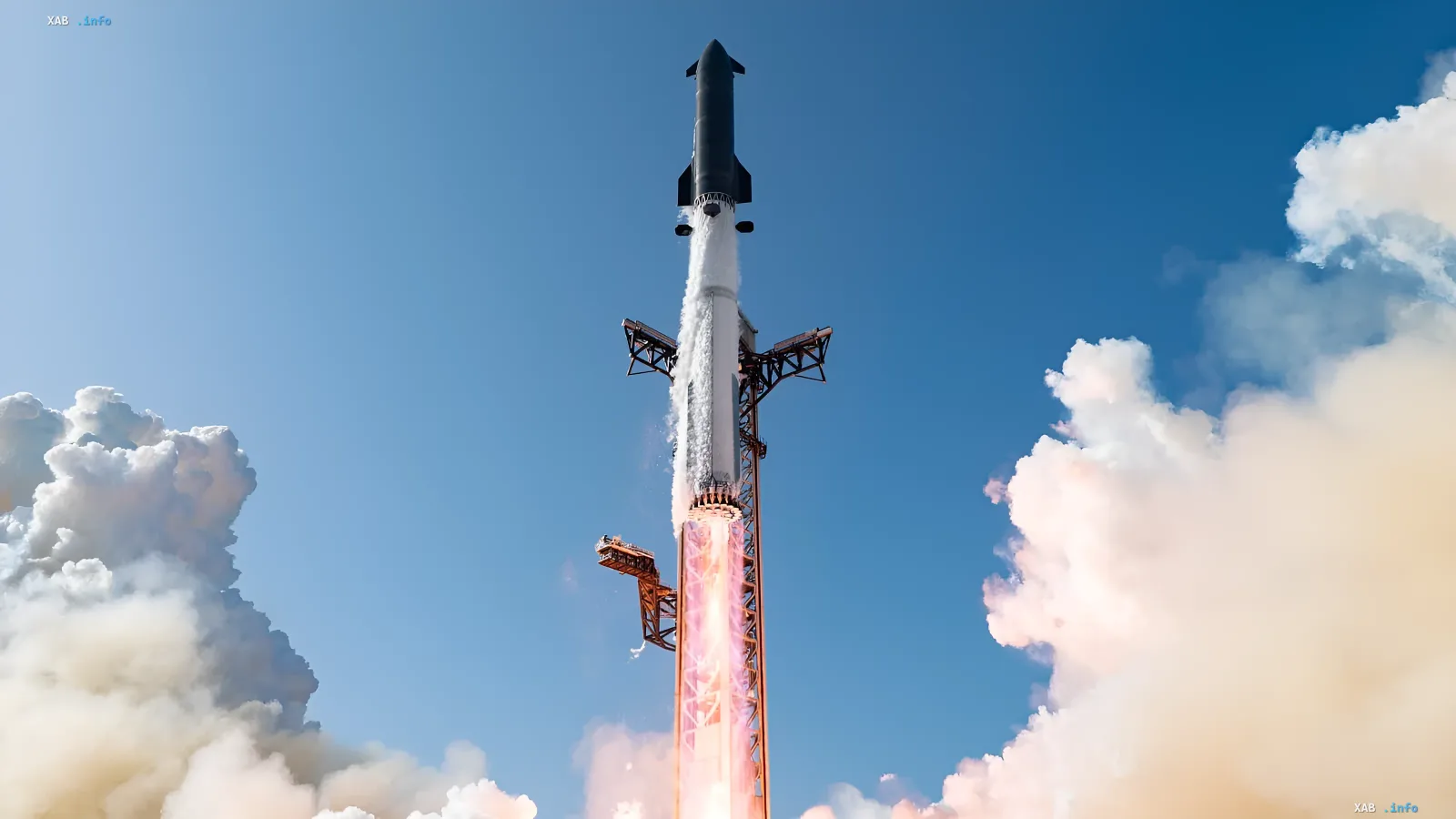
SpaceX CEO Elon Musk has outlined an ambitious plan to transform space logistics. According to his statement made during the quarterly report presentation, the super-heavy Starship space system will be capable of delivering up to 10 million tons of cargo to Earth's orbit annually in the future.
This announcement, which was the centerpiece of the recent presentation, indicates a fundamental shift in humanity's capabilities for space exploration. Musk emphasized that current figures, even accounting for SpaceX's dominance in the market, are only a fraction of what will be possible once the new system is fully operational.
Current Situation: SpaceX Dominance
To understand the scale of the announced plans, it is necessary to assess the current situation. At present, SpaceX launches about 2,500 tons of cargo into orbit annually using its Falcon 9 and Falcon Heavy rockets. This is a colossal figure that already places the company as the absolute leader in the industry.
According to data presented during the event, all other operators and countries in the world combined deliver only about 300 tons of cargo to orbit annually. Thus, SpaceX accounts for between 80% and 90% of all cargo launched from Earth to orbit. The company has already effectively monopolized the commercial launch market, but Musk is aiming for a qualitative leap.
Scaling Strategy: From 1 to 10 Million Tons
Elon Musk presented a phased plan for the implementation of Starship. According to him, after the full launch of the new system, in the initial stage it will be able to deliver one million tons of cargo to orbit annually. This is already 400 times greater than the current capabilities of the entire industry, including SpaceX.
However, the ultimate goal is significantly higher. In the long term, with process optimization and increased launch frequency, the volume of payload delivered to space could reach 10 million tons. This represents a 4000-fold increase compared to the company's current figures.
Technical Achievements and Ship Recovery
The realization of such plans is based on successful prototype tests. During the last flight, the spacecraft performed a controlled splashdown in the Indian Ocean. A crucial achievement was that for the first time in its history, the ship remained afloat after landing.
This fact allowed specialists to organize its recovery and restoration. The ability to retrieve and revive the ship after an ocean landing is a critically important step for reducing mission costs and ensuring the reusability of the system, which is the guarantee of the economic efficiency of the announced cargo volumes.
The Future: Lunar Bases and Mars Colonization
It is expected that in the future, this transport system will become the basis for long-term scientific expeditions to the Moon and Mars. Only such a volume of cargo transport can ensure the construction of large-scale lunar bases and the launch of colonization missions to the Red Planet. This will undoubtedly open a new page in the history of humanity's space exploration, turning space travel from exclusive events into regular logistical activity.