The era of monochromatic green screens, which became a symbol of night vision in cinema and military aesthetics, may be coming to an end. A group of Chinese researchers has developed a breakthrough technology capable of converting invisible infrared radiation into a full-color image. The results of the study, published in the authoritative journal Science Advances, point to the possibility of creating fundamentally new visualization systems.
Overcoming the Limitations of the Human Eye
Traditional night vision devices work on the principle of converting infrared light into shades of brightness of a single color—most often green. However, the human eye is evolutionarily much better adapted to distinguish subtle shades of color than the slightest changes in brightness. It is precisely this mismatch between biological capabilities and technical capabilities that became the starting point for new developments.
To solve the problem, scientists combined nanotechnology and optoelectronics. The system is based on colloidal mercury telluride quantum dots about 4 nanometers in size, integrated with a special two-layer OLED display.
How the "Smart" Filter Works
The key mechanism of the device is quantum confinement. Thanks to the microscopic size of the quantum dots, infrared light of different wavelengths excites individual electronic transitions rather than generating a single signal. This allows the system to distinguish radiation characteristics with high precision.
The principle of operation is based on energy and wavelength:
- Shorter infrared waves carry more energy and displace a greater number of positive charges.
- These charges are directed to the two-layer OLED display, where one layer emits red light and the second emits blue light.
- An energy barrier of 0.82 electron volts is installed between the layers.
Under weak infrared radiation, only the red layer is activated. As the flow of charges increases, they overcome the barrier and enter the blue layer. The mixing of colors changes the overall hue and brightness of the image depending on the wavelength and temperature of the object.
Glasses Prototype and Biocompatibility
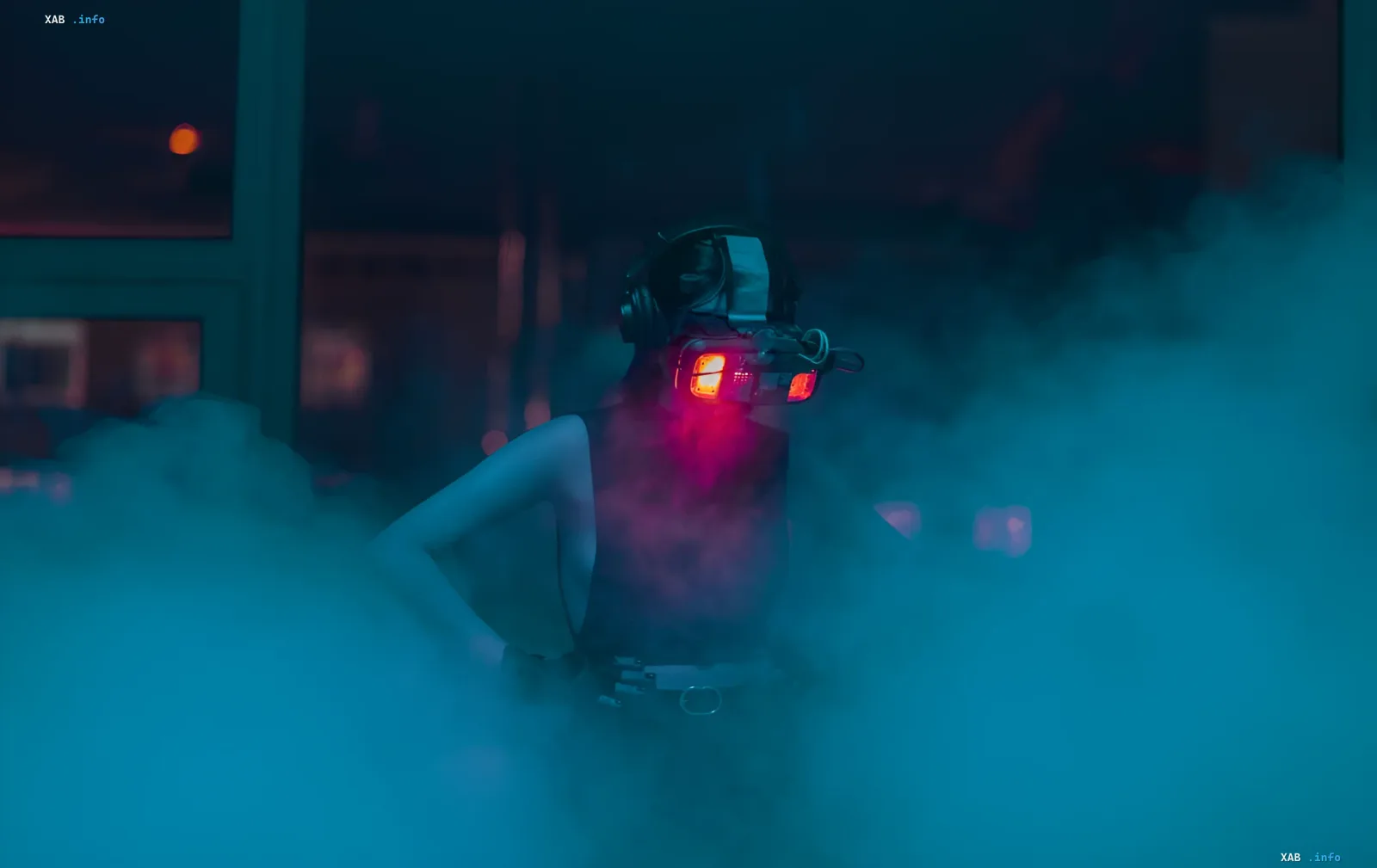
To demonstrate the technology, a prototype of semi-transparent glasses weighing only 23 grams with an active viewing area of 3.57 square centimeters was assembled. The device allows the user to see normal visible light and the superimposed color infrared image simultaneously.
Scientists also conducted experiments on integrating the technology with biological vision. Infrared pulses that passed through the converter successfully triggered electrical reactions in the retina and brain of laboratory mice and human volunteers. Without the use of a converter, infrared rays did not cause any reaction.
Prospects and Current Limitations
According to the developers' calculations, the new system allows distinguishing changes in infrared radiation power about 200 times better than standard devices. However, the technology is still at the stage of laboratory research. Before hitting the market, a number of technical and safety issues must be resolved:
- Ensuring autonomous power supply for the OLED layer.
- Checking the safety of contact with mercury telluride.
- Testing the glasses in real field conditions.