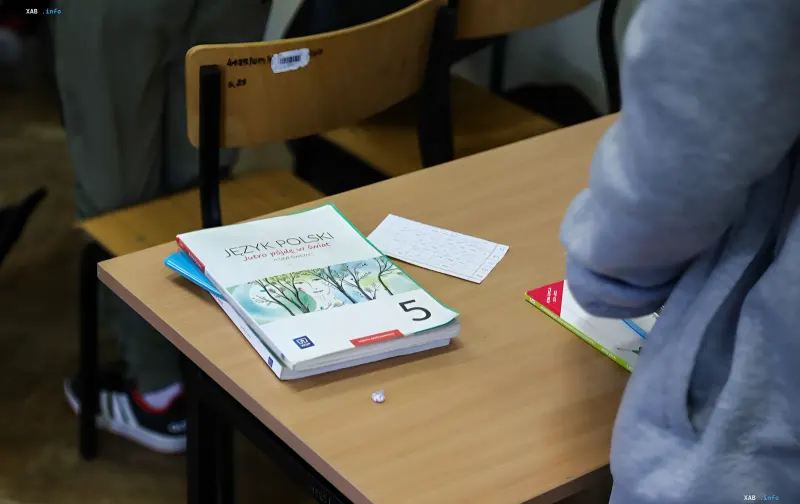
The education system in Poland is preparing for major changes that will affect thousands of Ukrainian children. From the new school year, starting September 1, 2026, the special provisions that have been in effect in recent years against the backdrop of the armed conflict will be abolished. All students from Ukraine will be officially included in the general education system for foreigners, subject to the standard rules applicable to citizens of other countries.
Integration instead of isolation
The decision to switch to the standard education law means that Ukrainian schoolchildren will cease to be a separate category of beneficiaries and will become part of a single educational process. This is a step aimed at the long-term integration of children into Polish society. However, the authorities understand that the transition period requires attention to language and adaptation barriers.
For children who do not speak Polish or have difficulties with learning, special support tools are provided. A key element of this system will be the government program "Friendly School," which will continue to operate in the 2026/2027 school year.
Support through the "Friendly School" program
The program is aimed at equalizing educational opportunities and helping with adaptation. Schools accepting Ukrainian students will be able to receive targeted funds to organize additional training and integration events. This will allow the quality of education to be maintained even in the absence of temporary emergency measures.
Language initiatives
Integration is a two-way street. Last year, Polish schools already introduced the possibility for students in grades 7–8 to officially choose Ukrainian as a second foreign language. This decision became an important step not only for preserving the cultural identity of the Ukrainian community but also for better mutual understanding between children.
Social consequences
Attending a Polish school remains a mandatory condition for Ukrainian families wishing to receive social assistance for children under the 800+ program. Thus, access to education is directly linked to receiving financial support from the state, making the issue of school adaptation critically important for thousands of families.