Epiphany, or the Theophany, is one of the oldest Christian holidays, commemorating the event from the Gospels in which Jesus Christ was baptized by John the Baptist in the waters of the Jordan River. For the faithful, this day is not merely a date on the calendar but a central event of the liturgical year, associated with the consecration of water and a special service. With the transition of part of the Ukrainian churches to the new calendar, the familiar dates of many holidays have shifted, and Epiphany is no exception: this is why, in 2026–2027, the holiday has two different dates depending on which style it is observed in.
How the date changed after the switch to the new calendar
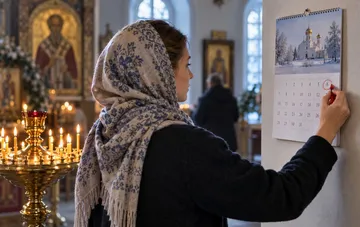
Since September 2023, the Orthodox Church of Ukraine (OCU) and the Ukrainian Greek Catholic Church (UGCC) have moved from the Julian to the new Julian calendar. As a result, all so-called fixed feasts — that is, those with a fixed date that does not change from year to year — have shifted 13 days earlier. Under the "old" style (Julian calendar), the Theophany, the Baptism of our Lord Jesus Christ, the Jordan, or Epiphany was celebrated on January 19. Consequently, after the switch to the "new" style, the holiday falls on January 6. Since, at the time of preparing this material (November 2026), the winter feasts are still ahead, the nearest Epiphany under the new style will be January 6, 2027, while under the old style it will be January 19, 2027.
Why the holiday has several names
In the Orthodox church calendar, January 6 is listed as "The Holy Theophany. The Baptism of our Lord God and Savior Jesus Christ." The holiday has several names because each of them recalls a different aspect of the Gospel event. As explained by the OCU press office: "Not only did the Son of God reveal Himself to people, but the Holy Trinity did, for the Savior was baptized in the Jordan, the Father testified His favor with a voice from heaven, and the Holy Spirit descended upon Christ in the form of a dove." This is why some call the day the Theophany, while others call it Epiphany or the Jordan.
How it is celebrated: the liturgy and the Great Blessing of Water
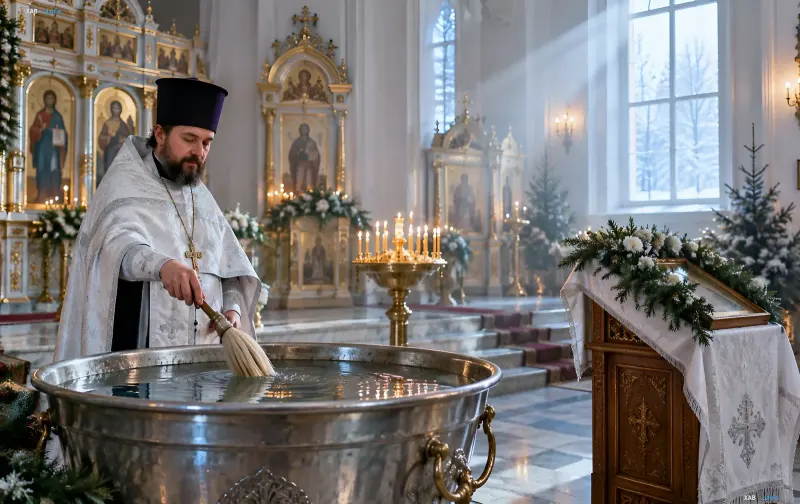
On this day, the liturgy is served according to the rite of Saint John Chrysostom, along with the Great Blessing of Water. The blessing is the central part of the holiday: the water, by belief, becomes consecrated and is used by the faithful throughout the year. The tradition of bathing in icy water, which many associate with Epiphany, requires caution: the church and specialists emphasize that immersing oneself in an ice hole is a personal decision, not a mandatory rite, and it is important to observe safety measures to avoid health risks.
Context: how the new calendar shifted other dates
The 13-day shift affected not only Epiphany but also a number of other fixed feasts. Thus, under the new church calendar, the Dormition of the Theotokos in 2026 is celebrated on August 15, whereas under the old style it is August 28. Similarly, the fasting periods have changed: the Nativity Fast under the new calendar in 2026 begins on November 15 and ends on December 24, while under the old style it runs from November 28, 2026, to January 6, 2027. This is why the faithful, accustomed to the former dates, should check the calendar of their own church so as not to miss the festive services and fasting days.