The New Market Reality: A Tale of Two Kingdoms
The personal computer market in 2026 is undergoing a fundamental transformation, which Intel Vice President and General Manager of the Enthusiast Product Group, Robert Hallock, described as a "tale of two kingdoms." In an interview with Tom's Hardware, the top executive stated that due to the sharp rise in the cost of memory and other critical components, the market will be divided for a long time into two isolated segments: expensive systems for enthusiasts and mass-market computers based on outdated technologies.
Hallock emphasizes that this split is driven not just by marketing strategy, but by harsh economic realities. Buyers of premium PCs with a budget of $5,000 and above are able to absorb additional costs of $300–400 for RAM and components without significant damage to their budget. However, for the mass market segment focused on budget builds, such price increases become a critical factor, making modern platforms inaccessible.
Intel's Strategy: Longevity of Old Platforms
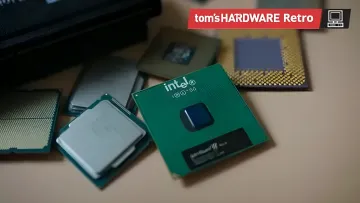
In response to these challenges, Intel is changing its traditional strategy for generation updates. Instead of rapidly phasing out old platforms, the company intends to support them for a long time. Robert Hallock confirmed that Raptor Lake architecture processors remain an "important part of the portfolio" and will be offered to the market for many more years. This decision aims to keep PCs accessible to the mass consumer who does not require cutting-edge technology but needs acceptable performance.
Parallel to this, Intel is developing a premium direction. The Nova Lake platform is positioned as a solution exclusively for enthusiasts and professionals willing to pay for maximum performance. Hallock stated directly that such products will not be able to meet the needs of all market segments due to the high cost of production and components. Thus, we are witnessing the formation of two parallel ecosystems: one moving forward with the latest technologies, the other being conserved to maintain price accessibility.
Competitor Reaction and Industry Adaptation
The problem is not limited to Intel; a similar trend is observed among competitors. AMD, for example, has brought the Ryzen 7 5800X3D processor back to the market and released the Ryzen 7 7700X3D to support the price-sensitive segment. Laptop manufacturers are also forced to switch to more affordable platforms, such as Intel Wildcat Lake and Qualcomm Snapdragon C chips, to keep prices at an acceptable level.
Hallock notes that in the long term, this will lead to a change in the very structure of the market: all manufacturers will have separate sockets for the premium segment and the mass market. High production and logistics costs, according to the expert, will not return to previous levels in the near future, making the "two kingdoms" strategy the only viable option for the survival of the industry.
Contradictory Data
Despite clear statements about the strategy of supporting old platforms, there are discrepancies in the industry regarding Intel's specific plans. Robert Hallock stated that Raptor Lake will be supported for years, yet rumors are circulating online about the appearance of the Raptor Lake Next platform in early 2027, which, according to insiders, should maintain compatibility with the LGA 1700 socket. Intel has not yet officially confirmed information about Raptor Lake Next.
On the one hand, this could mean that Intel is indeed planning evolutionary development of old platforms to extend their lifespan. On the other hand, the lack of official confirmation creates uncertainty for motherboard manufacturers and PC builders who are forced to make forecasts based on indirect data. For now, the company's strategy looks like a balancing act between innovation and economy, where old solutions serve as an anchor of stability for the mass market.