Ankara's diplomatic push in New York
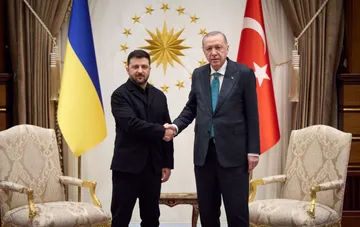
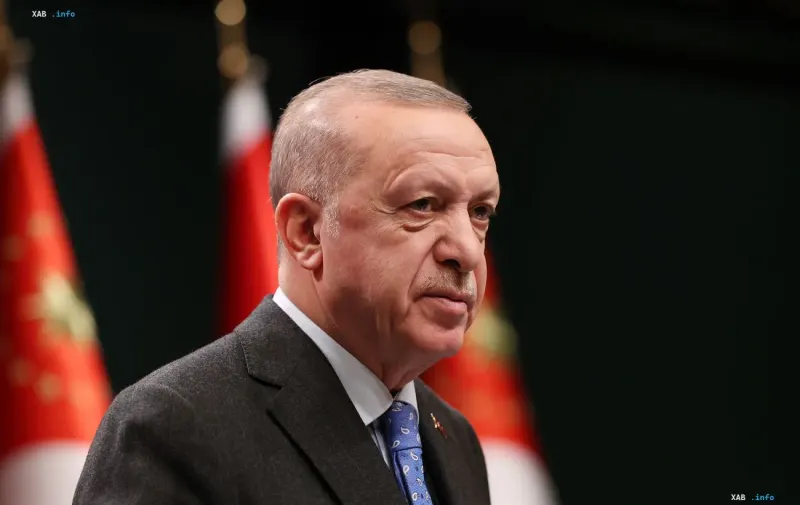
Turkish President Recep Tayyip Erdogan, at a briefing for journalists in New York, announced the resumption of the active phase of efforts to restore the grain corridor in the Black Sea. According to him, Ankara has not only returned to working out the mechanism for safe navigation but is also "accelerating diplomatic steps" to reach concrete agreements with the parties concerned. The statement was made on the sidelines of the UN General Assembly session, where the Turkish leader had earlier held a bilateral meeting with Volodymyr Zelensky dedicated to security in the Black Sea.
"The Black Sea must not become a front line"
Erdogan emphasized that the issue of security in the Black Sea is critically important both for Turkey and for the entire region. "The Black Sea is not a front line of this war and must never become one," the president stated, outlining Ankara's principled position. In the course of negotiations with the parties to the conflict, he said, Turkey has in detail argued the need to restore safe navigation, pointing to two key advantages: ensuring global food security and preventing the further spread of the conflict beyond the land theater of military operations.
Position on attacks on merchant vessels and a de-escalation plan
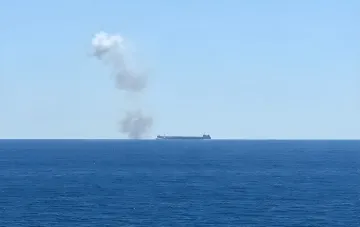
Separately, Erdogan drew attention to the fact that Turkey "has clearly stated that it does not accept attacks on merchant vessels in the Black Sea, no matter who carries them out," and expects responsible behavior from all parties. On the eve of the briefing, Ankara handed Ukraine and Russia its own proposal for de-escalation in the Black Sea — a document outlining a plan to resolve the crisis in the region. Thus, Turkey's diplomatic initiative is of a comprehensive nature: from a political statement to a specific technical proposal on the format of navigation.
Kyiv's reaction: a "positive response" according to Ankara
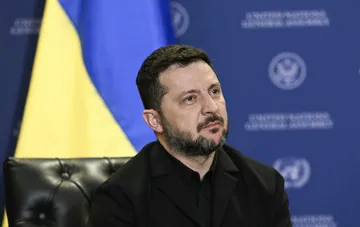
Erdogan reported that he had discussed the grain corridor issue with Volodymyr Zelensky again and that "the response I received from him was positive." This statement indicates that the Ukrainian side, at least at the level of top leadership, does not reject the idea of resuming mechanisms similar to the previous grain deal. At the same time, the provided sources contain no direct quote or official statement from the Ukrainian President's Office confirming the nature and scope of this "positive response" — the information relies on Erdogan's account.
Contradictory data
Open sources record a minor inconsistency in the chronology and nature of the contacts. The main text of the briefing indicates that Erdogan "discussed the issue again" with Zelensky, while a note by the RBC-Ukraine editors emphasizes that the meeting had already taken place on the sidelines of the UN General Assembly. This can be interpreted as two separate episodes (a preliminary meeting and a subsequent telephone/written contact) or as the same event described in different time frames. In addition, the outlet "Novaya Gazeta" (ng.ru) had already reported on August 30, 2026, that Turkey was "pushing for a new grain deal," which indicates the prolonged but non-linear nature of the negotiation process. The exact date of the handover of the de-escalation proposal to Kyiv and Moscow is not consistently recorded in open materials — in one case it refers to the "eve" of the briefing, in another to an earlier stage of diplomatic preparation.
Context: from the previous deal to a new format
The restoration of the grain corridor remains one of the most sensitive elements of the post-Sudan and post-Black Sea security architecture. The previous grain deal, in force from 2022 to 2023, was suspended amid the escalation of the conflict and the lack of security guarantees for the participants. Ankara's 2026 initiative is distinguished by the fact that Turkey acts not only as a mediator but also as a party offering its own de-escalation plan. The acceleration of diplomatic steps against the backdrop of the UN General Assembly session gives the process an international framework and increases the likelihood that the issue will be raised at the multilateral level — including through the UN Security Council or the "Black Sea Five" format.