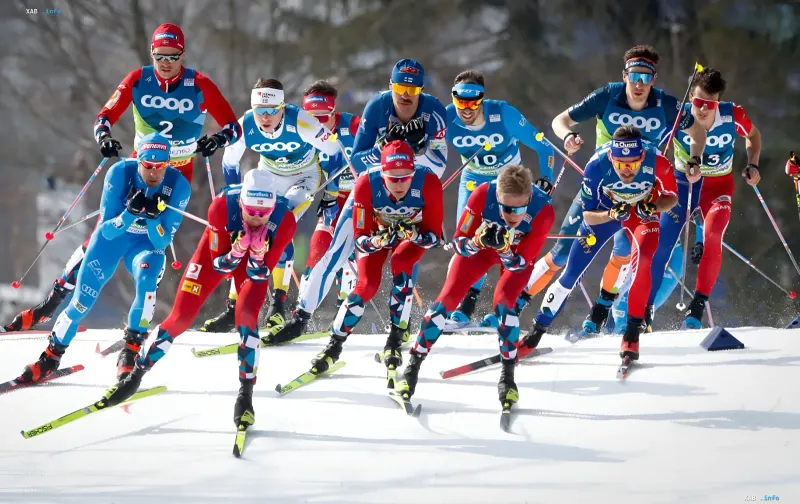
Estonia has officially confirmed its refusal to allow Russian and Belarusian athletes to participate in competitions held on its territory. Tallinn's position was solidified after the International Ski Federation (FIS) eased the criteria for the return of athletes from Russia and Belarus to the international arena. This was reported by Sport RBC.UA citing the Estonian broadcasting outlet ERR.
Relaxation of FIS Rules and New Status Assignment Procedure
In early September 2026, FIS revised its requirements for Russian and Belarusian athletes. Instead of in-depth checks for ties to security structures or military clubs such as CSKA and Dynamo, formal confirmation of neutrality is now sufficient to obtain a "neutral" athlete status. As a result, this week a group of Russians, including five-time Olympic medalist cross-country skier Denis Spitsov, received permission to perform in the new season. Conversely, the leader of the Russian national team, Alexander Bolshunov, was denied the status.
Estonia's State Position
The Estonian authorities took a principled stance and blocked the participation of athletes with "neutral" status in competitions on their territory. The agency emphasized that the presence of Russians and Belarusians contradicts the state policy of supporting Ukraine, and the tournaments themselves could be used by the Kremlin for propaganda purposes. In the Ministry of Culture's address to FIS, it states: "Estonia immediately condemned Russia's aggressive war against Ukraine, and since the beginning of the war, the Estonian government, the Ministry of Culture, and the Estonian Olympic Committee unanimously believe that athletes and teams from Russia and Belarus should not participate in international sports competitions until the end of the war in Ukraine." The agency also recalled that entry for citizens of Russia and Belarus on tourist visas, including for participation in sports events, has been banned in the country since the summer of 2022.
Third European Country with a Similar Ban
Thus, Estonia has become the third European country to close its borders at the state level to Russian and Belarusian athletes. Previously, similar visa and migration barriers were introduced by Norway and Finland. The Finnish authorities separately emphasized that the ban also applies to holders of "neutral" status, making Estonia's position part of a broader regional approach.
Sweden and the World Championships in Falun
Simultaneously, Sweden is actively working on mechanisms to bar Russians from the World Championships in Falun (February 24 – March 7, 2027). Against the backdrop of these decisions, several precedents remain in sports diplomacy: earlier, seven countries refused to sign the youth world ice hockey championship calendar due to the participation of Russians. The combination of these steps indicates that the issue of admitting athletes from Russia and Belarus remains one of the most sensitive in European sports.