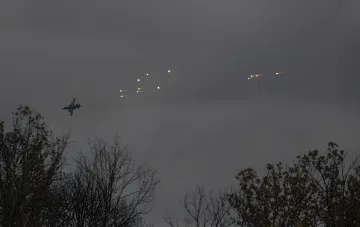
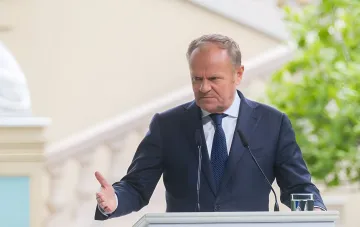
Estonian Defense Minister Hanno Pevkur (referred to as Martin Herem in local context) confirmed in an interview that on the night of November 11, 2026, Ukrainian unmanned aerial vehicles attacking the Russian port of Ust-Luga and a Baltic Fleet warship in the Gulf of Finland briefly violated Estonian airspace from both the southeast and northeast directions. According to Herem, the attack lasted from midnight until roughly 6:00 AM, with most strike drones moving near the Estonian border while remaining within Russian airspace. NATO fighter jets securing Baltic airspace were airborne throughout the entire attack, yet failed to shoot down the drones.
Chronology of the Airspace Violation
According to data voiced by Herem, at approximately 3:30 AM, a single drone coming from Latvia entered Estonian airspace for a very short time and headed towards Russia. A separate group of drones that reached the Ust-Luga area turned west and circled over the Gulf of Finland in Russian airspace, striking the port. Several devices from this group also briefly violated Estonian airspace over the waters of the Gulf of Finland. Herem emphasized that Estonia did not provide its airspace for use by drones of any foreign state.
Explosion on the Baltic Fleet Warship
At approximately 5:30 AM, an explosion occurred on a Russian Baltic Fleet warship located in the Gulf of Finland, after which smoke began billowing from the vessel. The ship headed back toward St. Petersburg under its own power. Herem explicitly stated that Estonia cannot confirm whether there was a Ukrainian trace behind the incident or if an accident occurred on board. On social media, the Exilenova+ channel reported potential casualties or fatalities, but Tallinn neither confirmed nor denied this information, limiting itself to stating the fact of the explosion and smoke.
Why NATO Fighter Jets Did Not Shoot Down the Drones
The airspace over Estonia at the time of the attack was covered by Baltic Air Policing mission aircraft stationed in Lithuania, Latvia, and Estonia. Turkish fighter jets, according to Herem, took to the air even before any drone entered the country's airspace. Nevertheless, not a single device was shot down: according to the minister's assessment, the drones were in a position that did not allow for their safe destruction — specifically, too close to the Russian border, and hitting them would mean firing into Russian territory. Herem added that Tallinn currently does not see the need to revise the parameters of the airspace policing mission.
Diplomatic Context and Parallels with 1939
During the conversation, the journalist drew attention to the similarity of the situation with the incident surrounding the Polish submarine Orzeł in 1939, when the Soviet Union accused Estonia of hostile actions. Herem acknowledged the formal similarity but emphasized the fundamental difference: Ukraine and Russia are in a state of war, and nothing was launched from Estonian territory. At the same time, he did not rule out that Moscow could use the episode for accusations in the international arena that drones are flying toward Russian oil facilities through the airspace of the Baltic states. According to the minister, Russia had not sent any notes or requests to Tallinn at the time of the interview. Estonia, in turn, passed on information about the violation to the Ukrainian side and sent a request asking to clarify what exactly the recorded drones were.
What's Next
Herem assured that Estonia sees no grounds for changing the current air defense and airspace protection strategy. The key remains the issue of assessing the danger of a particular drone upon detection and the technical feasibility of destroying it without risk to civilian infrastructure and without violating the sovereignty of a neighboring state. Future dynamics will depend on Moscow's position, the results of the investigation into the Baltic Fleet ship incident, and whether Tallinn receives a response to the request sent to Kyiv.